

Friday 21 March 2025
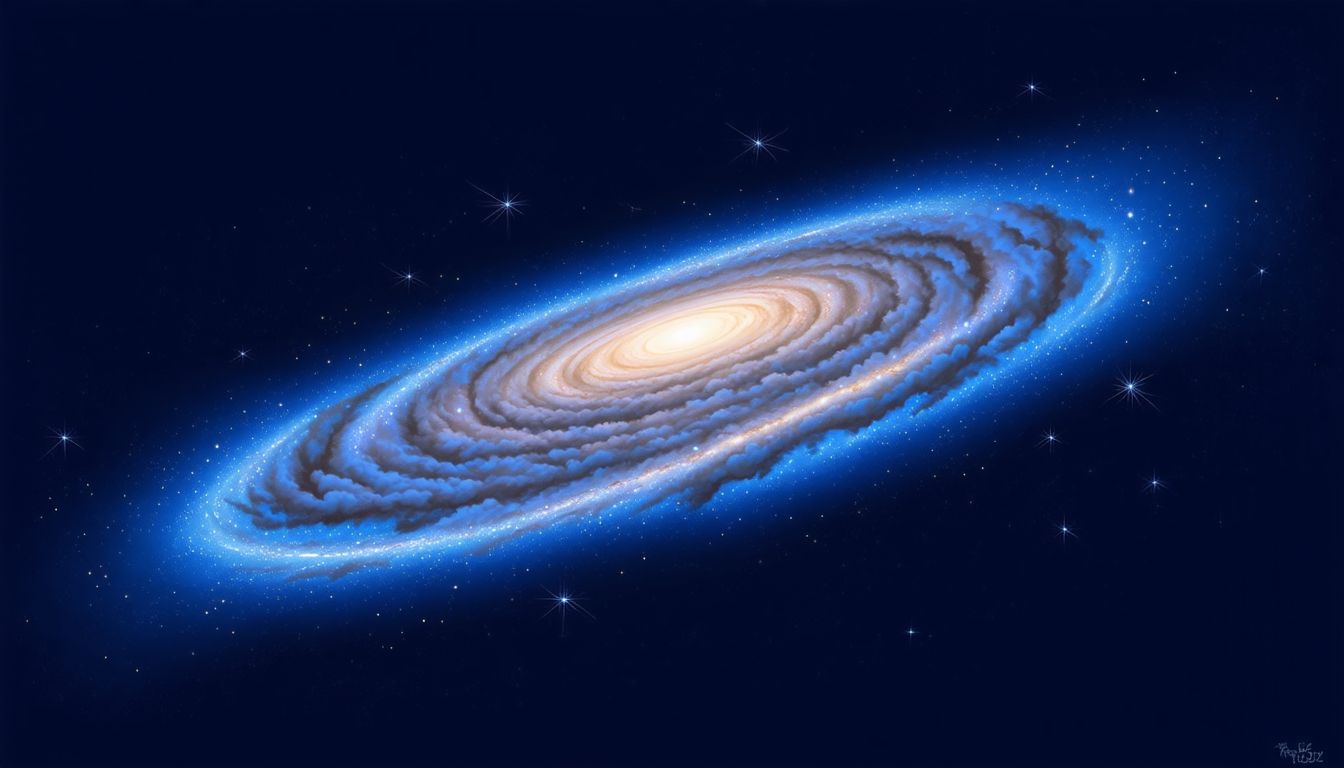
Scientists have long been fascinated by the way galaxies evolve over time, and a recent study has shed new light on this process. By analyzing data from a large-scale computer simulation, researchers have discovered a surprising connection between the mass of a galaxy and its rate of star formation.
The simulation, which spanned billions of years, tracked the growth and evolution of thousands of galaxies in a virtual universe. The team then used this data to create a detailed model of how galaxies form and change over time. This model showed that there is a clear boundary between galaxies that are actively forming stars and those that have stopped doing so.
The researchers found that galaxies above a certain mass threshold, around 1 trillion times the mass of our sun, were more likely to be star-forming than those below it. This makes sense, as massive galaxies tend to have more gas and dust available for new stars to form from.
But the study also revealed a surprise: even galaxies with masses below this threshold can still be star-forming, if they are in the right environment. For example, a small galaxy that is part of a larger cluster may receive a boost of gas and energy from its neighbors, allowing it to continue forming stars.
The researchers believe that this boundary between star-forming and quiescent galaxies is due to the interaction between the galaxy’s mass and the energy output of its central black hole. As a galaxy grows in mass, its black hole also becomes more massive, releasing increasing amounts of energy into the surrounding space.
This energy can either fuel new star formation or prevent it from occurring by stripping away gas and dust from the galaxy. The team found that galaxies above the mass threshold tend to have more massive black holes, which are able to supply enough energy to keep their stars forming.
The study’s findings could have significant implications for our understanding of how galaxies evolve over time. By identifying the key factors that determine whether a galaxy will continue to form stars or not, researchers can better understand the complex processes at play in these celestial bodies.
This research also highlights the importance of considering both internal and external factors when studying galaxy evolution. The team’s model shows that the environment in which a galaxy forms and grows is just as important as its own mass and composition.
As scientists continue to study the mysteries of galaxy evolution, this new information will be an invaluable tool for understanding the complex interplay between these celestial bodies.
Cite this article: “Galaxy Evolution: A Surprising Connection Between Mass and Star Formation”, The Science Archive, 2025.
Galaxies, Star Formation, Mass, Black Holes, Energy, Simulation, Evolution, Universe, Environment, Threshold





