

Friday 21 March 2025
Researchers have made significant progress in developing a new method for recognizing human activities using wearable sensors and machine learning algorithms. The approach, which combines convolutional neural networks (CNNs) with autoencoders, has been shown to be highly accurate and robust, even when dealing with noisy or incomplete data.
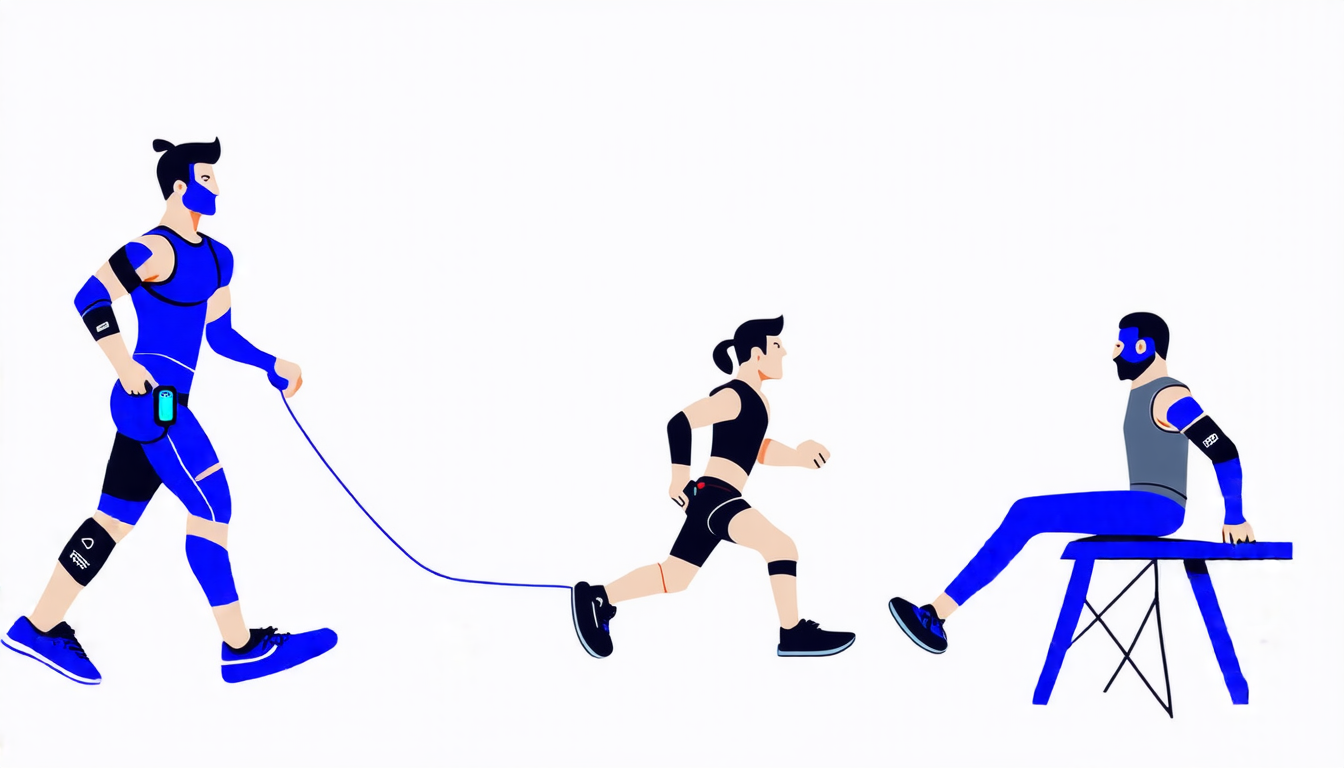
The team behind the research used data from several publicly available datasets, including one that features daily life activities such as sitting, standing, walking, and running. They trained their model on a combination of accelerometer and gyroscope data from wearable sensors placed on different parts of the body, including the hip, wrist, and ankle.
One of the key advantages of this approach is its ability to handle missing or noisy data. In real-world scenarios, it’s common for sensor data to be incomplete or contaminated by noise, which can make it difficult for machine learning models to accurately recognize activities. The autoencoder component of the model helps to fill in gaps and reduce the impact of noise, allowing it to perform well even when dealing with imperfect data.
The researchers also experimented with different architectures and hyperparameters to optimize their model’s performance. They found that using a combination of CNNs and recurrent neural networks (RNNs) was effective for recognizing activities with varying durations and patterns.
The results are impressive: the model achieved an accuracy rate of over 92% on one dataset, outperforming several state-of-the-art methods in the field. The team also demonstrated its ability to recognize activities from short time-series data, which is important for real-world applications where sensors may only be able to capture brief snippets of activity.
The potential applications of this technology are vast. For example, it could be used to develop wearable devices that can detect early signs of Parkinson’s disease or other motor disorders, allowing for earlier intervention and more effective treatment. It could also be used to monitor the health and wellness of older adults, enabling them to live independently for longer.
In addition to its potential medical applications, this technology could have significant implications for industries such as fitness and healthcare. For example, it could be used to develop personalized exercise programs or to monitor patients with chronic conditions.
Overall, this research represents a significant step forward in the development of wearable-based human activity recognition systems. Its accuracy, robustness, and potential applications make it an exciting area of study that has far-reaching implications for medicine, healthcare, and beyond.
Cite this article: “Accurate Wearable-Based Human Activity Recognition Using Convolutional Neural Networks and Autoencoders”, The Science Archive, 2025.
Wearable Sensors, Machine Learning Algorithms, Convolutional Neural Networks, Autoencoders, Human Activity Recognition, Accelerometer Data, Gyroscope Data, Recurrent Neural Networks, Parkinson’S Disease, Healthcare Technology.





