
Friday 21 March 2025
Scientists have long been fascinated by the complex networks that underlie many natural systems, from the human brain to ecosystems and climate patterns. One of the biggest challenges in studying these networks is understanding how information flows through them – or, more specifically, how different parts of the network interact with each other.
A new paper published this week sheds light on this problem by introducing a powerful new tool for analyzing complex systems: Partial Information Rate Decomposition (PIRD). In essence, PIRD provides a way to break down the flow of information within a network into its component parts, revealing how different pieces of the system interact with each other.
The researchers behind PIRD drew inspiration from existing techniques like partial information decomposition (PID), which has been used to study complex systems in fields like neuroscience and climate science. However, PID has a major limitation: it only works when the data being analyzed is stationary – that is, when the underlying patterns don’t change over time.
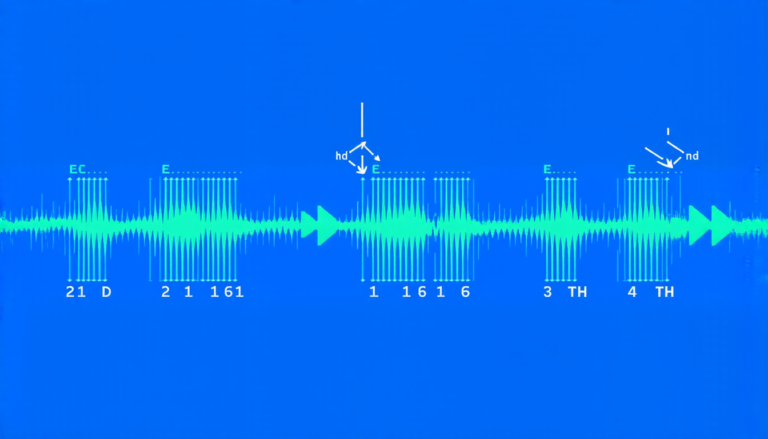
PIRD gets around this problem by using a novel approach based on spectral analysis, which allows it to capture the dynamic behavior of complex systems. By applying PIRD to real-world data sets, such as climate indices and brain activity patterns, the researchers were able to uncover new insights into how information flows through these networks.
One key finding was that PIRD can identify unique contributions from individual components within a network – in other words, it can tell us which parts of the system are doing what. This is particularly important for understanding complex phenomena like climate patterns, where different factors like ocean currents and atmospheric pressure interact to produce overall trends.
PIRD also revealed new information about how high-order interactions between multiple components shape the behavior of a network. In other words, it showed that even seemingly simple systems can exhibit surprisingly complex behavior when viewed from a dynamic perspective.
The implications of PIRD are far-reaching, with potential applications in fields like climate science, neuroscience, and finance. By providing a more complete picture of how information flows through complex networks, PIRD offers researchers new tools for understanding and predicting the behavior of these systems – and potentially even improving our ability to manage and mitigate their risks.
In practical terms, PIRD could help scientists better understand the intricate relationships between different components within a system, such as the interplay between ocean currents and atmospheric pressure in climate patterns. This knowledge could inform more effective strategies for mitigating the impacts of climate change, or for developing new treatments for complex neurological disorders.
Cite this article: “Unveiling Complexity: Introducing Partial Information Rate Decomposition (PIRD)”, The Science Archive, 2025.
Complex Systems, Networks, Information Flow, Partial Information Rate Decomposition, Pird, Spectral Analysis, Climate Science, Neuroscience, Finance, Data Analysis