

Friday 21 March 2025
For decades, software developers have grappled with the challenge of scaling complex systems without sacrificing performance or reliability. As applications grow in size and complexity, it becomes increasingly difficult to manage them effectively, leading to frustration, delays, and costly rework.
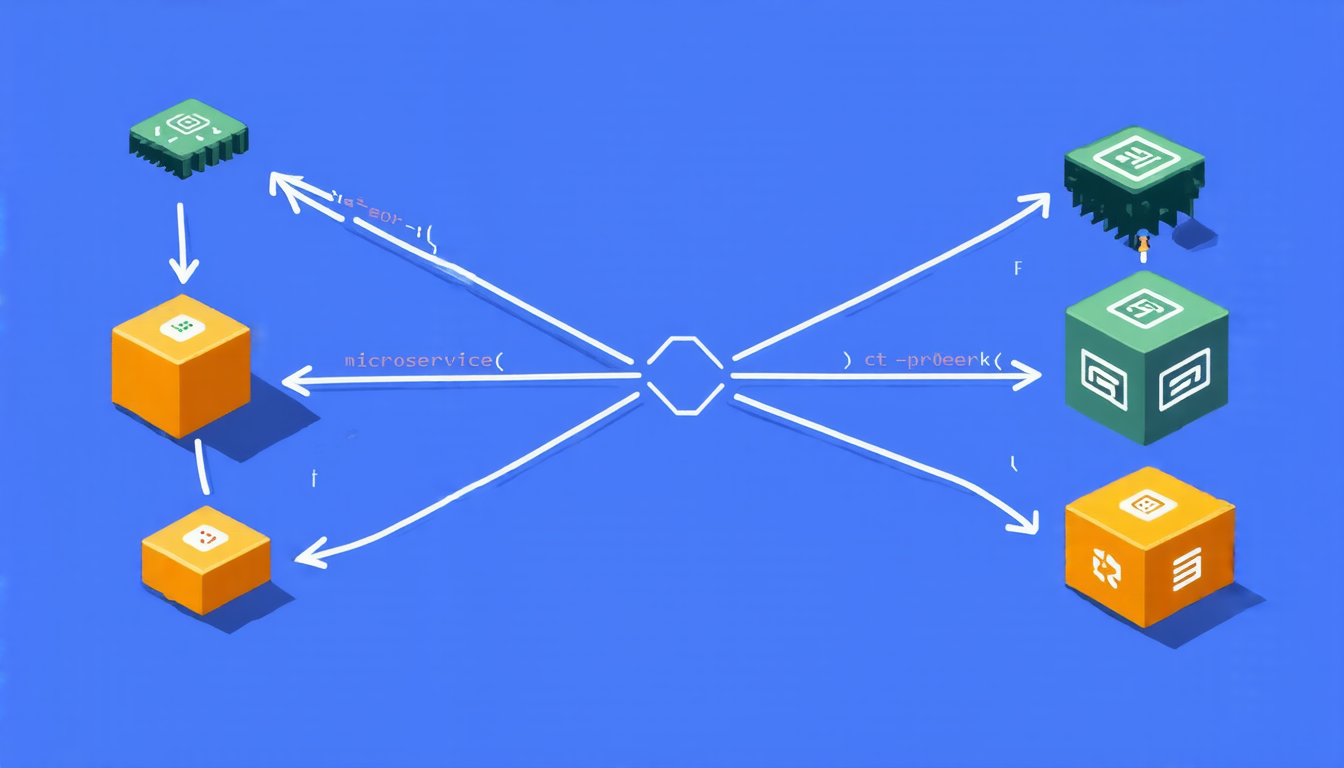
One promising approach is the decomposition of monolithic applications into microservices – smaller, independent components that can be developed, tested, and deployed separately. But how can developers identify the optimal boundaries between these services, ensuring they are cohesive, efficient, and scalable?
Researchers have recently made significant strides in developing AI-powered tools to automate this process. By leveraging large language models and advanced clustering techniques, these systems can analyze codebases, identify patterns and relationships, and generate a set of microservices that meet specific performance and scalability requirements.
The key innovation lies in the use of contrastive learning – a technique borrowed from natural language processing, where AI models learn to distinguish between similar but distinct concepts. In this case, the model is trained on large datasets of code snippets, learning to identify patterns and relationships between different components and services.
This approach has several advantages over traditional manual decomposition methods. For one, it can handle complex systems with thousands of lines of code, quickly identifying potential microservices and their boundaries. Additionally, the AI model can adapt to changing requirements and evolve alongside the system, reducing maintenance costs and improving overall scalability.
The authors of this study have developed a proof-of-concept tool that demonstrates the effectiveness of this approach. By analyzing several open-source applications, they were able to automatically identify microservices with high accuracy, achieving results comparable to those achieved by human developers.
While there are still challenges to be addressed – such as ensuring data consistency and handling edge cases – these findings have significant implications for software development. As applications continue to grow in complexity and scale, the need for efficient, effective decomposition strategies will only increase.
By harnessing the power of AI and machine learning, developers can streamline their workflows, reduce costs, and deliver high-quality solutions more quickly. The future of software development may well depend on our ability to adapt to these new tools and techniques – and the possibilities are endless.
Cite this article: “Automating Microservices Decomposition with AI-Powered Tools”, The Science Archive, 2025.
Software Development, Microservices, Ai-Powered Tools, Decomposition, Monolithic Applications, Scalability, Performance, Reliability, Contrastive Learning, Natural Language Processing





