
Friday 21 March 2025
A new approach to understanding complex networks has been developed by researchers, allowing for more accurate identification of hidden patterns and structures within these systems.
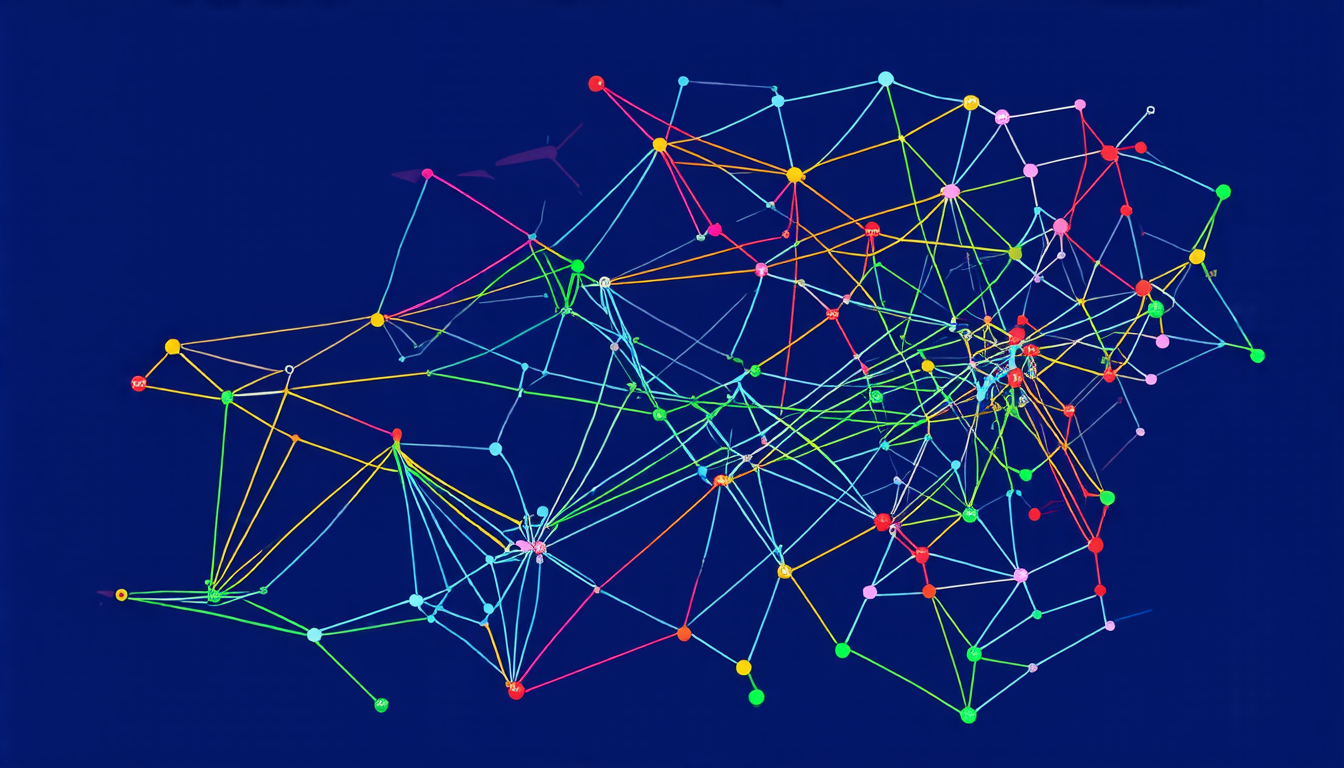
Networks are all around us – social media platforms, transportation grids, biological systems – and they’re getting increasingly complex. Identifying meaningful connections between nodes (individuals or entities) is crucial for understanding how these systems function, but it’s often a challenging task.
The traditional method of community detection involves analyzing the network as a whole, looking for patterns that might indicate clusters of densely connected nodes. However, this approach can be flawed, as it doesn’t account for individual characteristics of each node, such as attributes or features.
Enter the Covariate-Assisted Latent Factor Stochastic Block Model (CALF-SBM), a new method developed by researchers to tackle the complexity of community detection in networks. CALF-SBM takes into account not only the connections between nodes but also their individual characteristics, allowing for more accurate identification of hidden patterns and structures within these systems.
In a recent study, the researchers applied CALF-SBM to two real-world networks: one representing the collaboration network of otolaryngologists (ear, nose, and throat specialists) in the United States, and another depicting airport connections across North America. The results showed that CALF-SBM outperformed traditional methods in identifying meaningful community structures within these networks.
One of the key advantages of CALF-SBM is its ability to handle networks with varying levels of connectivity between nodes. In some cases, nodes may be strongly connected to each other, while in others, connections may be sparse or even non-existent. By incorporating node-level covariates (attributes) into the model, CALF-SBM can better capture these complex relationships.
The researchers also developed a novel algorithm for implementing CALF-SBM, which allows for efficient computation of model parameters and accurate estimation of community structures. This algorithm has been made available as an open-source package, making it accessible to researchers and practitioners working with complex networks.
The implications of CALF-SBM are far-reaching, with potential applications in a wide range of fields, from social network analysis to epidemiology. By providing a more nuanced understanding of complex networks, this method can help researchers identify key drivers of behavior, disease transmission, or economic activity, ultimately leading to more effective interventions and policies.
Cite this article: “Unlocking Hidden Patterns in Complex Networks with CALF-SBM”, The Science Archive, 2025.
Networks, Community Detection, Complex Systems, Covariates, Latent Factors, Stochastic Block Model, Node Attributes, Connectivity Patterns, Graph Theory, Machine Learning.