

Friday 21 March 2025
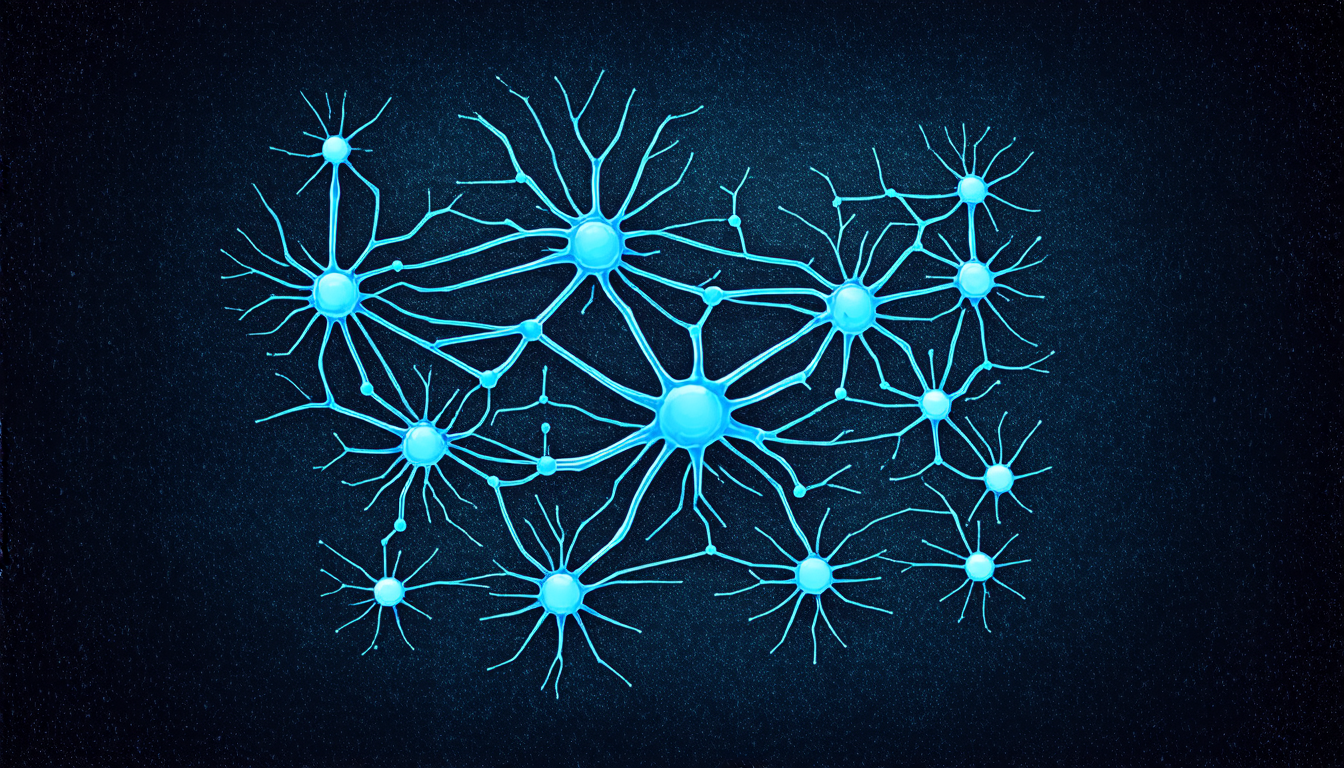
A team of mathematicians has made a significant breakthrough in understanding how neural networks learn and represent data. By studying the patterns formed by large matrices, researchers have shed light on the fundamental limits of feature learning – the ability of machines to identify important characteristics from complex data.
The study focused on a specific type of matrix, known as a spiked Wigner matrix, which is used to model the connections between neurons in neural networks. By analyzing the behavior of these matrices under different conditions, scientists have gained insights into how the networks learn and adapt.
One key finding is that even a single step of optimization – a process by which the network adjusts its weights to minimize errors – can significantly improve the quality of feature learning. This challenges previous assumptions about the amount of data required for effective learning.
The researchers also found that certain types of noise, or random fluctuations, in the data can actually enhance the ability of the network to learn important features. This is counterintuitive, as one might expect noise to degrade the accuracy of the results. However, by studying the patterns formed by these noisy matrices, scientists have discovered a new mechanism for feature learning that relies on the interplay between signal and noise.
The implications of this research are far-reaching, with potential applications in areas such as image recognition, natural language processing, and recommendation systems. By better understanding how neural networks learn and represent data, developers can create more efficient and effective machines.
The study also highlights the importance of considering the underlying structure of the data when designing machine learning algorithms. By taking into account the patterns formed by large matrices, researchers can develop more sophisticated models that are better equipped to handle complex data sets.
As scientists continue to push the boundaries of what is possible with neural networks, this research provides a valuable foundation for further exploration. The discovery of new mechanisms for feature learning and the refinement of existing algorithms will undoubtedly lead to breakthroughs in a wide range of fields.
Cite this article: “Unlocking the Secrets of Neural Network Learning”, The Science Archive, 2025.
Neural Networks, Feature Learning, Machine Learning, Optimization, Data Representation, Matrix Analysis, Noise, Signal Processing, Recommendation Systems, Image Recognition.





