

Friday 21 March 2025
A team of researchers has made significant progress in understanding the number of ways a rigid graph can be realized, a problem that has long fascinated mathematicians and physicists alike.
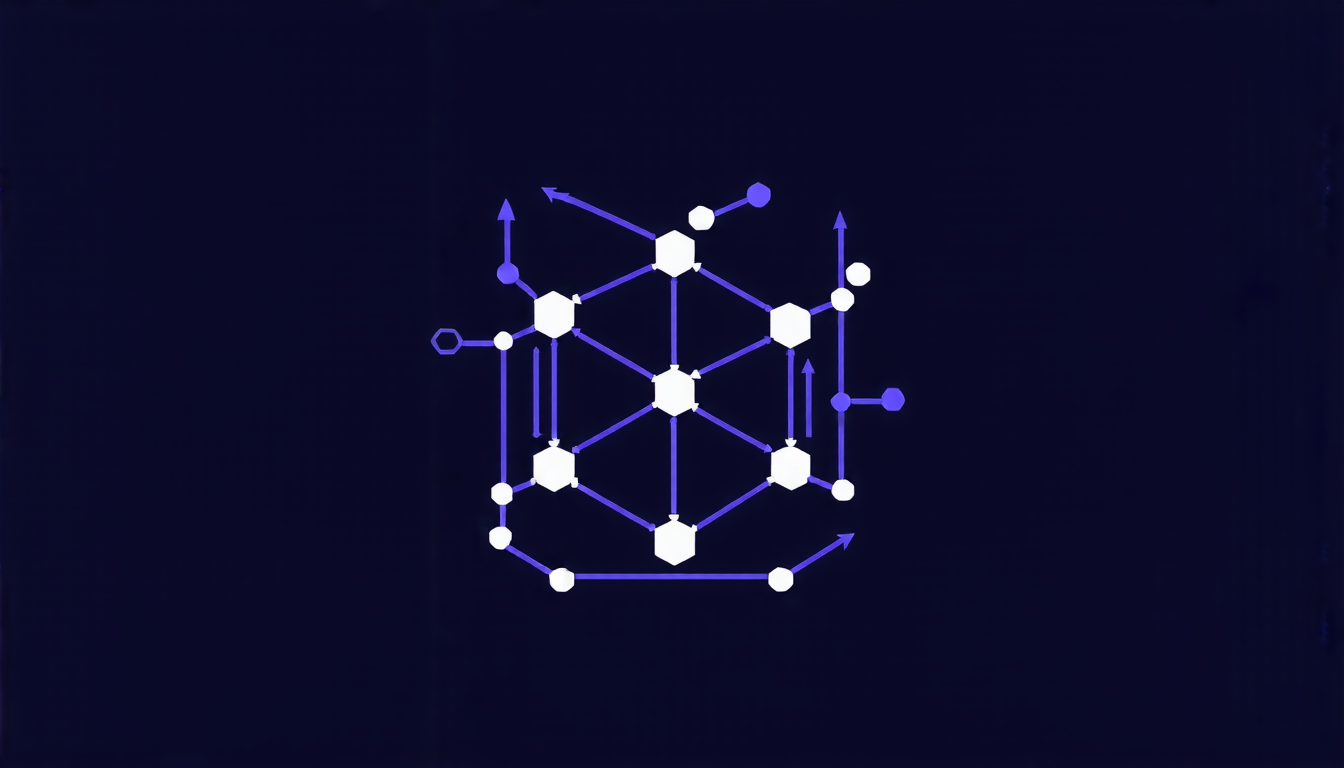
Rigid graphs are complex networks that remain fixed in space, despite attempts to bend or stretch them. They have applications in fields such as materials science, where they can help engineers design new materials with specific properties. However, calculating the number of ways a rigid graph can be realized is a daunting task, requiring a deep understanding of geometry and algebraic topology.
Traditionally, researchers have relied on numerical simulations to estimate the number of realizations, but these methods are limited by their inability to capture the full range of possibilities. Now, a new approach has been developed that uses combinatorial algorithms to count the number of realizations exactly.
The algorithm works by iteratively applying a series of transformations to the graph, each of which increases its dimensionality. The researchers used this method to compute the number of realizations for rigid graphs with up to 12 vertices, a feat previously thought impossible.
Their results show that the number of realizations grows rapidly with the size of the graph, but in a way that is surprisingly regular and predictable. For example, they found that the number of realizations increases by a factor of about 1.5 for each additional vertex added to the graph.
These findings have important implications for materials science, where understanding the properties of rigid graphs can help engineers design new materials with specific properties. For instance, researchers may be able to use these results to predict the mechanical behavior of materials under different stressors, or to design new materials that are more resistant to deformation.
The algorithm also has potential applications in computer science and data analysis, where it could be used to solve complex problems involving geometric transformations and combinatorial counting. For example, researchers may be able to use this method to analyze the structure of large networks, such as social media platforms or transportation systems.
Overall, this breakthrough is an important step forward in our understanding of rigid graphs and their applications. By providing a precise and efficient way to count the number of realizations, it opens up new possibilities for researchers to explore the properties of these complex networks and develop new technologies that rely on them.
Cite this article: “Counting Rigid Graph Realizations: A Breakthrough in Materials Science and Beyond”, The Science Archive, 2025.
Rigid Graphs, Combinatorial Algorithms, Geometry, Algebraic Topology, Materials Science, Graph Theory, Computational Complexity, Network Analysis, Data Structures, Geometric Transformations
Reference: Georg Grasegger, “Explorations on the number of realizations of minimally rigid graphs” (2025).





