

Friday 21 March 2025
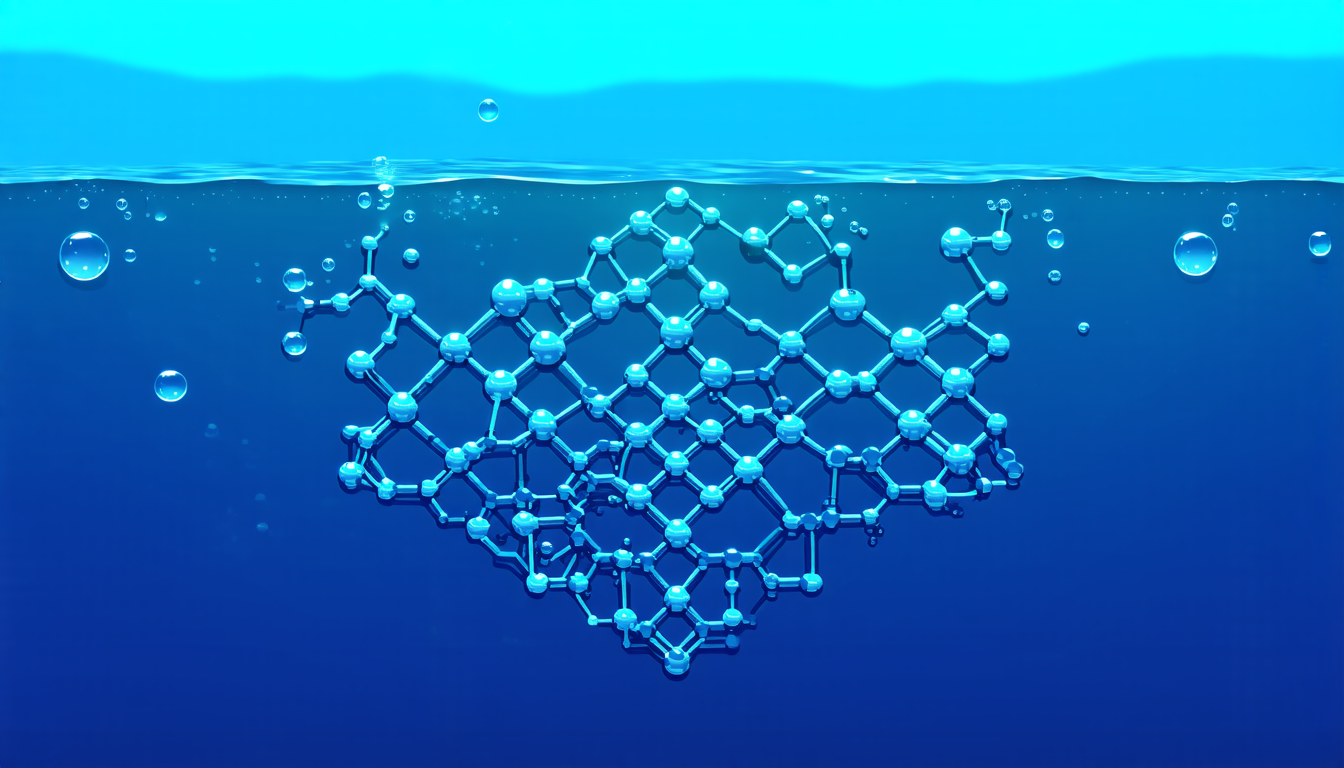
A two-dimensional lattice-gas model has been developed to study methane clathrate hydrates, a type of ice-like substance that forms when natural gas comes into contact with cold water deep beneath the ocean floor. These structures have potential as a new source of clean energy, but understanding their behavior is crucial for harnessing this resource.
The researchers used computer simulations to model the formation and dissociation of methane clathrate hydrates on a two-dimensional lattice, mimicking the structure of the water molecules that make up the substance. They found that the model accurately predicts the thermodynamic properties of the hydrates, such as their melting points and dissociation enthalpies.
One of the key findings is that the model can reproduce the unusual behavior of methane clathrate hydrates at high pressures. At these conditions, the hydrates undergo a phase transition, becoming more stable and resistant to dissociation. This has important implications for the extraction of natural gas from these deposits, as it may be possible to tap into these reserves without causing them to break down.
The model also sheds light on the role of water in the formation and stability of methane clathrate hydrates. The researchers found that the water molecules play a crucial role in stabilizing the structure of the hydrate, and that changes in the concentration of water can affect its behavior.
This work has significant implications for our understanding of methane clathrate hydrates and their potential as a source of clean energy. By developing more sophisticated models like this one, scientists may be able to better predict how these structures will behave under different conditions, allowing them to optimize extraction methods and reduce the environmental impact of gas production.
The researchers’ approach also has broader applications in the field of materials science. The two-dimensional lattice-gas model can be used to study other types of complex systems, such as polymers or biological molecules, that exhibit unusual behavior at high pressures.
Overall, this research demonstrates the power of computer simulations in understanding complex natural phenomena and highlights the importance of continued investment in scientific research to unlock the secrets of methane clathrate hydrates.
Cite this article: “Unlocking the Secrets of Methane Clathrate Hydrates”, The Science Archive, 2025.
Methane, Clathrate Hydrates, Lattice-Gas Model, Computer Simulations, Thermodynamic Properties, Phase Transition, Natural Gas, Clean Energy, Materials Science, High Pressures





