

Saturday 22 March 2025
The quest for better clustering algorithms has been a long-standing challenge in the world of computer science. Clustering, the process of grouping similar data points together, is a crucial step in many applications, from customer segmentation to anomaly detection. However, traditional clustering methods often struggle when dealing with complex, noisy datasets or those with inherent structure.
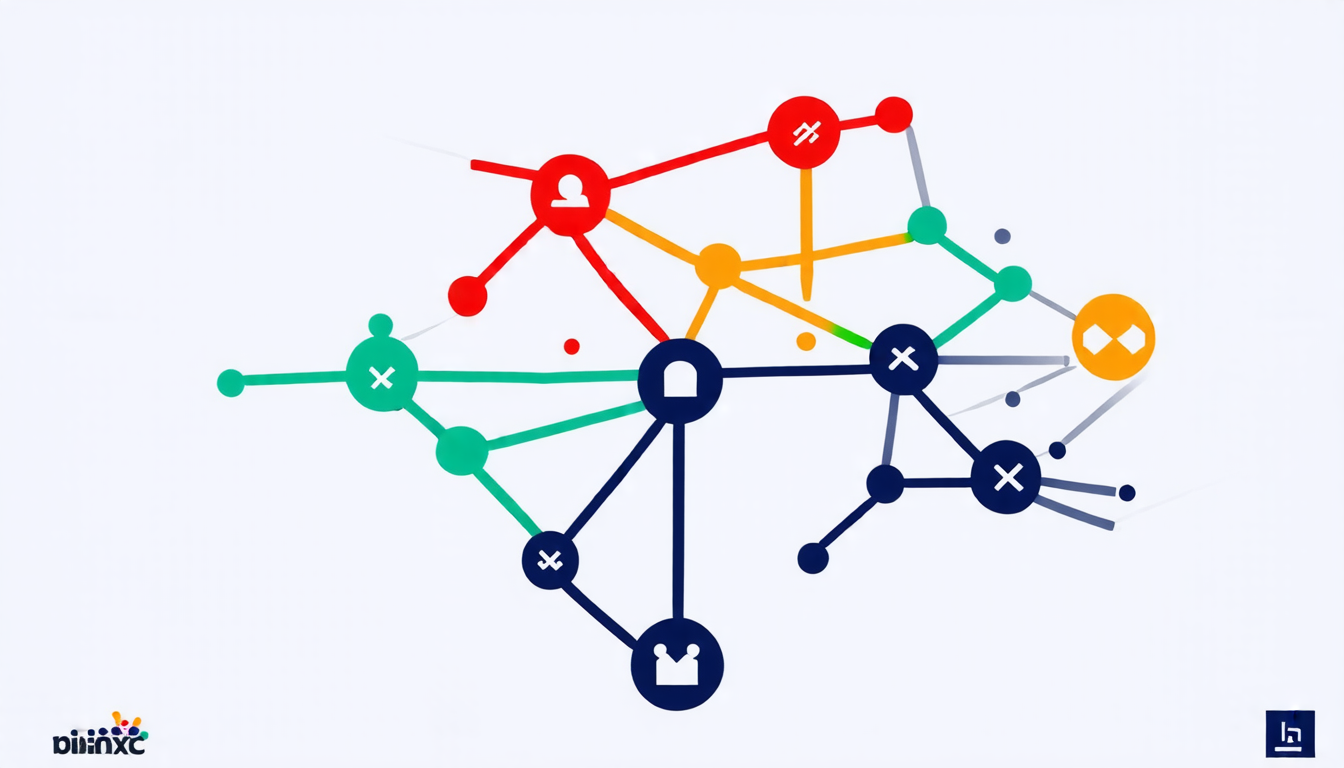
In recent years, researchers have turned their attention to signed graphs, where edges are labeled as positive (friend) or negative (enemy). This adds an extra layer of complexity, as the relationships between nodes are not just about proximity but also about the nature of those connections. The problem is that most clustering algorithms were designed for unsigned graphs and fail to account for these nuanced relationships.
A new approach, dubbed Robust Deep Signed Graph Clustering (DSGC), seeks to address this issue by leveraging a combination of spectral methods, weak balance theory, and attention mechanisms. The authors propose a novel framework that not only improves upon existing clustering algorithms but also provides a deeper understanding of the underlying graph structure.
The key innovation lies in the use of Weak Balance Theory, which posits that an enemy of my enemy is still just an enemy. This principle allows the algorithm to refine the graph by correcting noisy edges and identifying clusters more accurately. The authors demonstrate this through a series of experiments on synthetic and real-world datasets, showcasing DSGC’s ability to outperform existing methods in terms of clustering accuracy and robustness.
One of the most impressive aspects of DSGC is its ability to handle varying levels of noise and complexity in the data. By incorporating attention mechanisms, the algorithm can focus on the most relevant information and ignore irrelevant details, resulting in more accurate cluster assignments. This flexibility makes DSGC a valuable tool for a wide range of applications, from social network analysis to recommender systems.
The authors also provide a thorough evaluation of their approach, including a hyperparameter sensitivity analysis that demonstrates DSGC’s robustness across different settings. Furthermore, they demonstrate the algorithm’s ability to predict linkages between nodes in an unlabeled dataset, showcasing its potential for real-world applications.
While DSGC is not without its limitations – it requires careful tuning of hyperparameters and may struggle with very large datasets – its promise as a more effective clustering algorithm is undeniable. As researchers continue to push the boundaries of machine learning and graph theory, approaches like DSGC will play a crucial role in unlocking new insights and applications.
Cite this article: “Robust Deep Signed Graph Clustering: A Novel Approach to Clustering Complex Data”, The Science Archive, 2025.
Clustering, Graph Theory, Machine Learning, Signed Graphs, Weak Balance Theory, Attention Mechanisms, Spectral Methods, Clustering Algorithms, Noise Robustness, Deep Learning





