

Saturday 22 March 2025
A novel approach to securing federated learning, a technique that enables multiple organizations to jointly train AI models without exposing sensitive data, has been proposed by researchers. The method, dubbed DDFed, leverages homomorphic encryption and differential privacy to protect model updates during the training process.
Federated learning has gained popularity in recent years as companies look for ways to collaborate on complex AI projects while minimizing data sharing. However, this approach also raises significant security concerns, particularly when it comes to protecting individual organizations’ datasets from potential attackers. DDFed aims to address these concerns by integrating two key technologies: homomorphic encryption and differential privacy.
Homomorphic encryption allows computations to be performed directly on encrypted data without decrypting it first. This means that model updates can be securely aggregated and processed while still maintaining their confidentiality. In the context of federated learning, this technology enables organizations to contribute their data to a shared model without exposing their individual datasets.
Differential privacy, on the other hand, adds noise to the model updates to prevent any single organization’s data from being identified or compromised. This ensures that even if an attacker were able to access the encrypted model updates, they would not be able to glean any meaningful information about an individual organization’s dataset.
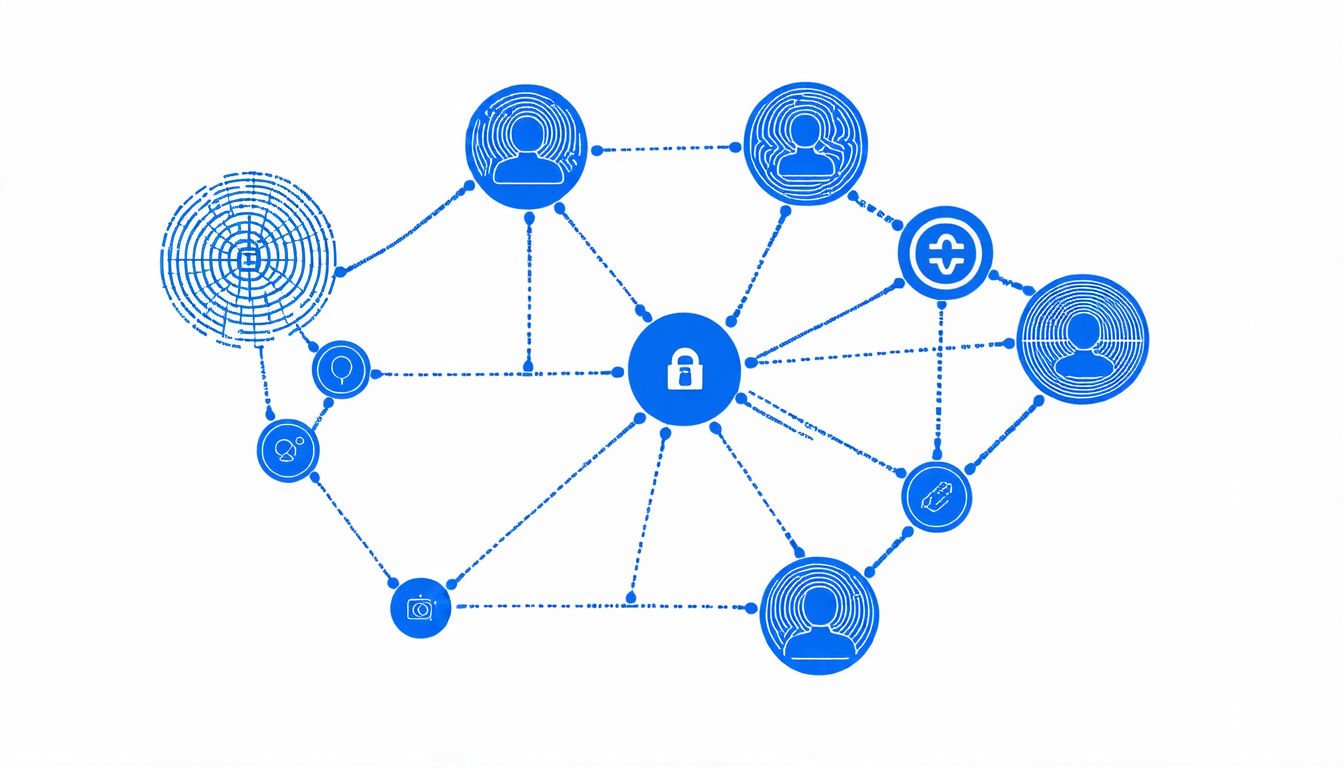
The DDFed framework consists of three main components: a client, an aggregation server, and a secure similarity computation module. The client is responsible for encrypting its local model updates using homomorphic encryption and adding differential privacy noise. The aggregation server receives the encrypted updates from the clients and aggregates them to form a global model update. Finally, the secure similarity computation module uses these aggregated updates to detect potential poisoning attacks.
In experiments conducted on several datasets, including MNIST and FMNIST, DDFed demonstrated robust performance against various types of attacks, including IPM, ALIE, and SCALINE. The framework also showed a slight increase in training time compared to traditional federated learning methods, but this was largely due to the additional computations required for homomorphic encryption.
While DDFed is a promising approach to securing federated learning, there are still several challenges that need to be addressed before it can be widely adopted. For example, the framework assumes that all clients have identical computational resources and communication bandwidth, which may not always be the case in real-world scenarios. Additionally, the framework’s performance could potentially degrade if too many clients contribute their data to the shared model.
Cite this article: “Securing Federated Learning with DDFed: A Novel Approach Combining Homomorphic Encryption and Differential Privacy”, The Science Archive, 2025.
Federated Learning, Homomorphic Encryption, Differential Privacy, Ai, Machine Learning, Data Security, Model Updates, Aggregation Server, Secure Similarity Computation, Poisoning Attacks





