

Saturday 22 March 2025
The quest for efficient infrastructure inspection has led researchers to develop innovative solutions that combine cutting-edge technologies and artificial intelligence. A recent study proposes a novel approach that leverages point cloud data, intensity features, and machine learning algorithms to detect anomalies in infrastructure, such as cracks and water damage.
Point clouds are three-dimensional representations of objects or scenes created by collecting vast amounts of spatial data from various sources like laser scanners or cameras. Intensity features are derived from the reflectance properties of surfaces, which can indicate defects or irregularities. By combining these two components with machine learning models, researchers aim to create a robust system for anomaly detection.
The proposed method, dubbed 3DMulti-FPFHI, consists of three main stages. First, point cloud data is preprocessed to remove noise and ensure uniformity. Next, intensity features are extracted from the point clouds using customized algorithms. Finally, the machine learning model analyzes the combined point cloud and intensity feature data to identify anomalies.
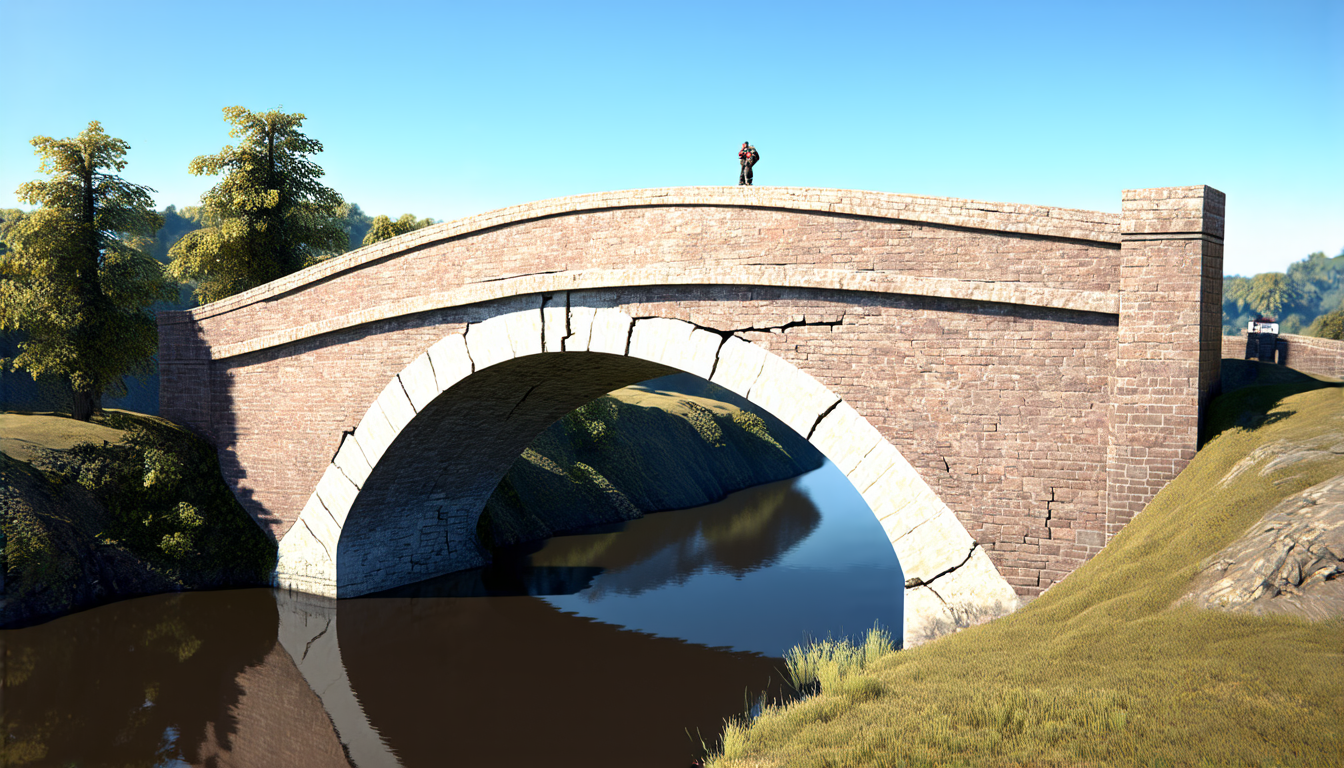
The 3DMulti-FPFHI method was tested on real-world infrastructure datasets, including a masonry arch bridge and a concrete tunnel. The results show that the system can accurately detect cracks and water damage with minimal false positives. Moreover, the algorithm’s ability to learn from experience enables it to adapt to new scenarios and improve its performance over time.
One of the significant advantages of this approach is its ability to process large amounts of data efficiently. This is particularly important for infrastructure inspection, where vast areas need to be monitored regularly. The proposed method can handle complex geometries and irregularities, making it suitable for a wide range of applications.
The potential benefits of 3DMulti-FPFHI are substantial. Automated anomaly detection can reduce the time and cost associated with manual inspections, allowing maintenance personnel to focus on high-priority issues. Moreover, the system’s ability to learn from experience enables continuous improvement, ensuring that the algorithm stays effective even as infrastructure ages or undergoes changes.
While this research has made significant strides in developing an efficient anomaly detection system, there are still challenges to be addressed. For instance, the accuracy of intensity features depends on the quality of point cloud data and environmental conditions. Future studies will need to focus on addressing these limitations and exploring ways to improve the algorithm’s robustness.
The development of 3DMulti-FPFHI is a testament to the potential of interdisciplinary research in creating innovative solutions for real-world problems.
Cite this article: “Efficient Anomaly Detection in Infrastructure Using Point Cloud Data and Machine Learning”, The Science Archive, 2025.
Infrastructure Inspection, Point Cloud Data, Intensity Features, Machine Learning, Anomaly Detection, Crack Detection, Water Damage Detection, 3D Modeling, Automation, Artificial Intelligence





