

Saturday 22 March 2025
A novel approach to accelerating reinforcement learning has been proposed, which could significantly improve the efficiency of autonomous systems. The strategy involves incorporating biologically inspired heuristics into the exploration process, allowing agents to learn faster and more effectively.
Reinforcement learning is a type of machine learning that enables agents to make decisions by interacting with their environment. In this context, an agent’s goal is to maximize its reward or minimize its punishment. However, traditional reinforcement learning algorithms can be slow and inefficient, particularly when dealing with complex environments.
To address this issue, researchers have turned to nature for inspiration. Particle Swarm Optimization (PSO) is a heuristic algorithm that mimics the behavior of animal groups, such as flocks of birds or schools of fish. In PSO, each agent moves through the environment based on its own experiences and those of its neighbors.
The new approach combines PSO with Multi-Agent Reinforcement Learning (MARL), which enables multiple agents to learn from each other’s experiences. By incorporating PSO into MARL, the algorithm can more effectively explore the environment and identify high-reward actions.
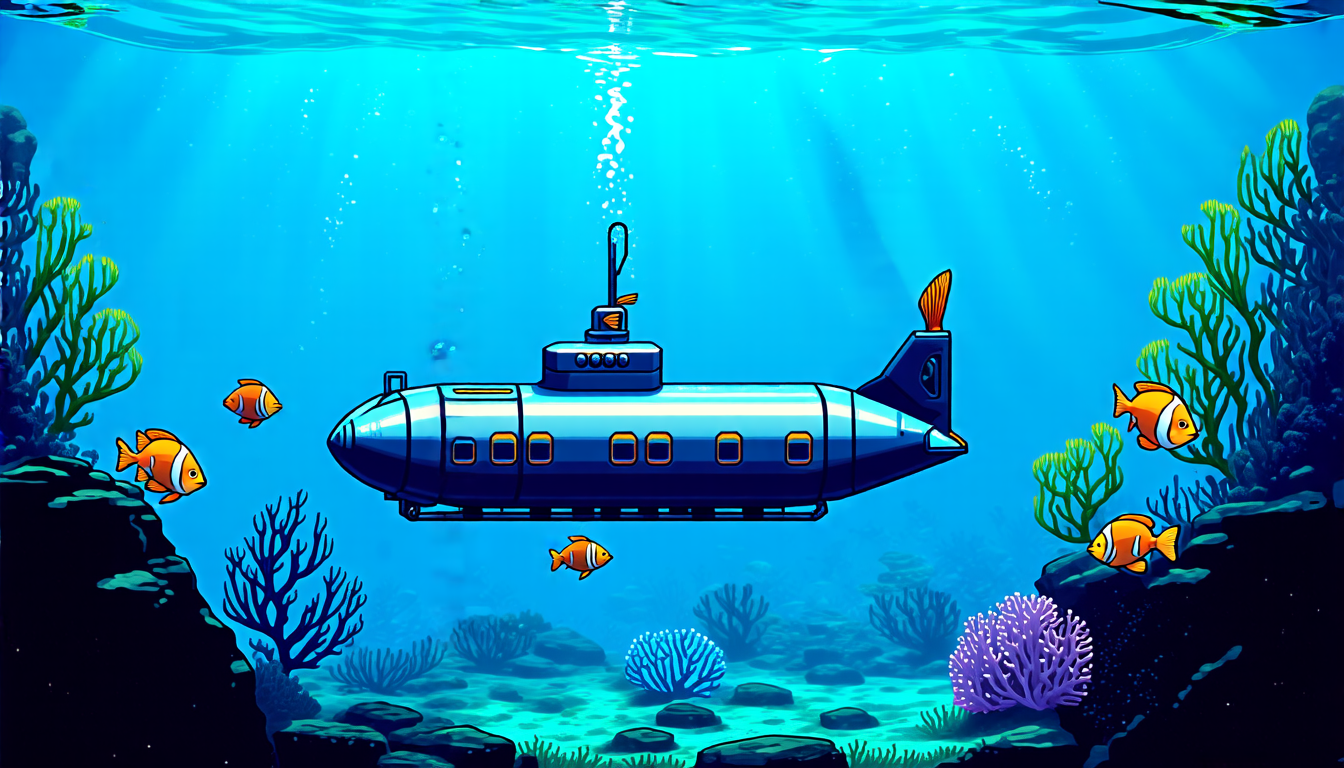
In a simulation study, the researchers applied their novel strategy to a scenario involving autonomous underwater vehicles (AUVs). The AUVs were tasked with detecting and identifying objects of interest while surveying an area. The results showed that the PSO-enhanced MARL algorithm significantly outperformed traditional MARL methods, achieving better performance in fewer episodes.
The implications of this research are significant. Autonomous systems, such as self-driving cars or drones, could potentially learn faster and more effectively with this approach. This could lead to improved decision-making and enhanced overall performance.
Furthermore, the incorporation of biologically inspired heuristics into reinforcement learning algorithms could have broader applications in fields such as robotics, artificial intelligence, and machine learning. By leveraging insights from nature, researchers may be able to develop more efficient and effective solutions for complex problems.
The next step will be to test this approach in real-world scenarios, where the challenges are often far greater than those encountered in simulations. Nevertheless, the potential benefits of PSO-enhanced MARL make it an exciting area of research that is likely to continue to evolve and improve over time.
Cite this article: “Nature-Inspired Reinforcement Learning Accelerates Autonomous System Development”, The Science Archive, 2025.
Reinforcement Learning, Multi-Agent Reinforcement Learning, Particle Swarm Optimization, Autonomous Systems, Self-Driving Cars, Drones, Robotics, Artificial Intelligence, Machine Learning, Biologically Inspired Heuristics





