

Saturday 22 March 2025
The quest for clarity in a sea of complexity has led researchers to develop an innovative approach to visualizing legal documents. By harnessing the power of artificial intelligence and graph theory, they’ve created a system that can distill intricate court decisions into easily understandable diagrams.
The challenge lies in deciphering the labyrinthine language of law, where dense paragraphs of text often conceal key points and relationships between entities. To address this issue, researchers have designed an algorithm that extracts relevant information from legal texts and represents it as a visual graph. This graph can be used to identify the main players involved, their roles, and the connections between them.
The system, called LegalViz, uses a combination of natural language processing (NLP) and graph theory to analyze legal documents and create an intuitive representation of their content. The algorithm is trained on a dataset of 7,010 legal cases from the European Union’s EUR-LEX database, ensuring it can handle complex and nuanced legal concepts.
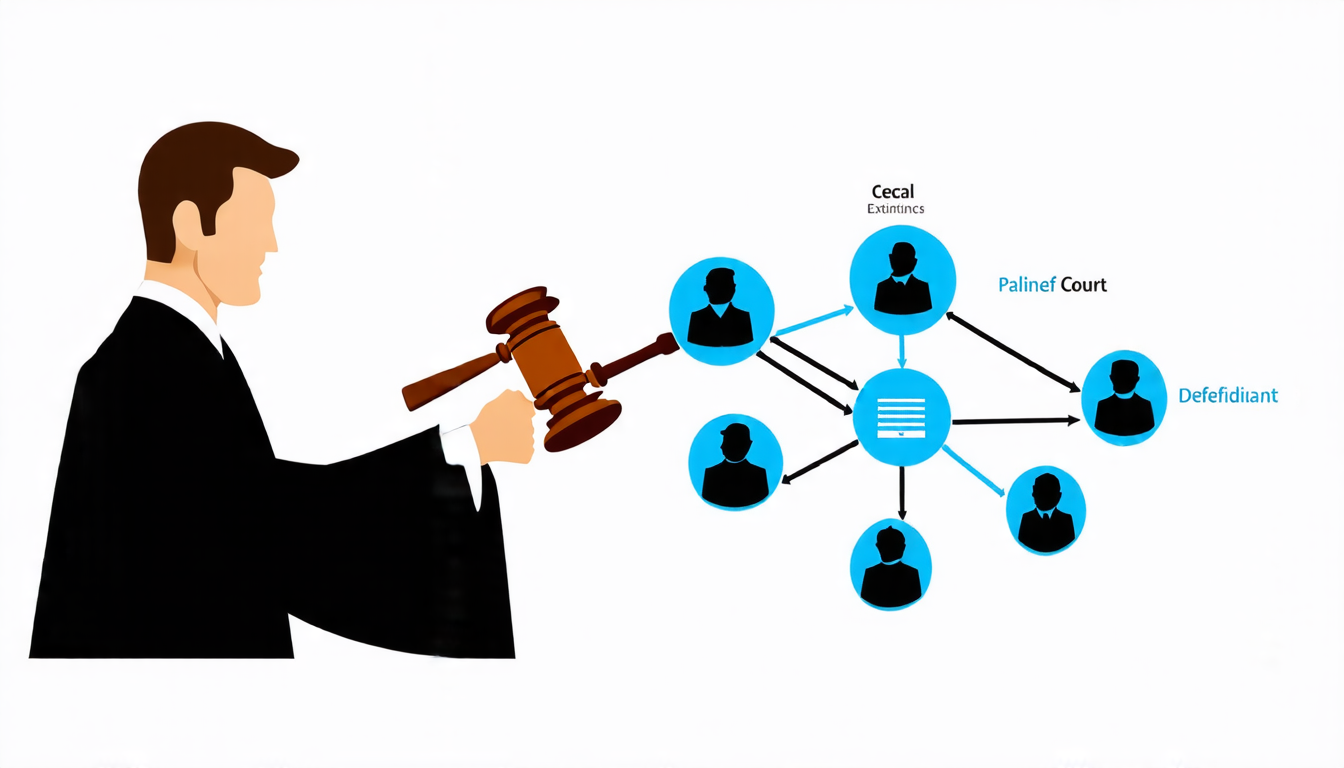
LegalViz’s output takes the form of a DOT graph, a visual language used in Graphviz to represent relationships between entities. In this context, nodes represent legal entities such as individuals, organizations, or institutions, while edges denote relationships like claims, contracts, or court decisions. The resulting diagram provides an at-a-glance overview of the case’s key players and their connections.
To test LegalViz’s capabilities, researchers compared its output with manually annotated diagrams created by experts. The results showed that the algorithm outperformed existing models in generating accurate and coherent visualizations. Furthermore, fine-tuning the model using expert-annotated data led to significant improvements in its ability to capture the nuances of legal relationships.
The implications of LegalViz are far-reaching. By providing a clear and concise way to visualize complex legal information, it has the potential to revolutionize the way lawyers, judges, and policymakers approach legal cases. This could lead to more efficient and effective decision-making processes, as well as improved access to justice for individuals who may struggle with complex legal concepts.
Moreover, LegalViz’s reliance on graph theory and NLP opens up avenues for further research into other areas of law and policy analysis. The algorithm’s ability to extract relevant information from large datasets could be applied to a wide range of fields, from environmental regulations to financial transactions.
As the world grapples with increasingly complex legal landscapes, LegalViz offers a beacon of hope for clarity and understanding.
Cite this article: “Visualizing Justice: A New Approach to Legal Decision-Making”, The Science Archive, 2025.
Artificial Intelligence, Graph Theory, Natural Language Processing, Legal Documents, Court Decisions, Visualizations, Dot Graph, Graphviz, Eur-Lex Database, Legal Relationships





