

Saturday 22 March 2025
The behavior of particles in a magnetic field has long been a subject of interest and study in the scientific community. Recently, researchers have made significant progress in understanding the dynamics of these systems, shedding light on the intricate dance between magnetism and gravity.
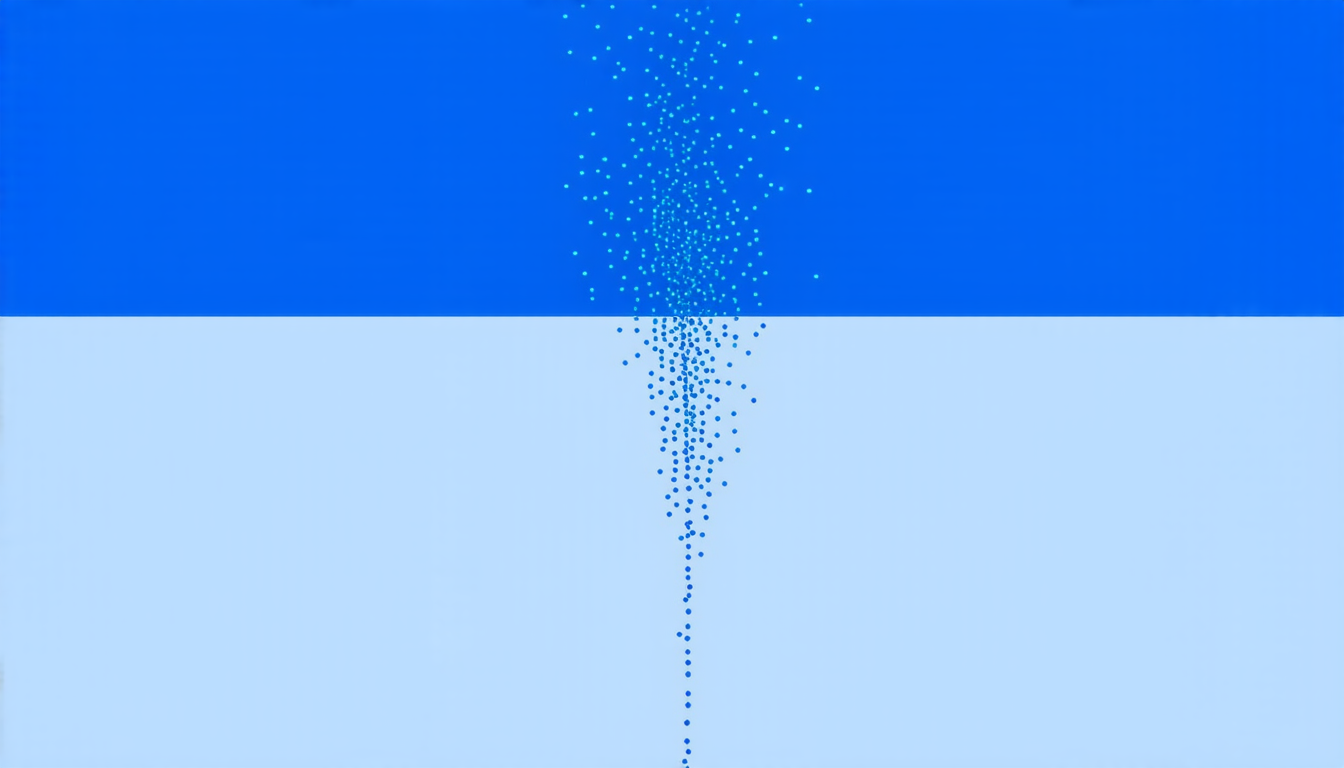
A new experiment has provided insight into the self-similar spreading of dense suspensions of particles under repulsive power-law potentials. The team used an innovative approach to create a system where particles were suspended in a capillary tube and subjected to a magnetic field. By carefully controlling the strength and duration of the field, they were able to observe the particles’ behavior over time.
The researchers found that the particles spread out in a self-similar manner, with their density decreasing as the distance from the center increased. This pattern was observed across different dimensions, from one to two, and was consistent with theoretical predictions. The team also discovered that the spreading rate was independent of the spatial dimension, indicating that the process is universal.
One of the most striking aspects of this research is the way it highlights the interplay between magnetism and gravity. By carefully manipulating the magnetic field, the researchers were able to create a system where the particles’ motion was influenced by both their magnetic properties and their gravitational attraction to each other. This led to some fascinating observations, such as the formation of particle columns and the break-up of aggregates.
The experiment also revealed some unexpected behaviors, such as the drift of the suspension over time due to slight variations in the magnetic field. This phenomenon was particularly pronounced in the two-dimensional system, where the particles’ motion was influenced by both their magnetic properties and their gravitational attraction to each other.
The researchers used a variety of techniques to analyze the data from the experiment, including calculations of the particles’ center of mass and the distribution of their distances from the center. They also measured the particles’ mean squared displacement (MSD) over time, which provided valuable insight into their motion.
One of the most significant implications of this research is its potential applications in fields such as materials science and biomedicine. By better understanding the behavior of particles under repulsive power-law potentials, researchers may be able to develop new materials with unique properties or design more efficient systems for manipulating particle motion.
Overall, this experiment has provided a fascinating glimpse into the complex dynamics of particle systems under magnetic influence. The results have significant implications for our understanding of these systems and their potential applications in various fields.
Cite this article: “Unveiling the Interplay between Magnetism and Gravity in Particle Dynamics”, The Science Archive, 2025.
Magnetism, Particles, Suspension, Gravity, Repulsive Power-Law Potentials, Self-Similar Spreading, Density, Universal Behavior, Particle Motion, Materials Science, Biomedicine





