
Saturday 22 March 2025
In a world where disaster response networks are becoming increasingly important, researchers have been exploring innovative ways to enhance communication services in areas affected by natural disasters. A recent study has shed light on the effectiveness of using unmanned aerial vehicles (UAVs) as flying base stations to support device-to-device (D2D) communication.
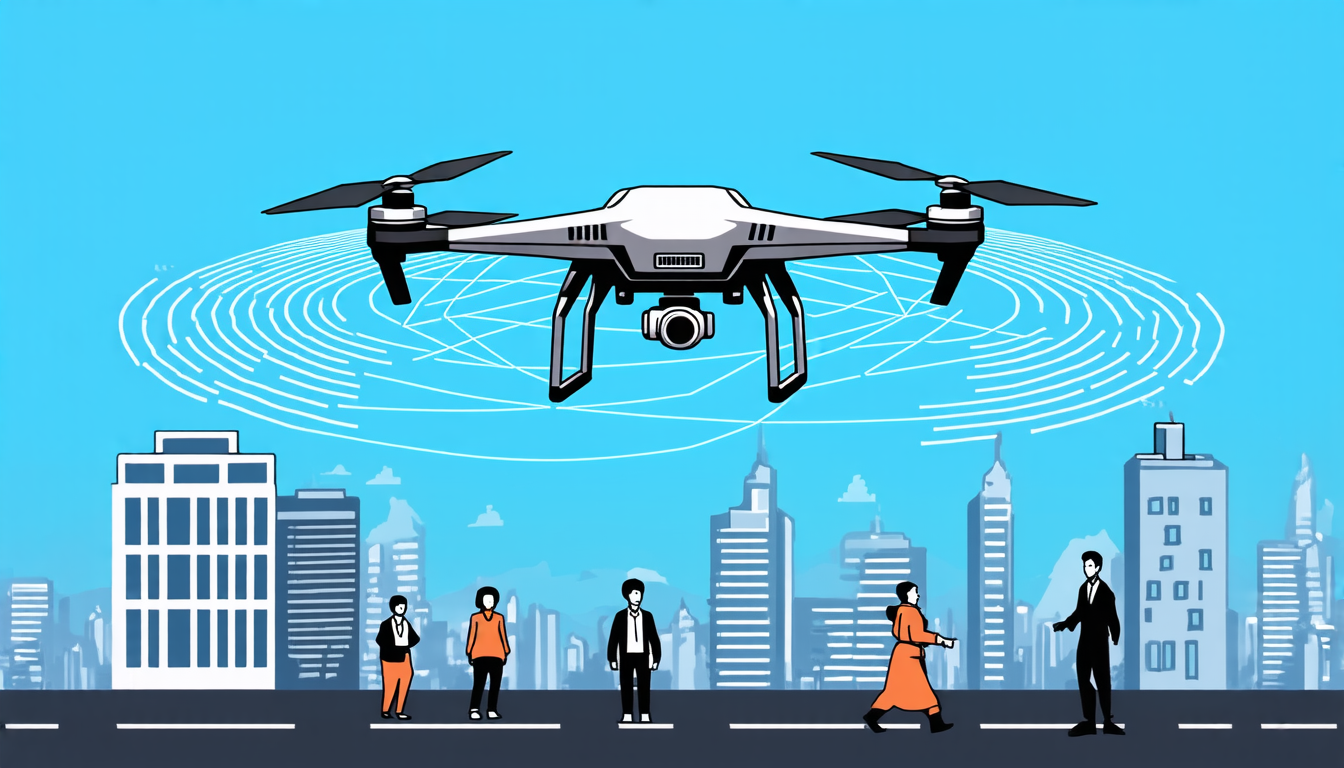
The paper proposes two scenarios for providing communication services to a D2D relay network, where uplink cellular users and D2D users coexist and share frequency bands. In both scenarios, a UAV acts as a flying base station, facilitating communication between devices. The first scenario focuses on direct D2D communication without energy harvesting capabilities, while the second scenario incorporates energy harvesting technology to enable D2D users to harvest energy from uplink cellular users.
The study reveals that increasing the density of uplink users leads to reduced energy efficiency (EE) due to increased energy consumption. Conversely, the behavior of D2D user density is different, with changes in harvested power and interferences caused by D2D users and uplink users affecting EE. The simulation results demonstrate that halving the energy harvesting time for uplink users in the second scenario can double the EE of the entire network.
The researchers also analyzed the impact of user densities on the rate of uplink communication and D2D communication. They found that increasing D2D user density leads to a downward trend in the uplink communication rate, while the D2D communication rate also exhibits a similar decline. This disparity is primarily due to interference caused by D2D users on cellular users in both scenarios.
The findings of this study have significant implications for disaster response networks and beyond. By leveraging UAVs as flying base stations, communication services can be enhanced in areas where traditional infrastructure may be damaged or non-existent. The energy harvesting technology used in the second scenario has the potential to improve EE and extend the lifespan of devices in these critical situations.
The research also highlights the importance of optimizing network performance by adjusting user densities and energy harvesting times. By finding the optimal balance between these factors, network operators can enhance communication services and improve disaster response efforts.
This study demonstrates the effectiveness of UAV-aided D2D communication in enhancing communication services in areas affected by natural disasters. As researchers continue to explore innovative solutions for disaster response networks, this work serves as a valuable contribution to the field, showcasing the potential of UAVs and energy harvesting technology to improve communication services in critical situations.
Cite this article: “UAV-Aided D2D Communication Enhances Disaster Response Networks”, The Science Archive, 2025.
Uavs, D2D, Communication Services, Disaster Response Networks, Energy Harvesting, Flying Base Stations, Natural Disasters, Unmanned Aerial Vehicles, Device-To-Device Communication, Network Optimization