

Monday 24 March 2025
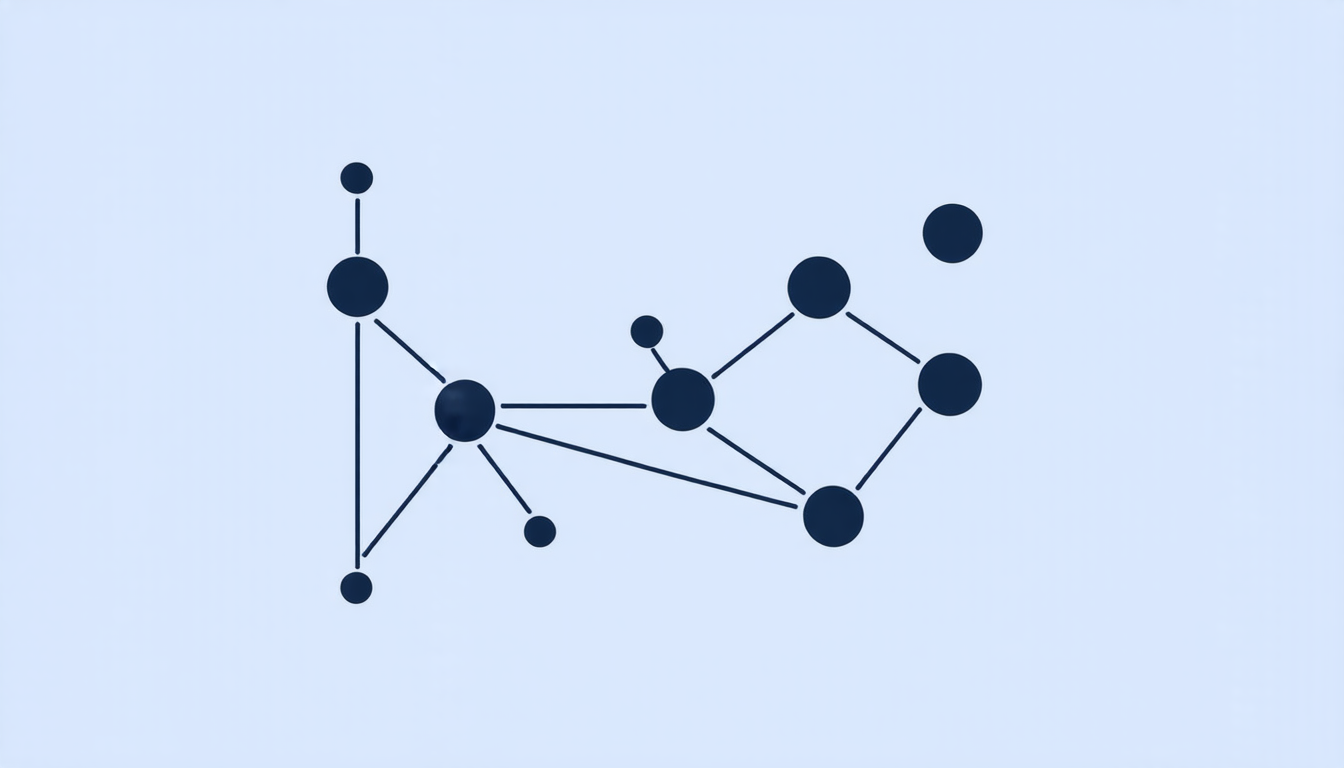
A recent study has shed new light on how large language models, like those used in chatbots and virtual assistants, are able to predict shortest paths in simple graphs. Graphs are mathematical structures used to represent relationships between objects, and understanding how models navigate them is crucial for developing more sophisticated artificial intelligence.
Researchers have been studying the internal workings of these language models, known as transformers, to better understand their capabilities. One key aspect is their ability to learn graph embeddings, which are representations of nodes and edges in a graph. By analyzing these embeddings, scientists can gain insights into how the model is processing and understanding the graph structure.
The study focused on a specific type of graph called a line graph, where each node represents an edge in the original graph, and two nodes are connected if the corresponding edges share a common endpoint. This allows researchers to examine the relationships between edges in the original graph by looking at the connections between nodes in the line graph.
To predict shortest paths, the model uses a novel algorithm called Spectral Line Navigation (SLN). SLN works by representing each edge as a vector in a high-dimensional space, where the position of the vector corresponds to its importance in the graph. The model then selects edges based on their proximity to other important edges, effectively following a path through the graph.
The researchers found that the model is able to learn to predict shortest paths with remarkable accuracy, even when dealing with complex graphs containing up to 10 nodes. They also discovered that the model’s performance improves as its hidden dimension increases, which suggests that larger models are better equipped to handle more complex graph structures.
Furthermore, the study demonstrated that SLN can be used to identify the minimum number of edges required for a model to learn a specific task. This has important implications for developing more efficient and effective artificial intelligence systems.
The findings have significant potential applications in areas such as network analysis, data visualization, and even social network analysis. By better understanding how language models navigate graphs, scientists can develop more sophisticated AI tools that are capable of processing complex relationships between objects.
This research highlights the importance of continued study into the internal workings of artificial intelligence systems, allowing us to unlock new capabilities and push the boundaries of what is possible with machine learning.
Cite this article: “Unlocking Graph Navigation: A Novel Algorithm for Predicting Shortest Paths in Complex Graphs”, The Science Archive, 2025.
Artificial Intelligence, Language Models, Graph Theory, Shortest Paths, Transformers, Graph Embeddings, Line Graphs, Spectral Line Navigation, Machine Learning, Network Analysis





