
Tuesday 25 March 2025
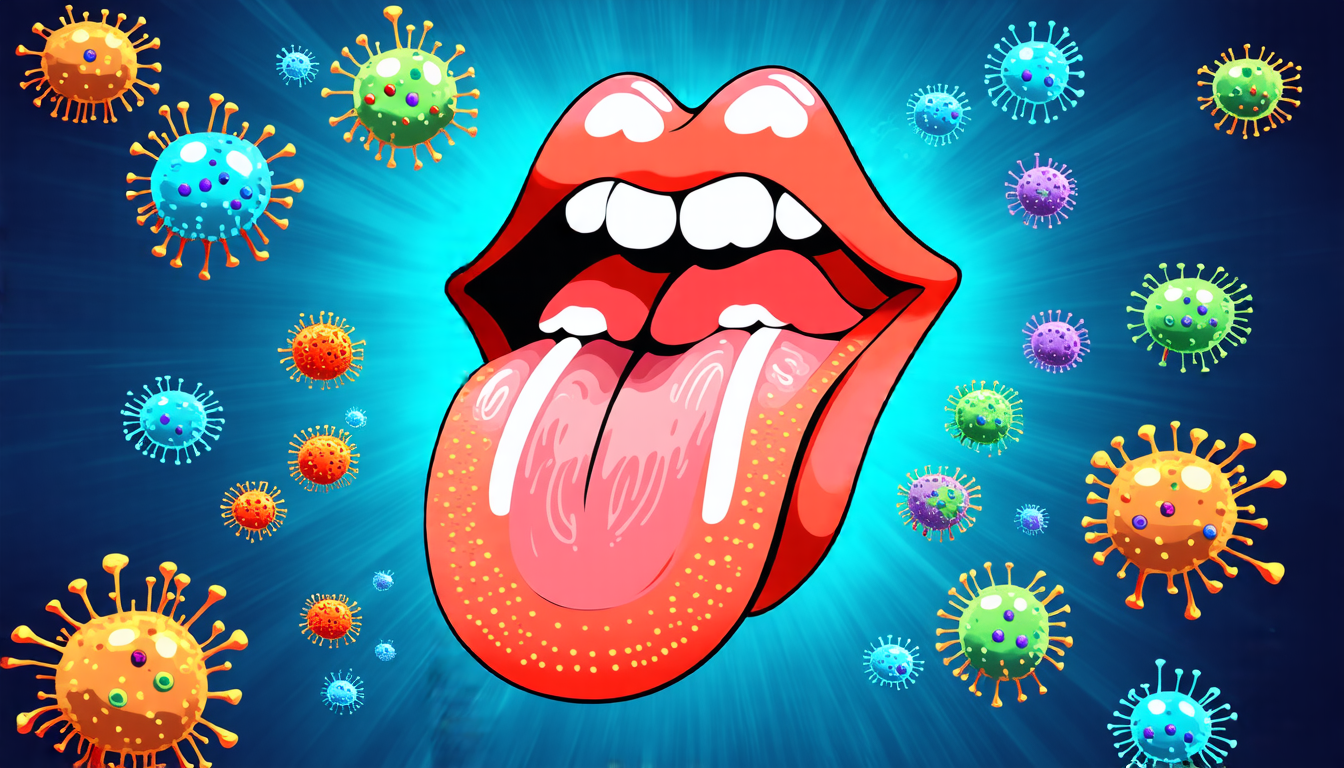
The human tongue is a hotbed of microbial activity, home to thousands of different species that play a crucial role in our overall health and well-being. But despite their importance, understanding how these microorganisms interact with each other and their environment has proven to be a challenge.
Researchers have long struggled to make sense of the complex patterns and relationships between different microbes on the tongue, often relying on indirect methods like DNA sequencing or culturing. However, these approaches have limitations – they can’t capture the dynamic interactions between microorganisms in real-time, and may not accurately reflect their actual behavior.
A new study published this week in a scientific journal has made significant progress towards addressing this issue by developing a novel statistical framework for analyzing spatial data from tongue microbiome samples.
The researchers used a technique called Bayesian multivariate point pattern analysis to examine the distribution of different microorganisms on the surface of the tongue. This approach allowed them to identify complex patterns and relationships between microbes that would have been difficult or impossible to detect using traditional methods.
One of the key findings was that certain pairs of bacteria – such as Streptococcus mitis and Veillonella – were more likely to be found together than chance would predict, suggesting a level of cooperation or symbiosis. Other pairs, like Actinomyces and Rothia, showed a negative correlation, indicating competition for resources.
The study also revealed that many microorganisms on the tongue are part of complex networks, with different species interacting with each other in intricate ways. This has important implications for our understanding of how these microbes contribute to oral health and disease.
The new framework has significant potential applications beyond tongue microbiome research. It could be used to analyze the spatial distribution of microorganisms in a wide range of environments, from soil to the human gut.
The researchers hope that their work will pave the way for more accurate and nuanced understanding of microbial communities, ultimately leading to better diagnostic tools and therapies for diseases linked to these microorganisms.
In the future, this statistical approach could be used to study the relationship between microbes in other parts of the body, such as the skin or lungs. The possibilities are endless, and the potential impact on our understanding of human health is significant.
Cite this article: “Deciphering the Complex Interactions of Microbes on the Human Tongue”, The Science Archive, 2025.
Tongue Microbiome, Microbial Activity, Statistical Framework, Bayesian Analysis, Point Pattern Analysis, Spatial Data, Microorganisms, Symbiosis, Competition, Oral Health