

Wednesday 26 March 2025
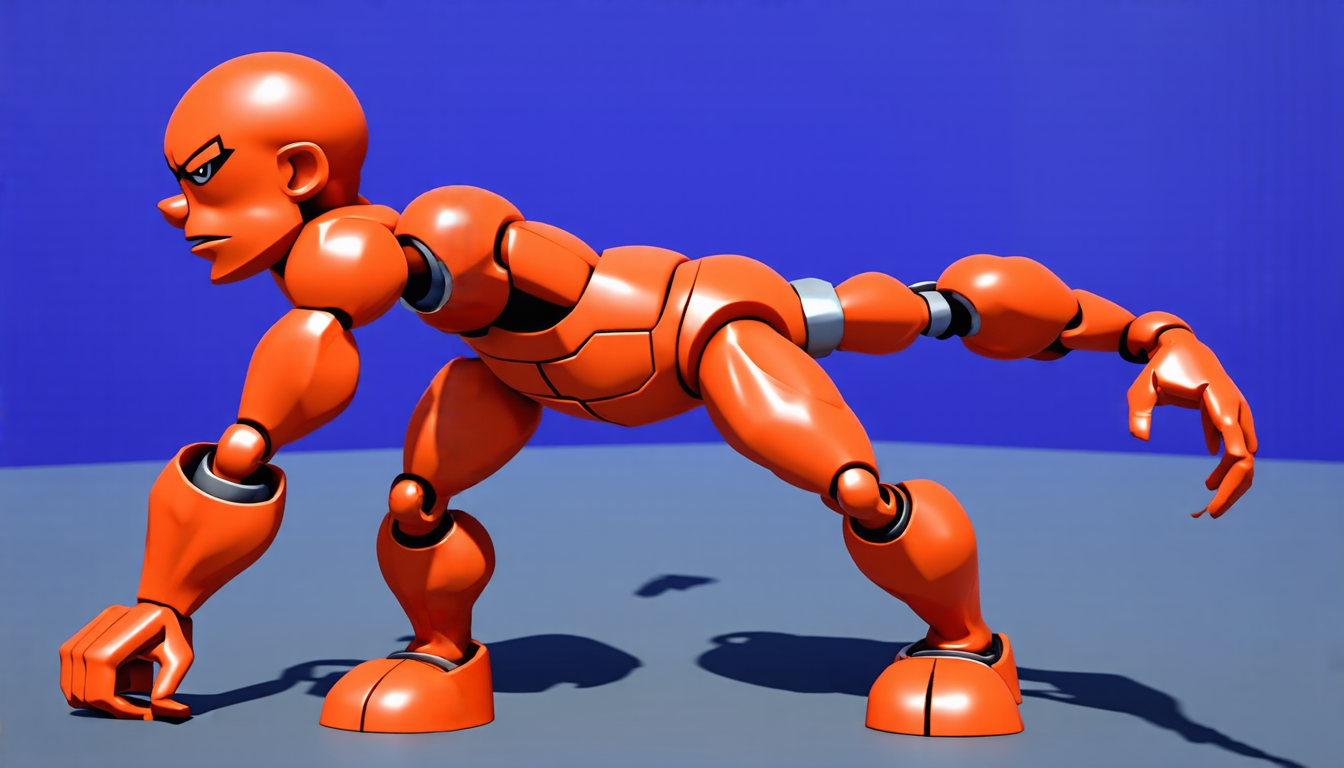
The quest for realistic computer-generated characters has been a long-standing challenge in the field of computer graphics. For decades, animators and researchers have worked tirelessly to develop techniques that can convincingly render human-like movements and expressions on screen. Now, a team of scientists has made significant progress towards achieving this goal, introducing MagicArticulate, a novel framework that transforms static 3D models into articulation-ready assets.
The problem lies in the complexity of human movement. Unlike simple animations, which involve repetitive motions, human characters require intricate combinations of joint movements and muscle contractions to achieve natural-looking poses and actions. This complexity is further exacerbated by the vast range of possible body types, ages, and ethnicities that need to be accounted for.
MagicArticulate tackles this challenge through a multi-faceted approach. First, it introduces Articulation-XL, a large-scale benchmark containing over 33,000 3D models with high-quality articulation annotations. This dataset serves as the foundation for training machine learning algorithms, which can then be applied to generate skeletons and predict skinning weights.
The framework’s core innovation lies in its skeleton generation method, which formulates the task as a sequence modeling problem. By leveraging an auto-regressive transformer, MagicArticulate can naturally handle varying numbers of bones or joints within skeletons and their inherent dependencies across different 3D models. This allows for more accurate predictions of joint movements and muscle contractions.
In addition to skeleton generation, MagicArticulate also employs a novel method for predicting skinning weights using functional diffusion processes. These processes incorporate volumetric geodesic distance priors between vertices and joints, ensuring that the resulting animations are both physically plausible and aesthetically pleasing.
To test the effectiveness of MagicArticulate, researchers conducted extensive experiments across various object categories, including humans, animals, and furniture. The results were striking, with MagicArticulate consistently outperforming existing methods in generating high-quality articulations.
The implications of this breakthrough are far-reaching. With MagicArticulate, animators and game developers can now create more realistic characters with greater ease and accuracy. This could lead to the creation of more immersive virtual worlds, where characters move and behave in ways that feel eerily lifelike.
Furthermore, MagicArticulate has the potential to revolutionize fields such as medicine, education, and entertainment.
Cite this article: “MagicArticulate: A Breakthrough in Realistic Computer-Generated Characters”, The Science Archive, 2025.
Computer Graphics, Artificial Intelligence, Machine Learning, Animation, 3D Modeling, Human Movement, Skeleton Generation, Skinning Weights, Virtual Worlds, Character Creation





