

Wednesday 26 March 2025
Deep learning models have revolutionized many fields, from image recognition to natural language processing. But when it comes to medical imaging, these models can be notoriously opaque – leaving clinicians and patients alike wondering how they arrive at their diagnoses.
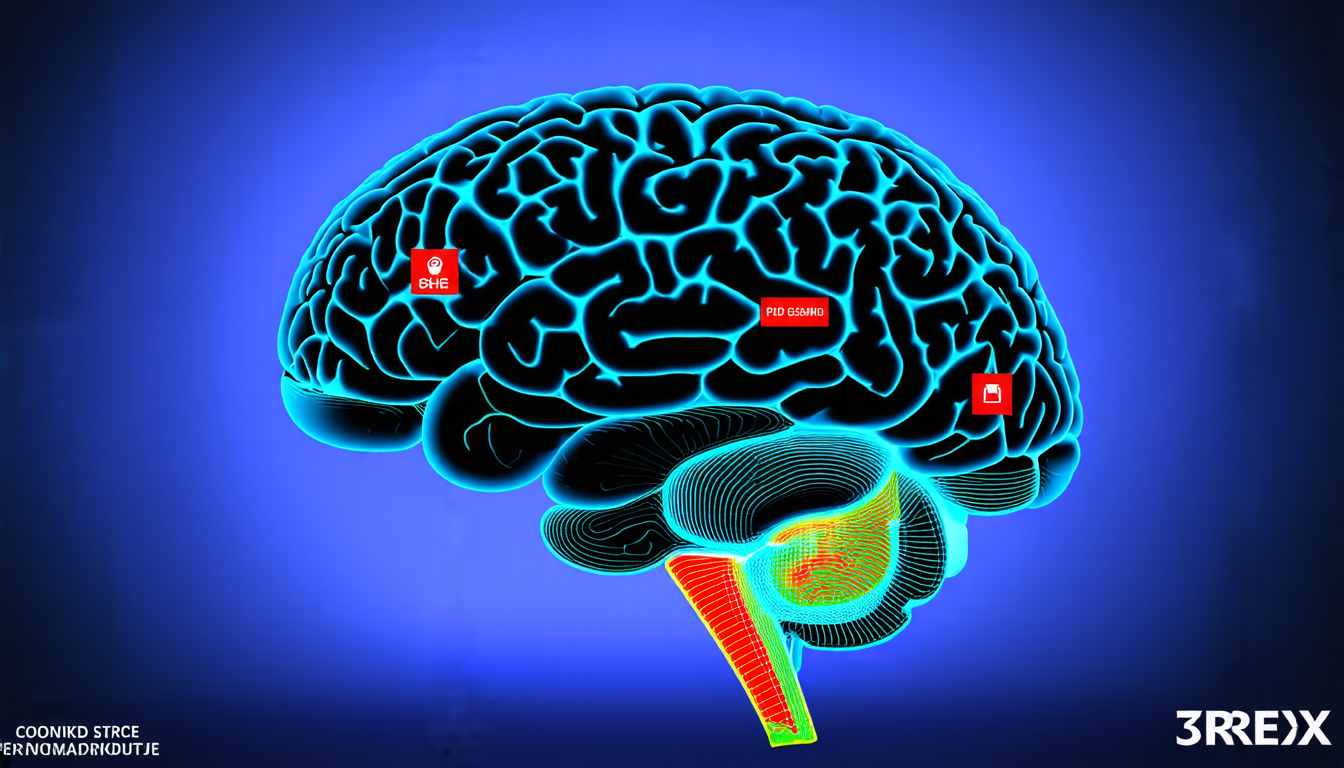
A new approach aims to change that by providing a transparent explanation of why a deep learning model has classified an MRI scan as showing signs of stroke. The technique, called 3D-REX, uses the theory of actual causality to generate responsibility maps that highlight the regions most crucial to the model’s decision-making process.
In medical imaging, being able to explain how a diagnosis was reached is crucial for building trust between clinicians and patients. Currently, many deep learning models are black boxes – their decisions are difficult or impossible to understand. This can lead to mistrust and skepticism about the accuracy of the diagnosis.
3D-REX addresses this problem by applying causal responsibility to medical imaging data. The technique starts by masking specific regions of the MRI scan and assessing how the model’s prediction changes in response. By analyzing these changes, 3D-REX builds a map that shows which regions are most responsible for the model’s classification.
The approach has been tested on a dataset of over 1,200 MRI scans, with promising results. The responsibility maps generated by 3D-REX provide valuable insight into how the model is making its decisions, allowing clinicians to understand why certain features are being highlighted as important.
One key advantage of 3D-REX is that it can be applied to a wide range of medical imaging modalities, from MRI and CT scans to X-rays. This means that the technique has the potential to be used in a variety of clinical settings, from stroke diagnosis to cancer detection.
The development of 3D-REX is an important step towards making deep learning models more transparent and trustworthy in medical imaging. By providing clinicians with a clear explanation of how their diagnoses are being made, 3D-REX has the potential to improve patient outcomes and reduce uncertainty around medical decisions.
In addition to its clinical applications, 3D-REX also has implications for our understanding of how the brain works. The technique provides new insights into how different regions of the brain interact and influence each other, which could have important implications for our understanding of neurological disorders such as stroke.
Overall, 3D-REX represents an exciting development in the field of medical imaging, with potential applications that extend far beyond diagnosis and treatment.
Cite this article: “Unlocking the Black Box: A New Approach to Transparent Medical Imaging Diagnosis”, The Science Archive, 2025.
Deep Learning, Medical Imaging, Mri Scans, Stroke Diagnosis, Transparency, Causality, Responsibility Maps, Clinical Applications, Brain Function, Neurological Disorders





