

Wednesday 26 March 2025
Scientists have long sought to understand the mysteries of magnetism, a fundamental force that governs the behavior of electrons and atoms. In a recent breakthrough, researchers have shed new light on the complex interplay between magnetism and orbital order in a class of materials known as transition metal oxides.
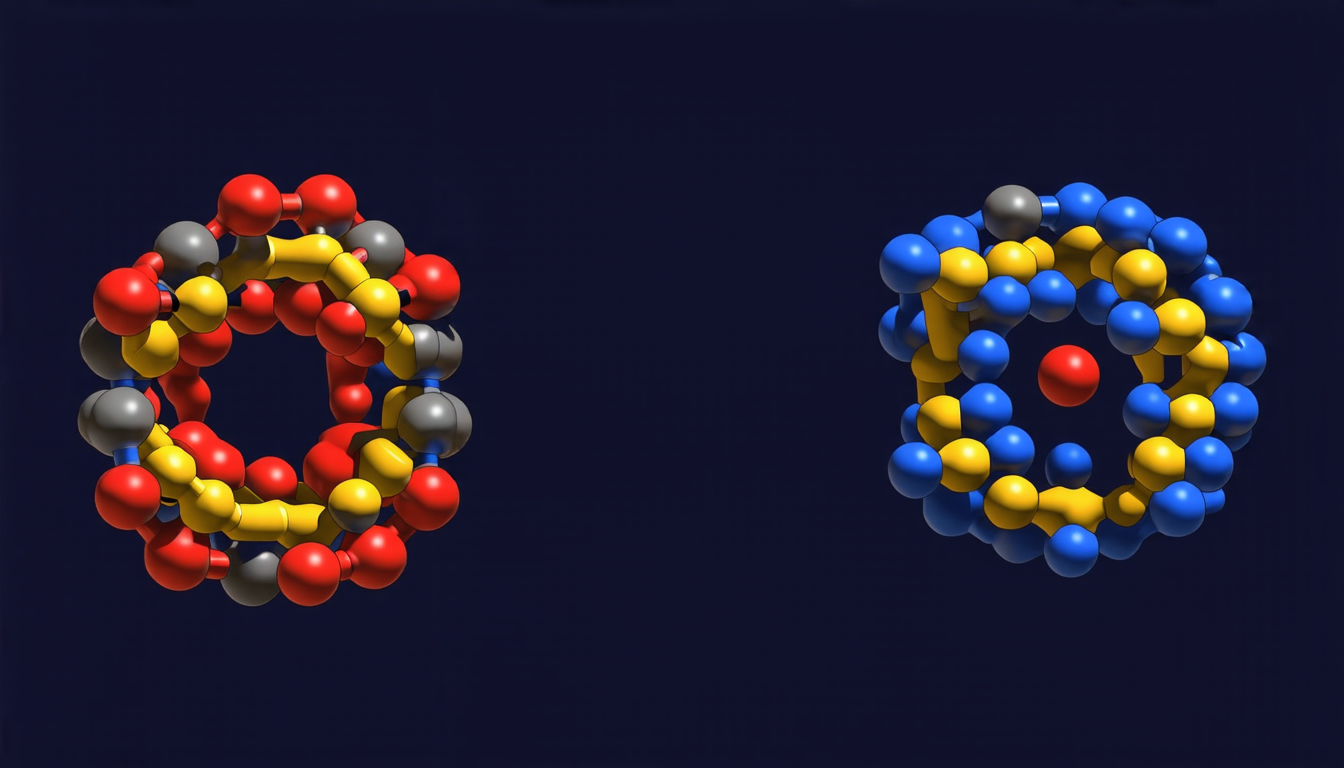
These oxides are made up of Transition Metal (TM) ions, such as titanium or iron, which are arranged in a specific crystal structure. The TMs can exhibit magnetic behavior due to their unpaired electrons, leading to the formation of magnetic domains that interact with each other. However, the orbital order of the TMs also plays a crucial role in determining the material’s overall magnetic properties.
In this study, scientists used neutron scattering and muon spin rotation techniques to investigate the magnetic properties of Y1−xCa xTiO3, a family of transition metal oxides that exhibit complex phase transitions. By analyzing the data, researchers were able to map out the spin- wave dispersions in these materials, which reveal the intricate patterns of magnetic interactions.
The findings suggest that the orbital order of the TMs is closely linked to the magnetism, with changes in the orbital configuration leading to significant alterations in the material’s magnetic behavior. This relationship was previously thought to be relatively simple, but the new data reveals a more complex interplay between spin and orbit.
One key insight from the study is that the introduction of calcium ions into the material can lead to a dramatic increase in magnetism, even at relatively low concentrations. This is because the calcium ions disrupt the orbital order, allowing the TMs to exhibit stronger magnetic interactions.
The implications of this research are far-reaching, as it could lead to the development of new materials with improved magnetic properties. These materials have potential applications in fields such as data storage and spintronics, where high-performance magnets are essential for efficient operation.
The study also highlights the importance of understanding the complex interplay between magnetism and orbital order in transition metal oxides. By exploring this relationship further, scientists may uncover new principles that govern magnetic behavior, leading to breakthroughs in fields such as materials science and condensed matter physics.
In summary, researchers have made significant progress in understanding the intricate dance between spin and orbit in transition metal oxides. The findings could pave the way for the development of new, high-performance magnets with far-reaching applications.
Cite this article: “Unlocking the Secrets of Magnetism: New Insights into Transition Metal Oxides”, The Science Archive, 2025.
Magnetism, Transition Metal Oxides, Orbital Order, Spin-Wave Dispersions, Neutron Scattering, Muon Spin Rotation, Calcium Ions, Magnetic Properties, Data Storage, Spintronics





