

Wednesday 26 March 2025
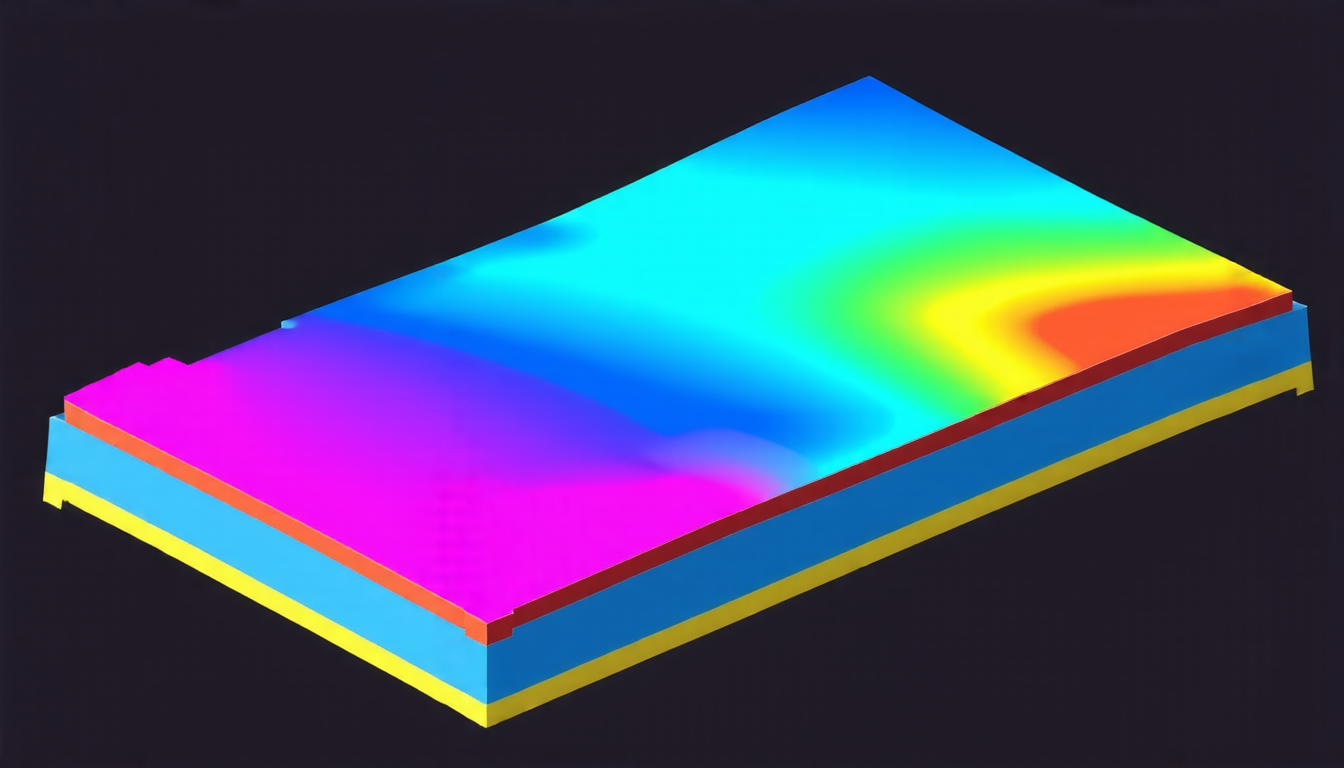
A thin film of CoO, a type of oxide, has been created on top of single crystals or epitaxial films of SrTiO3 using ion beam sputtering. This process allows for the control of the diffusion geometry and microstructure, making it an ideal method for studying chemical diffusion.
The resulting thin film is dense, flat, and compact, with a chemical sharp interface that is critical for achieving simple 1D diffusion profiles. The CoO layer can be post-annealed to achieve a constant source of cobalt diffusion into the SrTiO3 substrate.
To study this process, researchers used three different methods: energy dispersive X-ray spectroscopy (EDX) in a transmission electron microscope (TEM), atom probe tomography (APT), and time-of-flight secondary ion mass spectrometry (ToF-SIMS). Each method provides unique insights into the diffusion process.
EDX-TEM allows for high spatial resolution measurements of concentration profiles, while APT can provide three-dimensional images of the sample. ToF-SIMS, on the other hand, offers high sensitivity and accuracy in measuring depth profiles.
The researchers found that the CoO layer undergoes a phase transformation from normal to disordered spinel during post-annealing, which affects the diffusion process. They also observed the formation of Co3O4, a cobalt oxide with a different crystal structure than CoO.
To understand these findings, the team analyzed the data using a conjugate error function that takes into account the scattering of experimental data. This approach allowed them to determine the diffusion coefficient for cobalt in SrTiO3 with high accuracy.
The results show that the diffusion coefficient is around 3.34 x 10^-18 cm^2/s at a temperature of 1163 K, which is comparable to values reported in previous studies. The study highlights the importance of controlling the microstructure and interface quality for achieving accurate measurements of diffusion coefficients.
This research has implications for the development of new materials with tailored properties, such as thermoelectric devices and catalysts. By understanding the fundamental mechanisms of chemical diffusion, scientists can design more efficient materials that can be used in a wide range of applications.
The creation of a dense and flat CoO layer on SrTiO3 using ion beam sputtering offers a new approach for studying chemical diffusion. The combination of different analytical techniques provides a comprehensive understanding of the process, which will be crucial for the development of novel materials with unique properties.
Cite this article: “Controlled Chemical Diffusion in SrTiO3 via Ion Beam Sputtering”, The Science Archive, 2025.
Coo, Srtio3, Ion Beam Sputtering, Chemical Diffusion, Thin Films, Epitaxial Films, Energy Dispersive X-Ray Spectroscopy, Transmission Electron Microscope, Atom Probe Tomography, Time-Of-Flight Secondary Ion Mass





