

Wednesday 26 March 2025
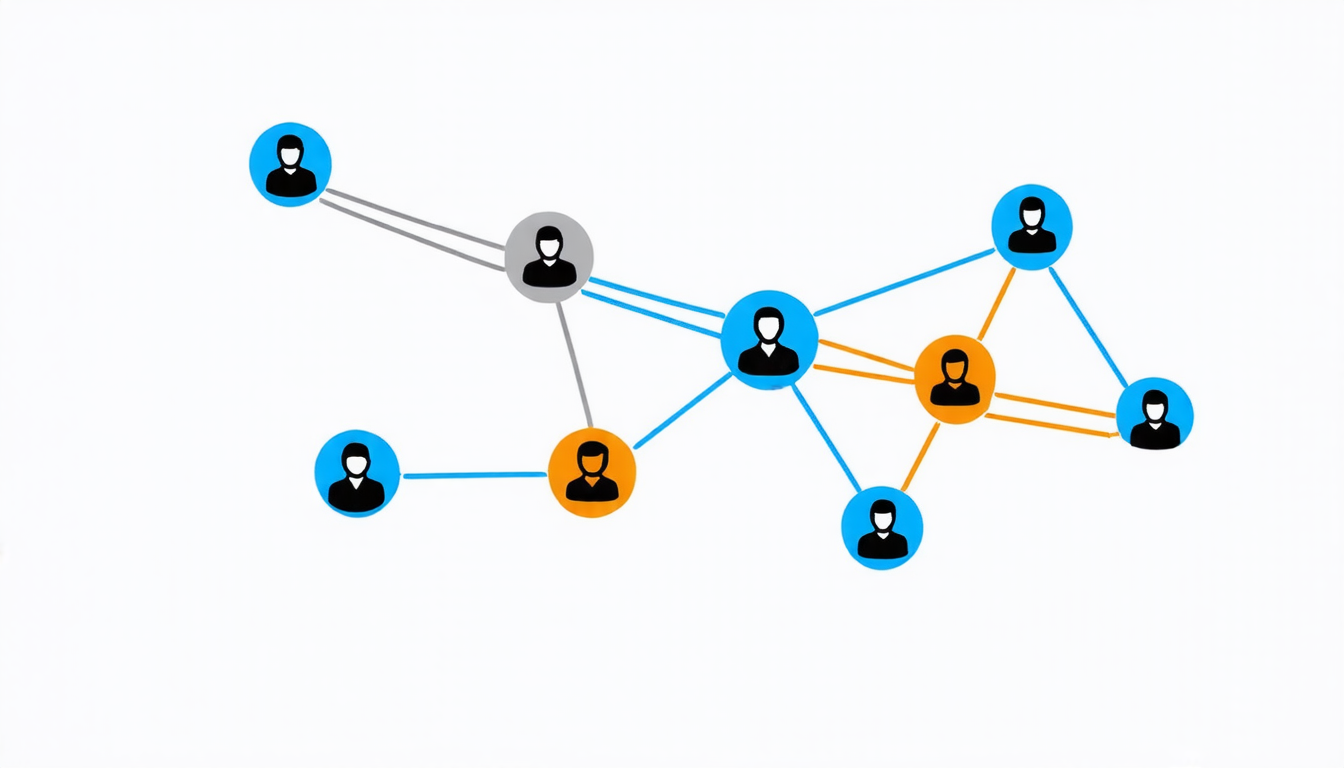
Networks are all around us, from the way our friends connect on social media to the complex relationships between species in an ecosystem. But despite their ubiquity, understanding how these networks function remains a major challenge for scientists.
One of the biggest hurdles is identifying the different roles that individual nodes play within a network. For example, in a social network, some people may be highly connected and influential, while others may be peripheral and less engaged. Being able to identify these roles could have significant implications for fields such as marketing, epidemiology, and sociology.
Researchers have traditionally relied on clustering algorithms to group nodes into communities based on their connections. However, this approach has its limitations. Clusters can be noisy and ambiguous, and may not accurately reflect the underlying structure of the network.
A new study published in a scientific journal offers a fresh perspective on role extraction. The authors propose a novel similarity measure that takes into account the patterns of connections between nodes, rather than just their individual properties. This approach allows for a more nuanced understanding of how nodes interact with each other and plays a role in shaping the network’s behavior.
The study uses a mathematical framework to define a new similarity matrix, which can be used to identify roles within a network. The authors demonstrate the effectiveness of this approach using synthetic data as well as real-world networks, including a faculty hiring network from North America.
One of the key advantages of this approach is its ability to handle weighted networks, where nodes have different levels of influence or importance. This is particularly important in many real-world applications, such as social media or financial networks, where the strength of connections can be highly variable.
The study also highlights the potential for this approach to be used in a wide range of fields, from biology and ecology to sociology and marketing. By understanding how nodes play different roles within a network, researchers may be able to identify key individuals or groups that are critical to the network’s function.
While there is still much work to be done in refining this approach, the study offers a promising new direction for researchers seeking to understand complex networks. As our world becomes increasingly interconnected, developing better tools for analyzing and understanding these networks will be essential for making sense of the complex systems that underlie many aspects of modern life.
Cite this article: “Uncovering Hidden Roles in Complex Networks”, The Science Archive, 2025.
Networks, Roles, Nodes, Connections, Similarity Measure, Clustering Algorithms, Mathematical Framework, Weighted Networks, Importance, Influence
Reference: Dario Fasino, “Role extraction by matrix equations and generalized random walks” (2025).





