

Wednesday 26 March 2025
The quest for understanding causality has been a longstanding challenge in various fields, from medicine to engineering. Causality is the relationship between an event and its effects, but identifying these connections can be difficult, especially when dealing with complex systems. Recently, researchers have made significant progress in developing a simulator that can help us better grasp causality.
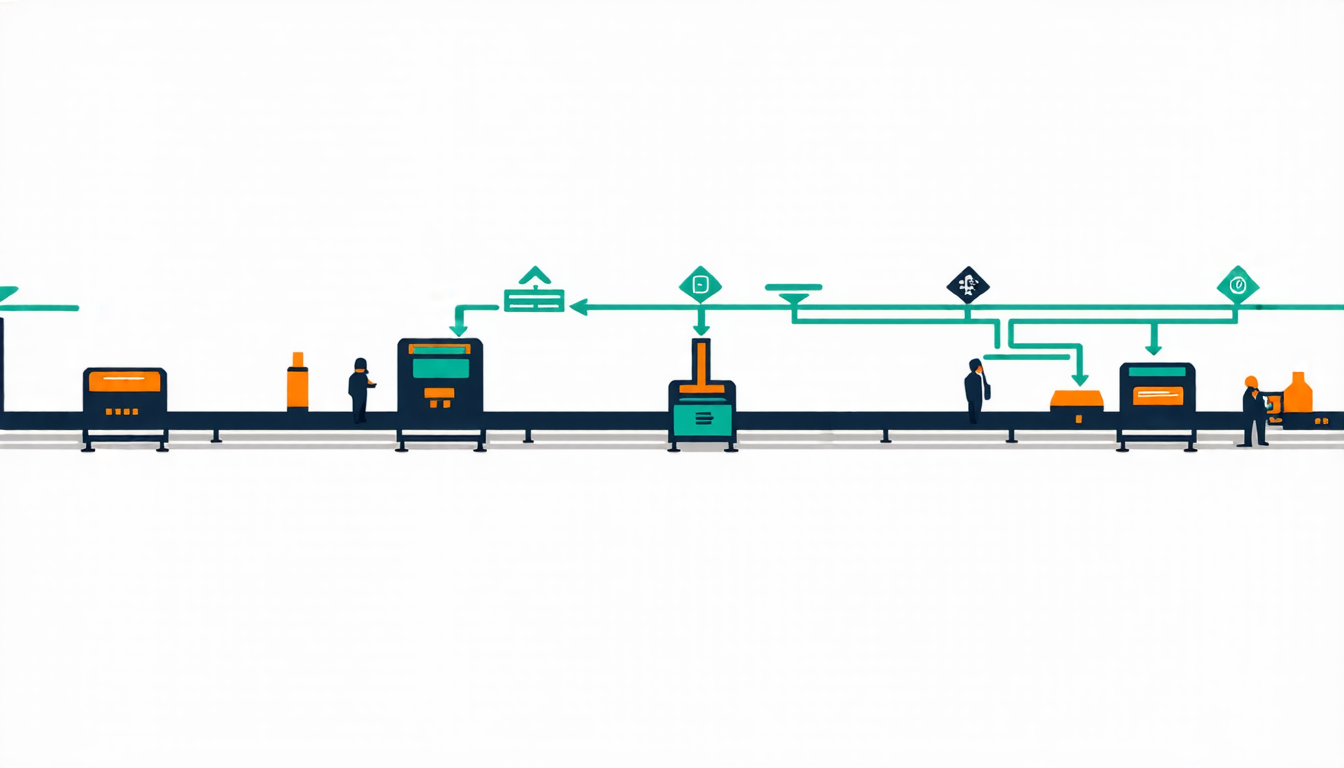
The simulator, called CausalMan, is designed to mimic real-world production lines, where variables are connected in intricate ways. By using this tool, scientists can test and evaluate various causal models, which are algorithms that aim to identify these connections. The goal is to develop more accurate and efficient methods for understanding how events unfold.
CausalMan allows researchers to create diverse scenarios, with linear and non-linear mechanisms, as well as challenging-to-predict behaviors. This versatility enables the simulator to be applied to various domains, such as medicine, finance, or social sciences.
To evaluate the effectiveness of CausalMan, researchers tested several causal models on two different datasets. The results showed that many state-of-the-art approaches struggled to accurately identify causality, particularly in scenarios with hidden confounders and non-trivial mechanisms. However, some models, such as Neural Causal Models (NCMs) and Causal Normalizing Flows (CNFs), demonstrated promising performance.
One of the key challenges in understanding causality is dealing with hybrid data types, which combine continuous and discrete variables. NCMs, for example, can adapt to these complexities by using a combination of MADE and conditional normalizing flows. This flexibility allows them to accurately estimate conditional distributions and identify causal relationships.
The CausalMan simulator also enables researchers to explore the impact of dataset size on model performance. Surprisingly, increasing the amount of data did not always lead to better results, as some models became less accurate due to overfitting. This finding highlights the importance of carefully selecting and preparing datasets for causal inference tasks.
In addition to evaluating individual models, CausalMan allows researchers to compare the performance of different approaches on a single dataset. This feature can help identify strengths and weaknesses of each method and inform the development of new algorithms.
The potential applications of CausalMan are vast. By providing a reliable platform for testing and evaluating causal models, this simulator can accelerate progress in various fields, from medicine to finance.
Cite this article: “Simulating Causality: A New Tool for Understanding Complex Relationships”, The Science Archive, 2025.
Causality, Simulator, Causalman, Production Lines, Algorithms, Causal Models, Neural Networks, Normalizing Flows, Dataset Size, Overfitting





