

Wednesday 26 March 2025
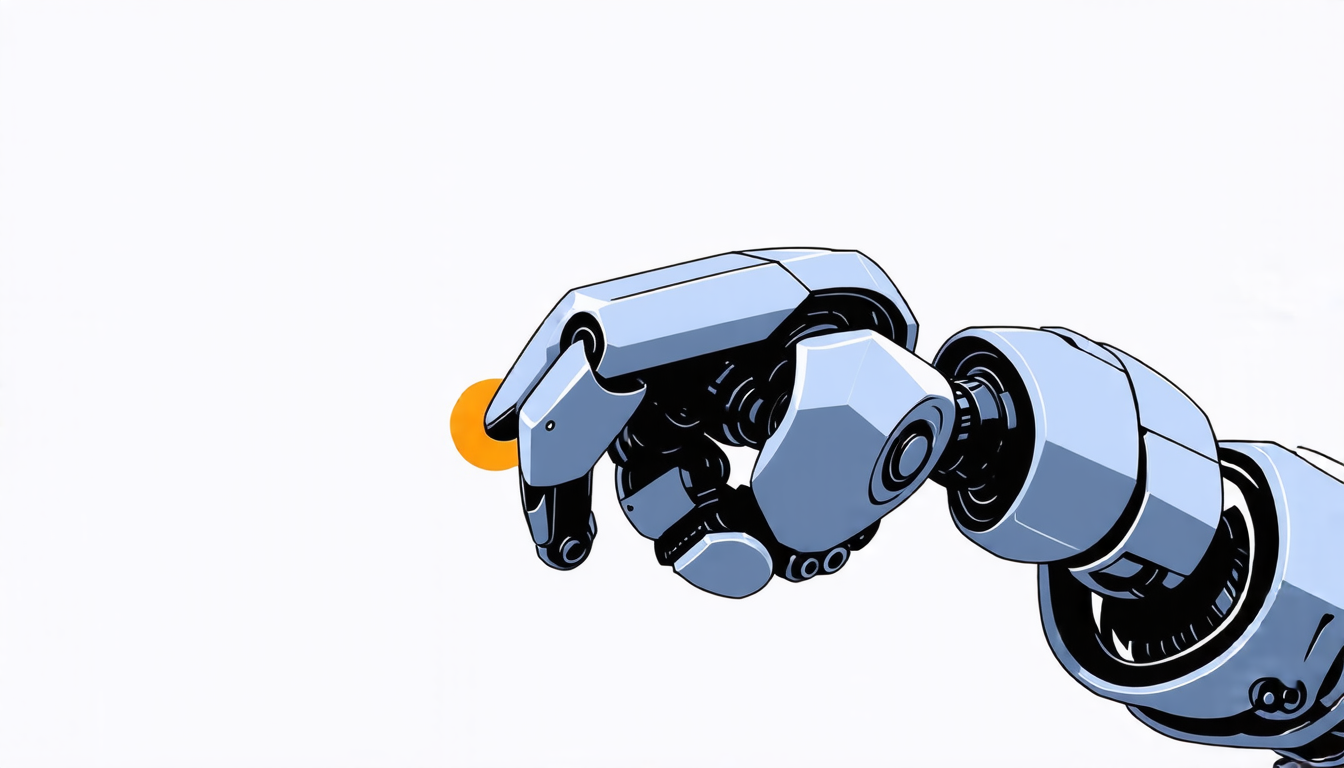
Robotics has long been plagued by a fundamental limitation: the inability to respond quickly and effectively to changing environments. This is particularly problematic in tasks that require precise control, such as delicate manipulation of objects or dynamic object interaction. A new approach seeks to address this issue by introducing a noise-relaying diffusion policy, which enables robots to generate actions responsive to their current observations.
The traditional method for teaching robots new skills involves imitation learning, where they mimic human behavior through trial and error. However, this process can be slow and inefficient, particularly in tasks that require complex motor control. A more recent approach has been to use diffusion policies, which model action sequences as a sequence of denoised observations. This allows the robot to generate actions by iteratively refining its predictions based on new sensory information.
The key challenge with diffusion policies is their lack of responsiveness. By relying on historical observations, these models can fail to adapt quickly to changing environments. In robotics, this can lead to poor performance and even catastrophic failure. The new noise-relaying diffusion policy seeks to address this limitation by incorporating a sequential denoising mechanism that conditions each action on the latest observation.
The approach is built upon a noise-relaying buffer that stores actions with progressively increasing levels of noise. This allows the robot to generate immediate, noise-free actions at the head of the sequence, while appending noisy actions at the tail. The sequential denoising mechanism ensures that each action is conditioned on the latest observations, enabling responsive control.
Experiments conducted on a range of tasks demonstrate the effectiveness of this new approach. In one task, a robot was tasked with relocating an object to a specific target location. While traditional diffusion policies struggled to adapt to changes in the environment, the noise-relaying diffusion policy was able to respond quickly and accurately. This resulted in a significant improvement in success rate compared to traditional methods.
The implications of this work are far-reaching. By enabling robots to respond more effectively to changing environments, it could lead to breakthroughs in areas such as robotic grasping, manipulation, and dynamic object interaction. Additionally, the approach could be applied to other fields where responsiveness is critical, such as autonomous vehicles or prosthetic limbs.
While there is still much work to be done to refine this new approach, its potential to revolutionize robotics is clear. By providing robots with a more responsive ability to adapt to changing environments, it could unlock new possibilities for robotic control and enable the development of more sophisticated and effective robotic systems.
Cite this article: “Responsive Robotics: A Noise-Relaying Diffusion Policy for Improved Adaptability”, The Science Archive, 2025.
Robotics, Diffusion Policy, Noise-Relaying, Sequential Denoising, Action Sequence, Robotics Control, Adaptive Learning, Imitation Learning, Robotic Grasping, Autonomous Systems





