

Wednesday 26 March 2025
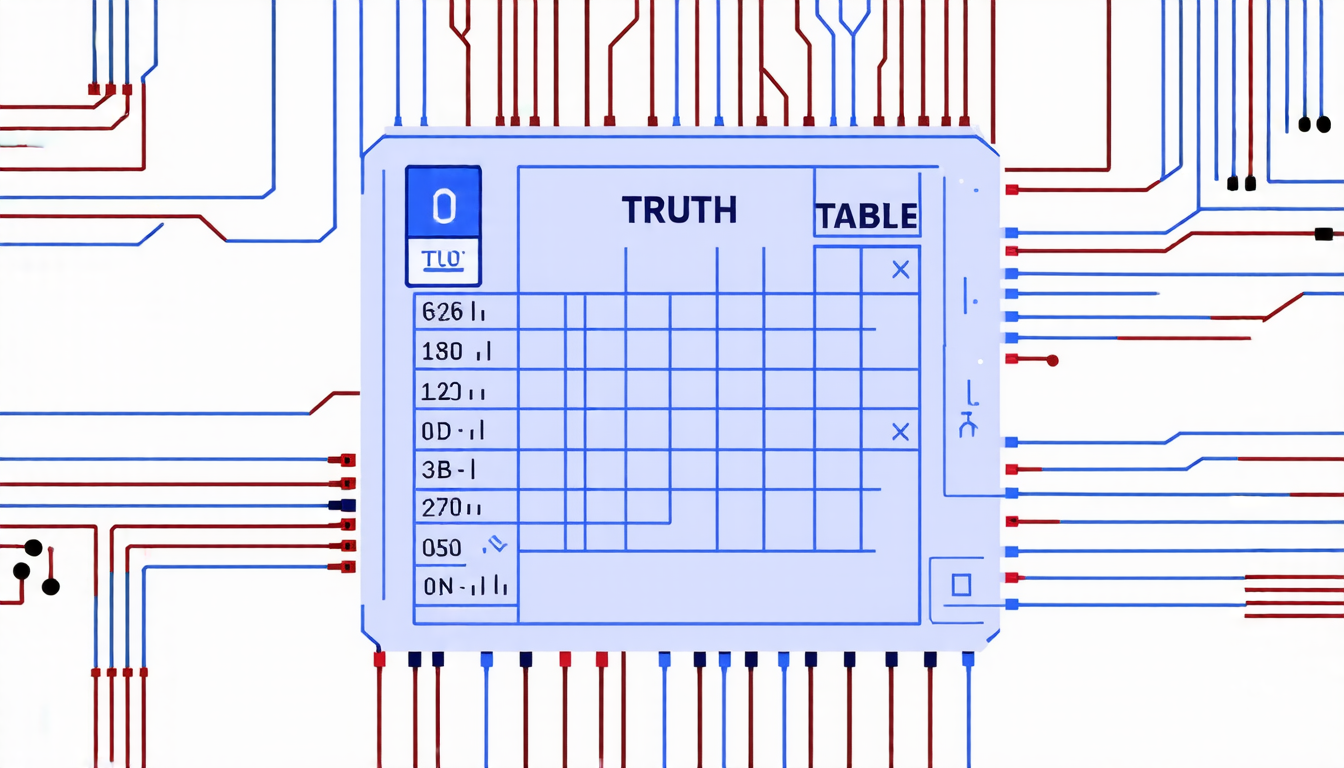
The paper explores a new approach to generating digital circuits, using a combination of artificial intelligence and neural networks. The researchers have developed a system that can generate complex digital circuits directly from truth tables, which are simple representations of how the circuit should behave.
The system uses a technique called masked autoregressive modeling, which allows it to predict the next component in the circuit based on what has come before. This is done by analyzing the patterns and relationships between different components in the circuit, and using this information to generate new components that fit together seamlessly.
One of the key advantages of this approach is its ability to reduce the size of the search space for digital circuit design. Traditional methods require searching through a vast number of possible circuits before finding one that meets the desired specifications. In contrast, the system proposed here can generate a small set of candidate circuits directly from the truth table, making it much faster and more efficient.
The researchers have tested their system on a range of benchmark circuits, including some well-known examples from the field of digital logic design. Their results show that the system is able to generate high-quality circuits that meet the desired specifications with a very low error rate.
One interesting aspect of this work is its potential applications in the field of artificial intelligence itself. Digital circuits are used extensively in AI systems, and being able to generate them more efficiently could have significant benefits for fields such as computer vision and natural language processing.
The system also has potential applications in other areas where complex digital circuits are required, such as in the design of electronic systems or in the development of new technologies. By making it easier to generate these circuits, this technology could help accelerate innovation in a wide range of fields.
Overall, this paper presents an innovative approach to generating digital circuits that has significant potential for practical applications. Its ability to reduce the search space and generate high-quality circuits makes it an attractive solution for anyone working with digital logic design.
Cite this article: “Generative Digital Circuit Design using Artificial Intelligence and Neural Networks”, The Science Archive, 2025.
Artificial Intelligence, Neural Networks, Digital Circuits, Truth Tables, Masked Autoregressive Modeling, Circuit Design, Search Space Reduction, Digital Logic Design, Computer Vision, Natural Language Processing.





