

Wednesday 26 March 2025
The quest for efficient data storage and processing has long been a driving force in the development of computer science. In recent years, researchers have turned their attention to compressive sensing, a method that allows us to represent complex signals using fewer measurements than traditional methods require. This approach has far-reaching implications for everything from medical imaging to wireless communication networks.
One challenge facing compressive sensing is the need to convert these sparse signals into digital form. In many cases, this involves quantization – essentially, rounding or truncating the signal to fit it into a binary format. However, this process can introduce errors and reduce the overall quality of the data.
Enter one-bit compressed sensing. By using only binary measurements (i.e., 0s and 1s) to represent these signals, researchers have been able to develop new methods for compressing and reconstructing sparse data. This approach has several advantages over traditional quantization methods, including improved robustness against noise and errors.
In a recent paper, a team of researchers demonstrated the effectiveness of one-bit compressed sensing using generative models. These models are trained on large datasets to learn the patterns and structures present in the signals they’re meant to represent. By combining these models with compressive sensing techniques, the researchers were able to develop an algorithm that can accurately reconstruct sparse signals from binary measurements.
The key to this approach lies in the way it handles errors and noise. Traditional quantization methods often rely on complex algorithms to correct for errors, which can be time-consuming and computationally intensive. In contrast, one-bit compressed sensing uses the generative model to learn how to effectively ignore or correct for these errors.
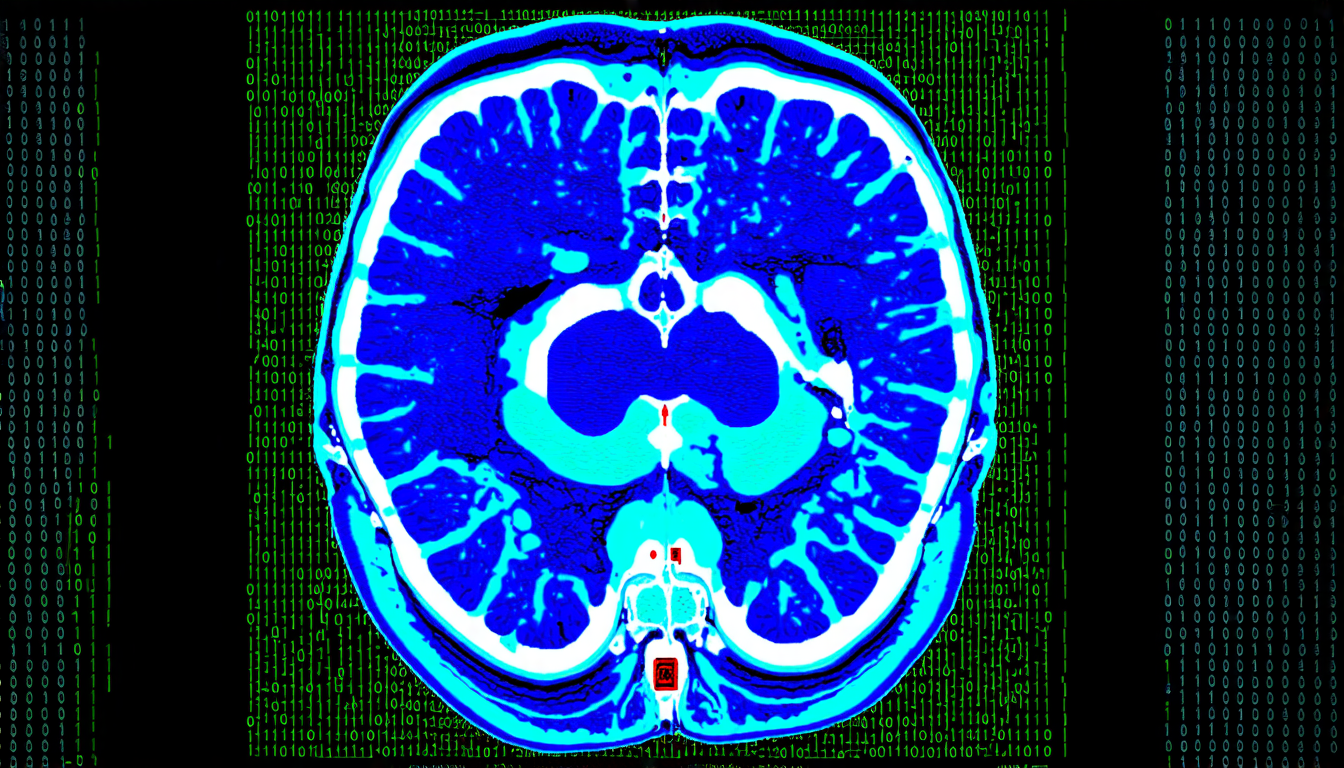
This has significant implications for a wide range of applications. For example, in medical imaging, compressive sensing could allow doctors to quickly and accurately reconstruct images from sparse measurements, reducing the need for expensive and time-consuming data acquisition techniques. In wireless communication networks, it could enable more efficient transmission of data by allowing devices to transmit fewer bits while still maintaining accurate signal recovery.
The researchers’ algorithm also has some interesting implications for our understanding of the relationship between data compression and generative models. By using a model trained on large datasets to inform the compressive sensing process, they’re able to tap into the vast amounts of structure present in these signals. This could lead to new approaches for compressing and representing complex data, with potential applications in everything from machine learning to computer vision.
Cite this article: “Unlocking Efficient Data Storage: One-Bit Compressive Sensing”, The Science Archive, 2025.
Compressive Sensing, One-Bit Compressed Sensing, Quantization, Generative Models, Sparse Signals, Binary Measurements, Noise, Errors, Medical Imaging, Wireless Communication Networks





