

Wednesday 26 March 2025
The intricate world of graph theory, where mathematicians delve into the complexities of connections and relationships between objects. It’s a realm that may seem abstract, but has real-world implications in fields like computer science, engineering, and even social network analysis.
Recently, researchers have made significant strides in understanding the flow polynomial, a mathematical object that describes the properties of graphs. The flow polynomial is like a fingerprint for graphs – it’s unique to each one and can reveal hidden patterns and structures within its connections.
In a new paper, mathematicians have established an upper bound for the absolute value of the coefficient corresponding to ti in the flow polynomial expansion of a graph. This may sound like technical jargon, but what it means is that they’ve found a way to put a limit on how big those coefficients can be.
The significance of this finding lies in its potential applications. For example, in computer science, understanding the flow polynomial can help optimize network communications and improve data transmission speeds. In engineering, it can aid in designing more efficient transportation systems or electrical networks.
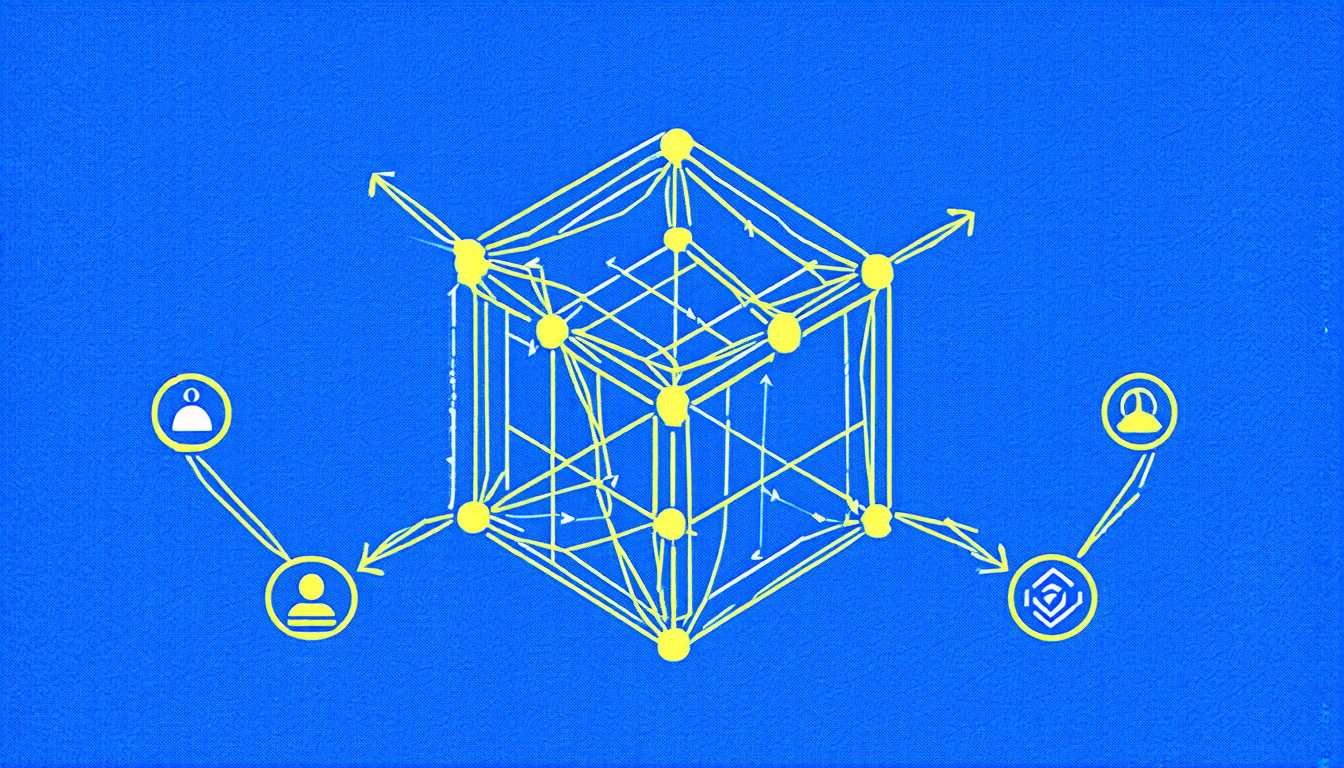
But what’s particularly interesting about this research is that it also sheds light on the properties of cubic graphs – those with three edges meeting at each vertex. Cubic graphs are like the building blocks of many complex systems, and understanding their behavior can reveal insights into how these systems function.
The mathematicians’ discovery has far-reaching implications for our understanding of graph theory as a whole. By studying the flow polynomial and its coefficients, researchers can gain a deeper grasp of the intricate relationships between objects in various domains.
One of the most fascinating aspects of this research is that it raises new questions about the nature of these relationships. For instance, do the coefficients of the flow polynomial follow certain patterns or rules? And how do these patterns influence the behavior of the graph as a whole?
As researchers continue to explore the mysteries of graph theory, their discoveries will likely have far-reaching impacts on our understanding of complex systems and networks. The flow polynomial may seem like an abstract concept, but it has real-world implications that can help us build better models of reality.
The study of graph theory is a testament to human curiosity – we’re driven to understand the intricate patterns and relationships that govern our world. And as mathematicians continue to delve into the complexities of these connections, they’ll likely uncover even more surprising insights that challenge our understanding of reality itself.
Cite this article: “Unraveling the Secrets of Graph Theory”, The Science Archive, 2025.
Graph Theory, Flow Polynomial, Coefficients, Graph Properties, Computer Science, Engineering, Social Network Analysis, Cubic Graphs, Network Communications, Data Transmission Speeds





