

Wednesday 26 March 2025
For decades, scientists have been struggling to analyze multidimensional separations data, a crucial step in understanding complex biological samples. This type of data is generated when multiple chemical compounds are separated and detected using instruments like liquid chromatography or gas chromatography coupled with mass spectrometry.
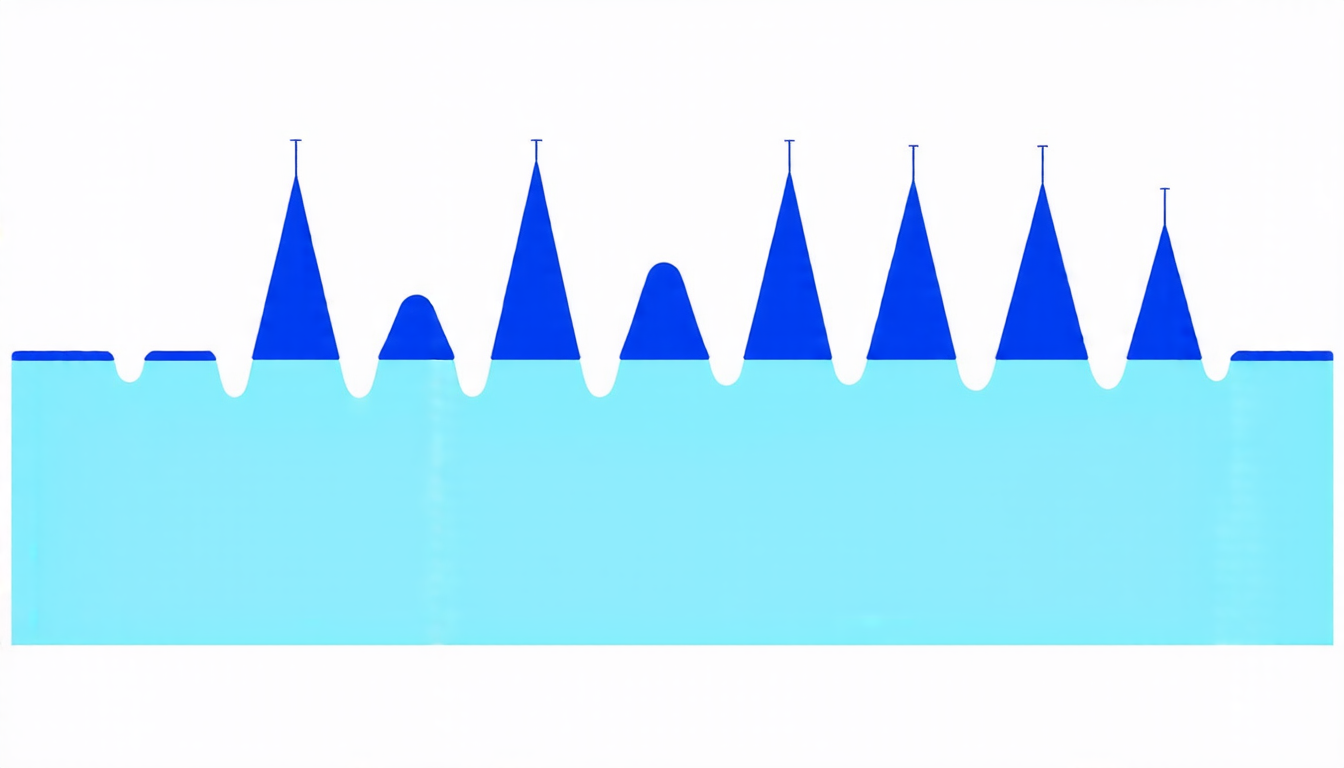
One major challenge in analyzing this data is peak drift, where the peaks representing different compounds shift over time due to degradation of the stationary phase or other experimental factors. This makes it difficult to compare samples taken at different times or from different sources. Current methods for aligning these peaks are often complex and require significant computational resources.
A new study has proposed a simple solution to this problem using a technique called Fourier transform-based orthogonal Procrustes analysis (FFT-OPA). In essence, the method transforms the data into the frequency domain, where it can be analyzed more easily. The algorithm then maps the transformed data onto a target image, effectively aligning the peaks.
The researchers tested their method on synthetic data and found that it performed well even in challenging scenarios, such as when there was significant noise or overlap between peaks. They also demonstrated that their approach could be used to analyze data without the need for additional model constraints, making it more flexible than other methods.
One of the key advantages of FFT-OPA is its simplicity. Unlike other alignment algorithms, which can be computationally intensive and require significant expertise, this method is straightforward to implement and requires minimal computational resources. This makes it an attractive option for laboratories with limited resources or those who are new to data analysis.
The study also highlights the potential applications of FFT-OPA in various fields, including metabolomics, proteomics, and environmental monitoring. By enabling the alignment of multidimensional separations data, this method has the potential to revolutionize our understanding of complex biological systems and environmental processes.
In practical terms, FFT-OPA could be used to identify biomarkers for diseases or to monitor the effectiveness of treatments. It could also be employed in environmental monitoring to track changes in ecosystems over time. The possibilities are vast, and this new method has the potential to open up new avenues of research in a wide range of fields.
The study’s findings have been published in a leading scientific journal, and experts in the field are already exploring its applications. With its simplicity and flexibility, FFT-OPA is poised to become an essential tool for researchers working with multidimensional separations data.
Cite this article: “Simple Solution for Aligning Multidimensional Separations Data”, The Science Archive, 2025.
Multidimensional, Separations, Data, Analysis, Fourier Transform, Orthogonal Procrustes, Alignment, Peaks, Biomarkers, Metabolomics





