

Thursday 27 March 2025
For centuries, humans have dreamed of building machines that can mimic our own movements, allowing us to interact with the world in a more natural and intuitive way. From humanoid robots designed for search and rescue missions to prosthetic limbs that restore mobility to those who’ve lost it, the quest for creating machines that can move like us has driven innovation in fields from robotics to neuroscience.
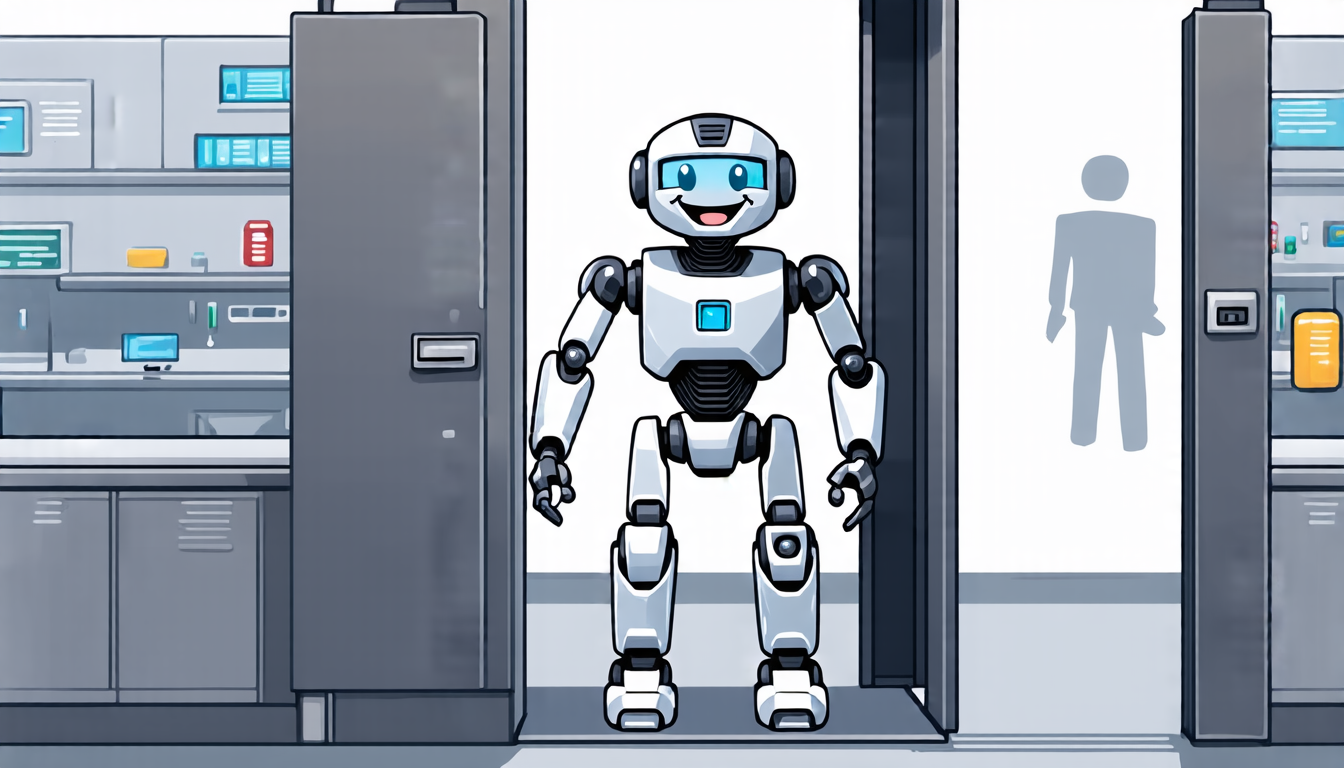
Recently, a team of researchers made a significant breakthrough in this area by developing a new system that enables humanoid robots to perform complex tasks like walking, squatting, and even opening doors. The secret to their success lies in a sophisticated combination of artificial intelligence, machine learning, and advanced sensor technology.
The system, known as HOMIE (Humanoid Loco-Manipulation with Isomorphic Exoskeleton Cockpit), consists of three main components: an exoskeleton that mimics the human body’s movements, sensors that track the robot’s joints and limbs in real-time, and a sophisticated AI program that interprets the data to control the robot’s actions.
One of the key innovations behind HOMIE is its ability to learn from experience. Unlike traditional robotics systems, which rely on pre-programmed instructions, HOMIE’s AI program can adapt to new situations and environments by observing how humans interact with them. This allows the robot to develop a level of dexterity and flexibility that was previously unimaginable.
To test the system, researchers trained a humanoid robot called Unitree G1 using Isaac Gym, a powerful simulation platform designed for training robots. The results were impressive: the robot was able to perform complex tasks like opening doors, picking up objects, and even walking down stairs with ease.
But what’s truly remarkable about HOMIE is its ability to generalize from one task to another. In other words, once the robot has learned how to open a door, it can use that knowledge to open any similar door it encounters in the future. This level of intelligence is unprecedented in robotics and has significant implications for fields like healthcare, manufacturing, and search and rescue.
The potential applications of HOMIE are vast and varied. For example, robots equipped with this technology could be used to assist people with disabilities, perform tasks that are too dangerous or repetitive for humans, or even explore and interact with environments that are hostile to human life.
While there’s still much work to be done before HOMIE becomes a reality, the potential benefits of this technology are undeniable.
Cite this article: “Robotics Breakthrough: Humanoid Robot Learns Complex Tasks Like Humans”, The Science Archive, 2025.
Humanoid Robots, Artificial Intelligence, Machine Learning, Sensors, Exoskeleton, Robotics, Neuroscience, Simulation Platform, Dexterity, Flexibility





