

Thursday 27 March 2025
A team of researchers has made a significant breakthrough in the field of networked control systems, which are used to manage and optimize complex networks such as power grids, transportation systems, and communication networks.
These systems typically involve multiple nodes or devices that communicate with each other to achieve a common goal. However, designing and optimizing these systems can be extremely challenging due to the complexity of the interactions between the different components.
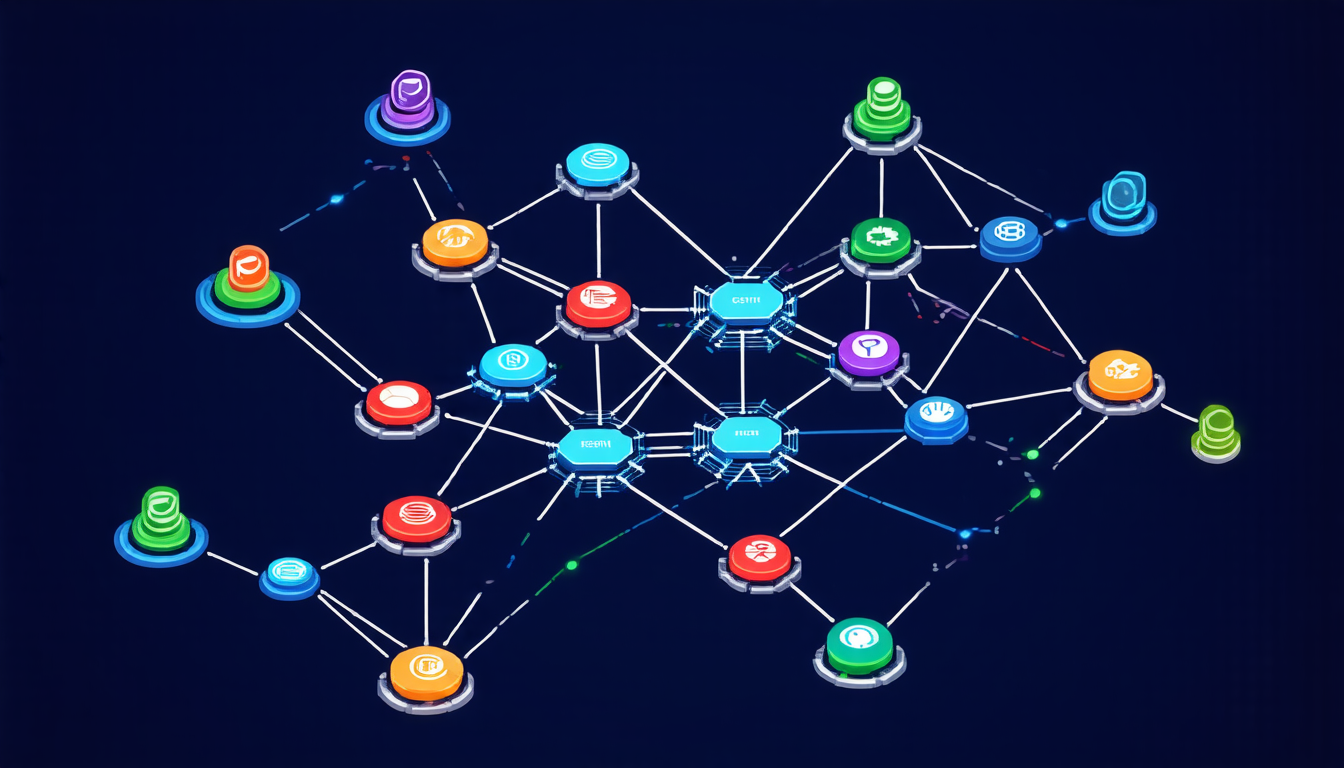
To tackle this problem, researchers have developed a new approach that uses a technique called decentralized control. This involves dividing the system into smaller sub-systems, each controlled by its own local controller, rather than trying to control the entire system centrally.
The new approach has been shown to be more efficient and effective than traditional centralized control methods in simulations of complex networks. It also allows for greater flexibility and adaptability, as each local controller can adjust its behavior in response to changes in the network.
One of the key benefits of this approach is that it can help to reduce the risk of cascading failures, which occur when a failure in one part of the system triggers a chain reaction of failures throughout the network. By giving each local controller more autonomy and flexibility, the new approach can help to prevent these types of failures from occurring.
The researchers used a combination of theoretical modeling and simulation-based testing to develop and evaluate their approach. They created complex networks with different numbers of nodes and connections, and then simulated various scenarios to test how well the decentralized control system performed.
The results showed that the decentralized control system was able to optimize the performance of the network in a wide range of scenarios, including those involving failures or changes in the network structure. The approach also demonstrated its ability to adapt to changing conditions and recover from disturbances.
This breakthrough has significant implications for the design and operation of complex networks, which are becoming increasingly important in modern society. By allowing local controllers to make decisions based on real-time data and adapting to changing conditions, this approach could help to improve the resilience and efficiency of these systems.
In addition to its practical applications, this research also has broader implications for our understanding of complex systems and how they can be controlled and optimized. The decentralized control approach used in this study could potentially be applied to other fields such as biology, economics, or social networks, where complex interactions between individual components are critical to the overall performance of the system.
Overall, this breakthrough demonstrates the potential of decentralized control methods for improving the performance and resilience of complex systems.
Cite this article: “Decentralized Control Systems Show Promise in Optimizing Complex Networks”, The Science Archive, 2025.
Networked Control Systems, Decentralized Control, Complex Networks, Power Grids, Transportation Systems, Communication Networks, Resilience, Efficiency, Optimization, Cascading Failures.





