

Thursday 27 March 2025
A new method for secure linear algebra has been developed, allowing for faster and more efficient computation on remote servers without compromising data privacy. The technique, which involves a combination of cryptographic scrambling and clever algorithm design, has significant implications for a wide range of applications, from machine learning to cloud computing.
At its core, the approach is based on an innovative use of homomorphic encryption, a type of encryption that enables computations to be performed directly on encrypted data without first decrypting it. This allows for the secure evaluation of linear algebra operations, such as matrix multiplication and vector addition, on remote servers without revealing sensitive information about the input data.
The method relies on the creation of special types of matrices and vectors, known as trapdoored objects, which are designed to facilitate efficient computation while maintaining the security of the underlying data. These objects are constructed using a combination of cryptographic techniques, including lattice-based cryptography and ring-learning with errors (LPN).
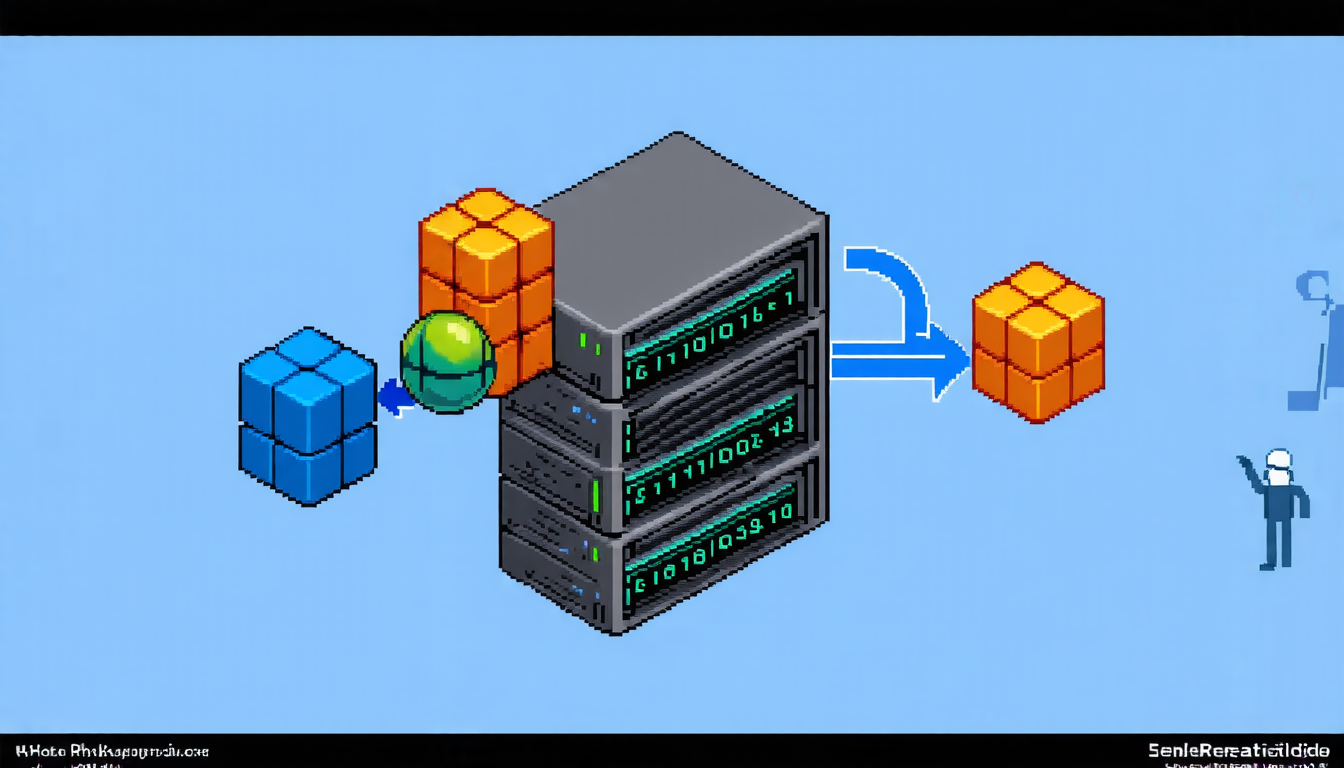
When an operation is requested, the client encrypts the input data and sends it to the remote server along with a trapdoored object. The server then performs the computation on the encrypted data, using the trapdoored object to ensure that the results are secure and private.
The benefits of this approach are substantial. For one, it enables the secure evaluation of linear algebra operations in cloud computing environments without compromising the privacy of sensitive data. This is particularly important for applications such as machine learning, where large datasets must be processed remotely while maintaining confidentiality.
Furthermore, the method allows for the efficient computation of complex linear algebra operations, which can significantly reduce the time and resources required for remote computations. This has implications not only for cloud computing but also for a wide range of other applications that rely on secure and efficient data processing.
The technique is still in its early stages, and further research is needed to fully realize its potential. However, the initial results are promising, and it is likely that this approach will play an important role in shaping the future of cloud computing and data privacy.
Cite this article: “Secure Linear Algebra in the Cloud: A New Approach to Private Data Processing”, The Science Archive, 2025.
Cloud, Encryption, Homomorphic, Linear Algebra, Machine Learning, Cryptography, Lattice-Based, Ring-Learning With Errors, Lpn, Secure Computing





