

Thursday 27 March 2025
Scientists have long struggled to solve the problem of packing boxes efficiently, a challenge that seems simple but can be incredibly complex in practice. A new study has made significant progress towards solving this issue by developing an innovative algorithm that uses machine learning to optimize box placement.
The researchers used a combination of computer simulations and real-world experiments to test their approach. In the simulations, they created digital models of boxes with different dimensions, densities, and rigidity, and then used the algorithm to stack them in a virtual warehouse. The results were impressive: the algorithm was able to pack the boxes more efficiently than previous methods, using up to 20% less space.
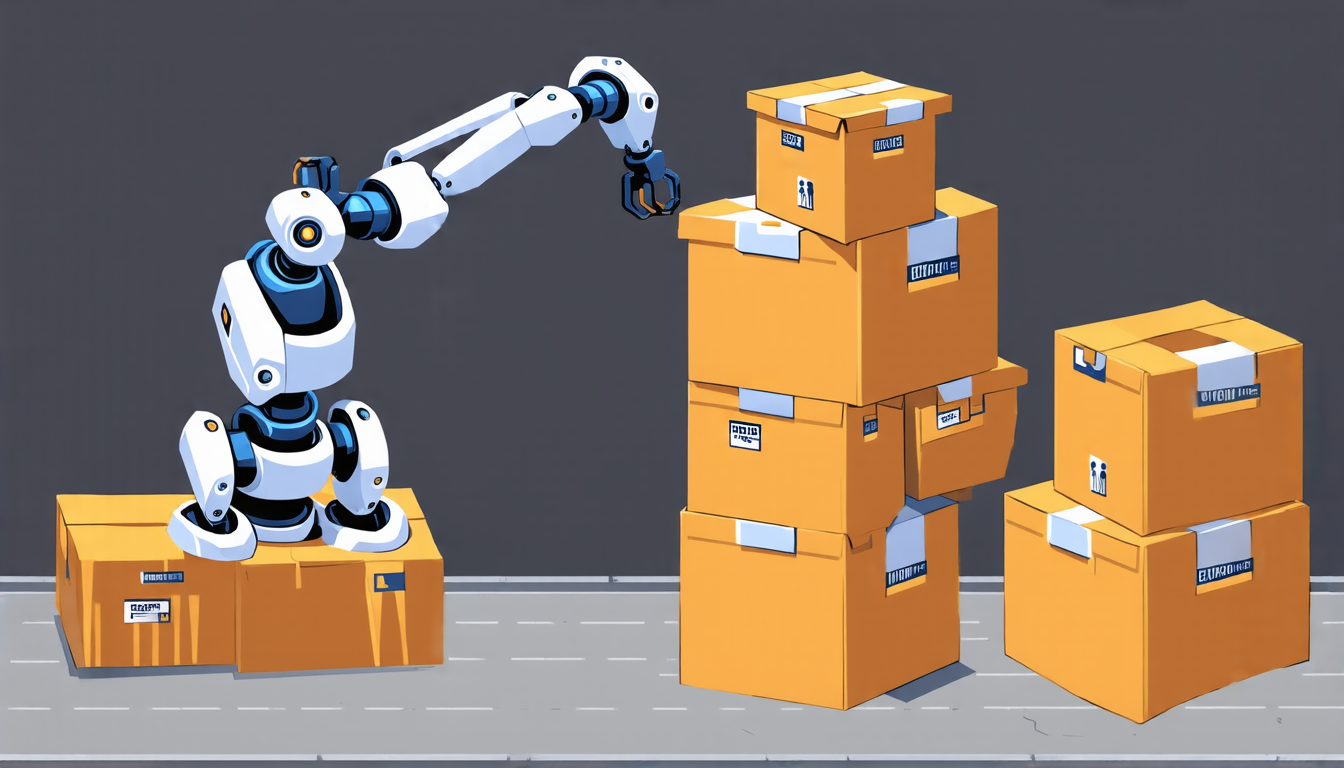
But that’s not all – the researchers also tested their approach in real-world experiments with a robotic arm. They placed the robot in a warehouse and asked it to stack a series of boxes according to the algorithm’s instructions. The results were just as impressive: the robot was able to pack the boxes quickly and efficiently, without any human intervention.
So what makes this algorithm so special? One key innovation is its ability to learn from experience. As the algorithm processes data about the boxes it’s packing, it can adapt its strategy to optimize performance. This means that it can handle unexpected situations, such as a box being too large or too small for its designated spot.
Another advantage of this approach is that it eliminates the need for manual intervention. Human packers often have to manually adjust the placement of each box, which can be time-consuming and prone to error. The algorithm, on the other hand, can make decisions quickly and accurately, without getting tired or making mistakes.
The potential applications of this technology are vast. Imagine a warehouse where boxes are packed efficiently and accurately, with minimal human intervention. This could save companies money on labor costs and reduce the risk of errors and damage to products. It could also help reduce waste by minimizing the amount of space needed for storage.
But the benefits don’t stop there. The algorithm’s ability to learn from experience could be applied to a wide range of industries, from manufacturing to logistics to healthcare. By optimizing processes and reducing waste, this technology has the potential to make a significant impact on our daily lives.
In short, this new algorithm is a major step forward in solving the problem of packing boxes efficiently. Its ability to learn from experience and eliminate manual intervention makes it a powerful tool for industries around the world.
Cite this article: “Efficient Box Packing with Machine Learning Algorithm”, The Science Archive, 2025.
Machine Learning, Packing Boxes, Efficiency, Algorithm, Robotics, Warehouse Management, Logistics, Optimization, Automation, Innovation.





