

Thursday 27 March 2025
Researchers have made significant strides in enhancing the performance of language models on graph-based tasks, a crucial area of study that has far-reaching implications for artificial intelligence and data analysis.
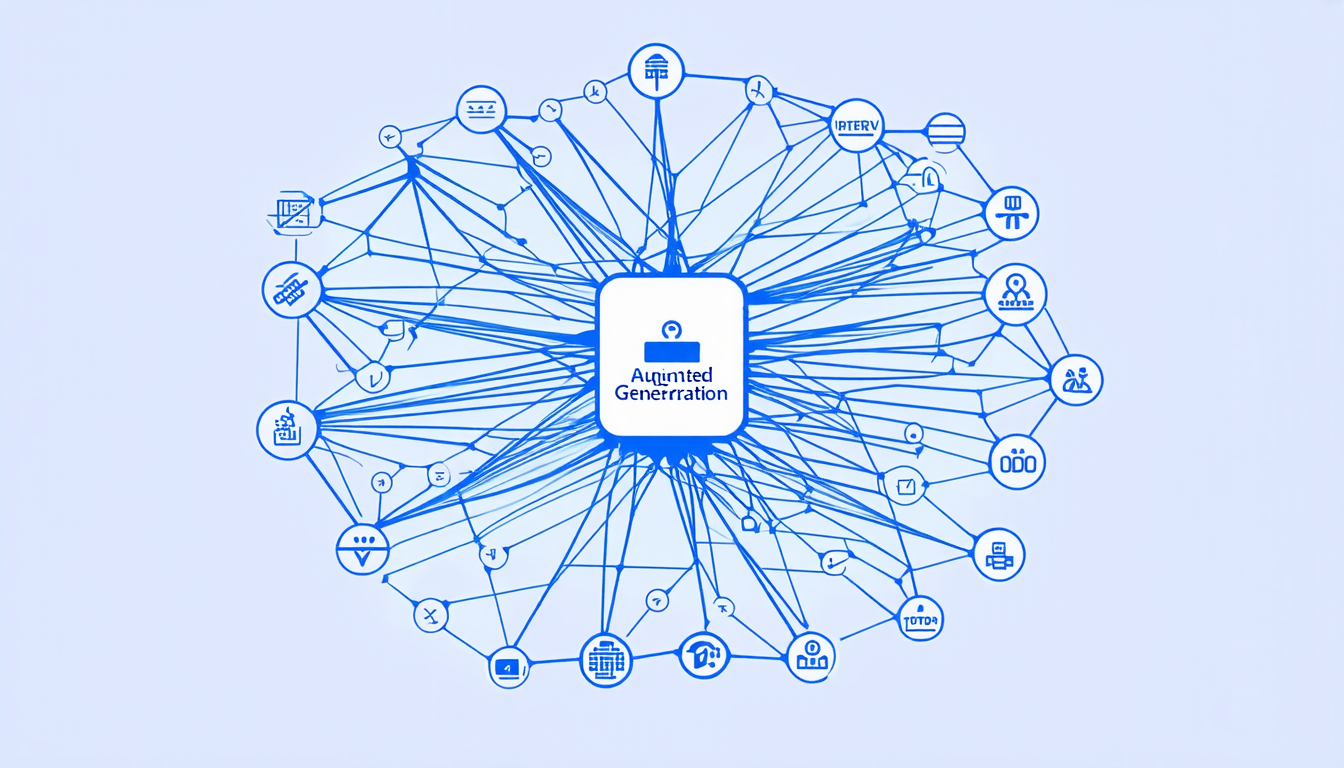
The integration of natural language processing (NLP) and graph learning has long been an active area of research. Recently, scientists have proposed novel frameworks that leverage the strengths of pre-trained language models to improve performance on graph-related tasks. These advancements rely on a technique called retrieval-augmented generation (RAG), which combines the contextual understanding capabilities of language models with structured data from graphs.
The RAG approach is built upon the notion that language models are proficient at learning patterns and relationships within unstructured text, but often struggle to comprehend complex graph structures. To overcome this limitation, researchers have developed methods that incorporate graph structure as inherent context for language models, effectively bridging the gap between NLP and graph learning.
The proposed frameworks, known as QUERYRAG, LABELRAG, and FEWSHOTRAG, utilize graph connectivity to retrieve relevant contextual information from neighboring nodes. This information is then incorporated into input prompts for pre-trained language models, enhancing their ability to understand complex graph relationships.
Experimental results demonstrate the effectiveness of these RAG frameworks across various datasets, including citation networks, text-attributed graphs, and knowledge graphs. Notably, FEWSHOTRAG, which incorporates both query and label information from neighboring nodes, achieves superior performance on most datasets.
The implications of this research are far-reaching. By enhancing the performance of language models on graph-based tasks, these advancements have the potential to revolutionize areas such as social network analysis, recommendation systems, and knowledge graph embedding.
Moreover, the proposed RAG frameworks can be applied to a wide range of applications, including but not limited to: node classification, edge prediction, and graph clustering. The versatility of these approaches makes them an attractive solution for researchers seeking to leverage the strengths of language models in their own work.
While this research is certainly promising, there are still several challenges that need to be addressed before RAG frameworks can be widely adopted. For instance, further exploration is needed to determine the optimal number of retrieved neighbors and the most effective retrieval mechanisms for specific graph structures.
Nonetheless, these advancements mark a significant step forward in bridging the gap between NLP and graph learning, and have the potential to unlock new possibilities for artificial intelligence research and application.
Cite this article: “Enhancing Language Model Performance on Graph-Based Tasks through Retrieval-Augmented Generation”, The Science Archive, 2025.
Language Models, Nlp, Graph Learning, Retrieval-Augmented Generation, Rag, Graph Structure, Contextual Understanding, Pre-Trained Language Models, Node Classification, Edge Prediction, Graph Clustering.





