

Thursday 27 March 2025
Scientists have made a significant breakthrough in developing artificial intelligence that can control and simulate human-like movements, revolutionizing the field of robotics and computer animation.
Researchers have created an innovative framework called ModSkill, which allows them to break down complex physical movements into smaller, more manageable parts. By doing so, they can train AI systems to mimic human actions with unprecedented accuracy, enabling the creation of highly realistic simulations for various applications such as video games, movies, and virtual reality experiences.
The key innovation behind ModSkill lies in its ability to modularize skills, allowing AI systems to learn and adapt more efficiently. This is achieved by dividing the body into smaller parts, such as arms, legs, and torso, and training separate controllers for each component. This approach enables the AI system to focus on specific movements and gestures, resulting in more precise and natural-looking simulations.
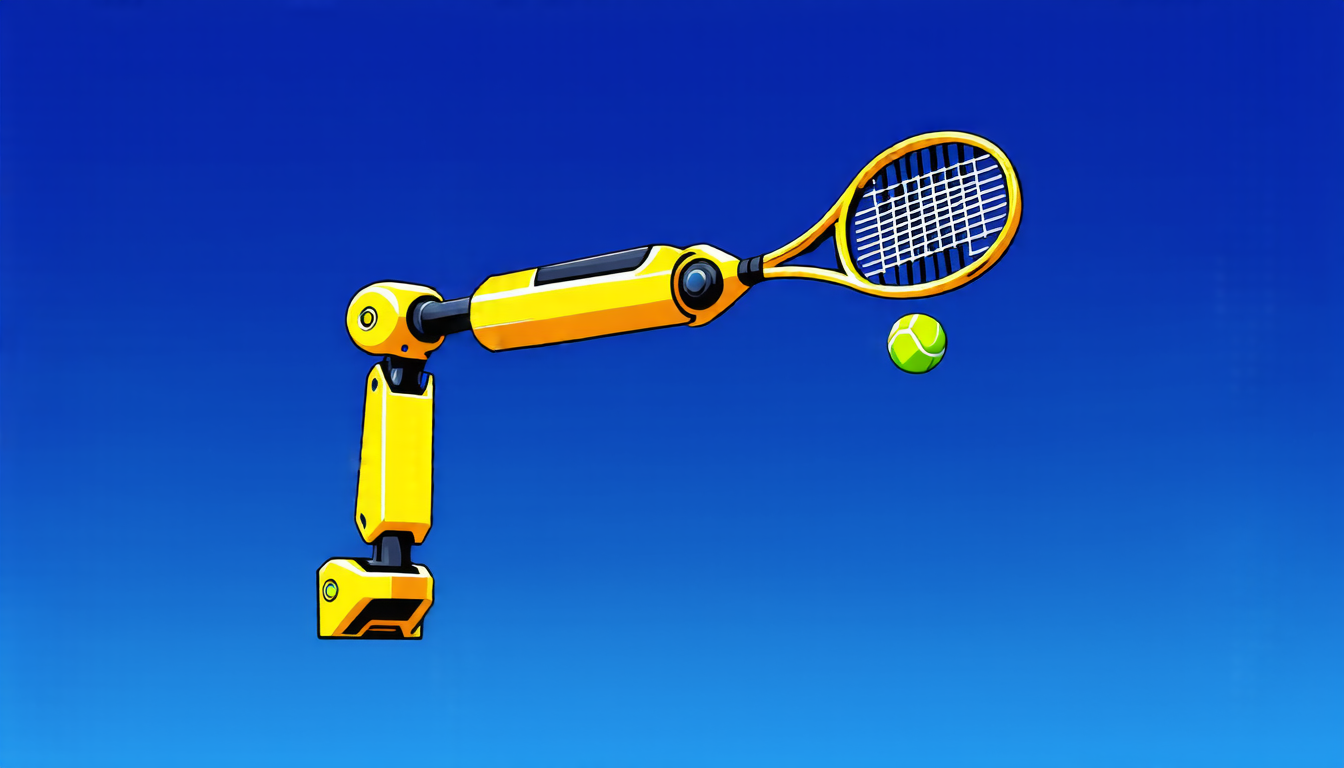
The researchers tested ModSkill using a variety of tasks, including walking, running, jumping, and even complex actions like playing tennis or basketball. The results were impressive, with the AI system able to accurately mimic human movements and adapt to new situations with ease.
One of the most significant advantages of ModSkill is its ability to generate highly realistic simulations. By combining the modular skills, the AI system can create complex movements that are indistinguishable from those performed by a real person. This has major implications for fields such as video games, where realistic character animations can greatly enhance the player’s experience.
Another notable aspect of ModSkill is its potential to improve human-robot interaction. With the ability to control and simulate human-like movements, AI systems can be designed to work alongside humans in a more natural and intuitive way. This could lead to significant advancements in fields such as healthcare, where robots could assist surgeons or provide care for patients.
The researchers also demonstrated ModSkill’s potential for use in virtual reality experiences. By generating highly realistic simulations of human movements, the AI system can create immersive and engaging environments that simulate real-world scenarios. This has major implications for industries such as entertainment and education, where VR technology is increasingly being used to enhance user experiences.
In addition to its practical applications, ModSkill also holds significant potential for advancing our understanding of human movement and behavior. By analyzing and modeling the modular skills, researchers can gain valuable insights into how humans learn and adapt new movements, which could lead to breakthroughs in fields such as neuroscience and psychology.
Cite this article: “ModSkill: A Breakthrough in Artificial Intelligence for Human-Like Movement Simulation”, The Science Archive, 2025.
Artificial Intelligence, Robotics, Computer Animation, Modskill, Human-Like Movements, Simulations, Video Games, Virtual Reality, Neuroscience, Psychology
Reference: Yiming Huang, Zhiyang Dou, Lingjie Liu, “ModSkill: Physical Character Skill Modularization” (2025).





