

Thursday 27 March 2025
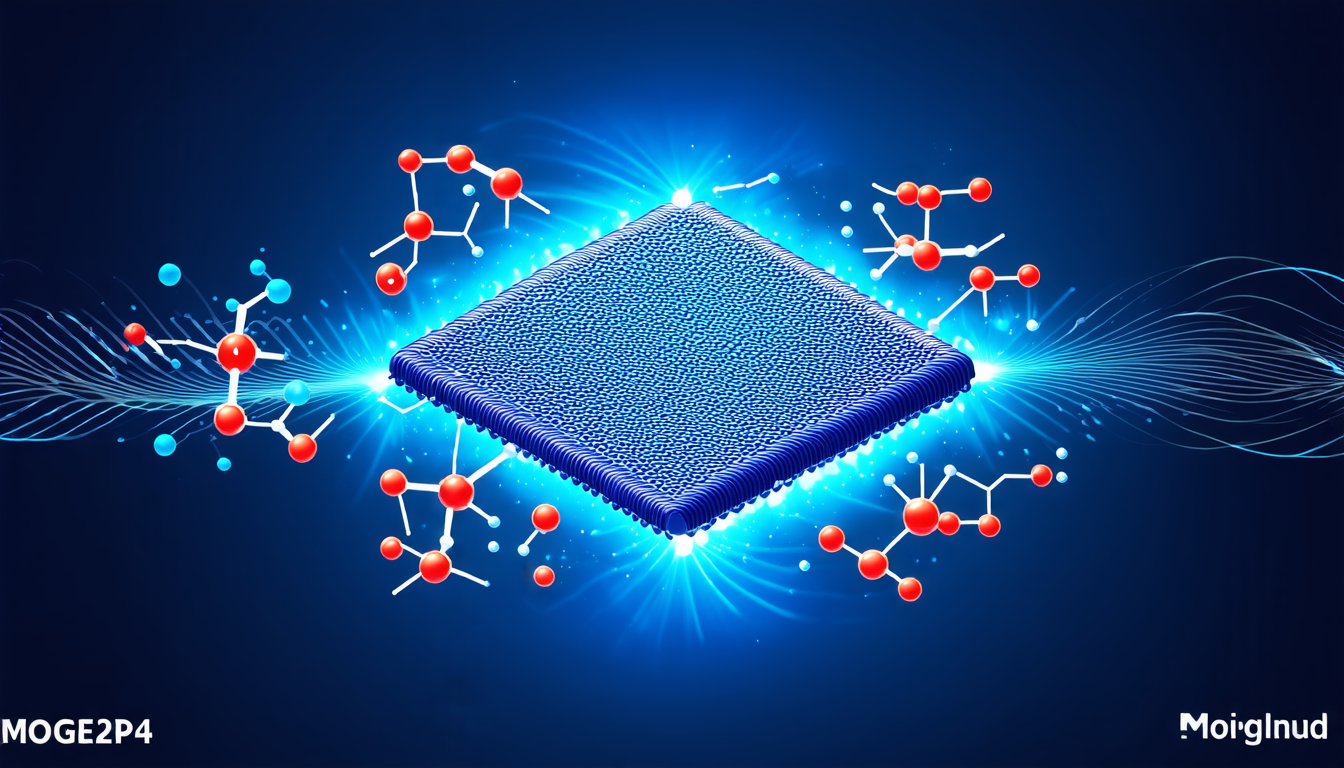
Researchers have been exploring the potential of two-dimensional materials for various applications, including biomedical uses. A recent study has shed light on the properties of MoGe2P4, a material that shows promise in photothermal therapy.
Photothermal therapy is a cancer treatment approach that utilizes near-infrared (NIR) light to heat and destroy tumors. The key component in this process is the photothermal agent (PTA), which absorbs NIR light and converts it into heat. MoGe2P4 has been found to possess excellent optical absorption properties, particularly in the NIR-I biological window (750-1000 nm). This makes it an attractive candidate for PTA applications.
The researchers used first-principles calculations to analyze the electronic, thermodynamic, and optical properties of MoGe2P4. They discovered that this material demonstrates rapid temperature elevation when exposed to low laser power, which is a critical requirement for photothermal therapy. Additionally, MoGe2P4 was found to be stable under multiple laser cycles, indicating its potential for repeated use.
PEGylation, the process of attaching polyethylene glycol (PEG) molecules to the surface of MoGe2P4 nanosheets, was also investigated. This modification improved the biocompatibility of the material and allowed it to interact more effectively with biological systems. The researchers observed that PEGylation at human body temperature was stable, suggesting potential applications in therapeutic settings.
The study highlights the importance of understanding the properties of MoGe2P4 at the atomic level. By combining first-principles calculations with experimental techniques, researchers can gain valuable insights into the material’s behavior under various conditions. This knowledge can be used to optimize MoGe2P4 for specific applications, such as photothermal therapy.
The potential benefits of using MoGe2P4 in cancer treatment are significant. Photothermal therapy has shown promising results in clinical trials, and the development of more effective PTAs could lead to improved patient outcomes. The ability to tailor the properties of MoGe2P4 through modifications like PEGylation also opens up possibilities for targeted delivery and controlled release.
While this study is an important step forward in understanding the properties of MoGe2P4, further research is needed to fully explore its potential applications. The development of more advanced experimental techniques and computational methods will be crucial in unlocking the full capabilities of this material.
Cite this article: “MoGe2P4: A Promising Material for Photothermal Cancer Therapy”, The Science Archive, 2025.
Moge2P4, Photothermal Therapy, Nir Light, Pta, Cancer Treatment, Biomedical Applications, Two-Dimensional Materials, Optical Absorption Properties, First-Principles Calculations, Pegylation.





