

Friday 28 March 2025
Computers are getting better at understanding complex networks, like those found in social media or biological systems. But what about when these networks get really big? That’s where a new algorithm comes in – designed to efficiently count and list all the triangles (or cliques) in massive networks.
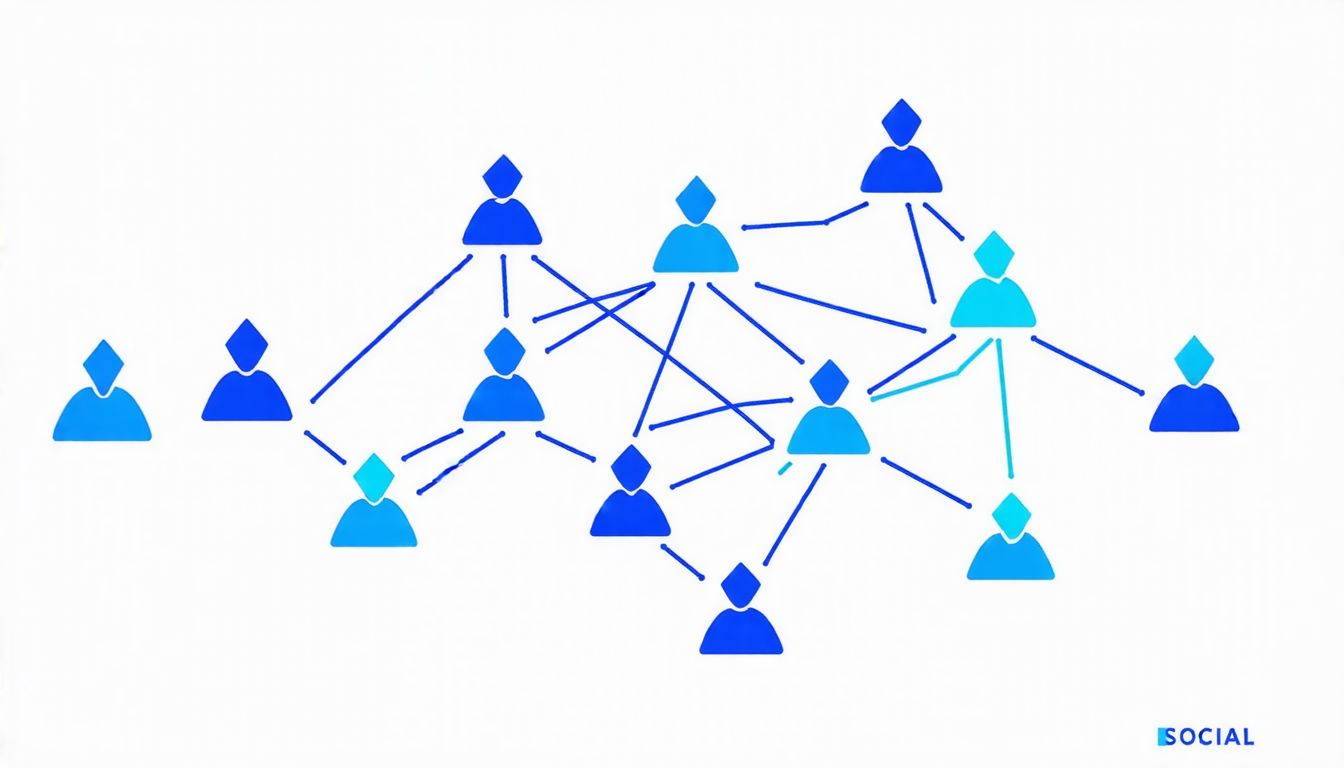
Triangles are important because they can reveal hidden patterns and relationships within a network. For instance, in social media, finding triangles can help identify clusters of friends or groups that interact with each other. In biology, triangles can show how proteins or genes interact to form complexes.
The problem is that traditional methods for counting triangles get bogged down when dealing with huge networks. This is because these methods require a lot of computer memory and processing power, making them impractical for large-scale analysis.
Enter the new algorithm, developed by researchers from various institutions around the world. It’s called Algorithm 9, and it’s designed to efficiently list all triangles in a network using a combination of clever data structures and mathematical techniques.
In tests on large synthetic networks, Algorithm 9 outperformed existing methods by several orders of magnitude. This means that scientists can now analyze massive networks with ease, uncovering new insights into complex systems.
But how does it work? Essentially, the algorithm breaks down the network into smaller pieces, called simplices, which are then analyzed individually. By combining the results from each simplex, Algorithm 9 generates a complete list of triangles in the network.
The beauty of this approach is that it allows researchers to focus on specific parts of the network, rather than having to analyze the entire thing at once. This makes it much more efficient and scalable for large-scale analysis.
One potential application of this technology is in understanding complex biological systems. By analyzing protein-protein interaction networks, scientists could identify new targets for disease treatments or understand how certain diseases develop.
Another area where Algorithm 9 could shine is in social network analysis. By identifying clusters of friends or groups that interact with each other, researchers could gain insights into how information spreads through a population or how social movements form.
The algorithm’s potential impact extends beyond just these fields, however. As networks become increasingly important in many areas of science and technology, the ability to efficiently analyze them will become crucial for making new discoveries and driving innovation.
With Algorithm 9, researchers now have a powerful tool at their disposal for tackling complex network analysis. The possibilities are endless, and it will be exciting to see where this technology takes us in the future.
Cite this article: “Efficiently Uncovering Hidden Patterns in Massive Networks with Algorithm 9”, The Science Archive, 2025.
Complex Networks, Social Media, Biological Systems, Triangles, Cliques, Algorithm, Data Structures, Mathematical Techniques, Network Analysis, Scalability





