

Friday 28 March 2025
As NASA prepares to send a team of robots to the Moon, scientists are working on a complex system that will allow these machines to work together seamlessly. The Cooperative Autonomous Distributed Robotic Exploration (CADRE) mission aims to demonstrate how multiple robots can explore and map the lunar surface without human intervention.
The key to this autonomous operation is a sophisticated planning and scheduling algorithm developed by NASA’s Jet Propulsion Laboratory. This algorithm, known as MEXEC, allows the robots to coordinate their activities, allocate tasks, and adapt to changing circumstances on the fly.
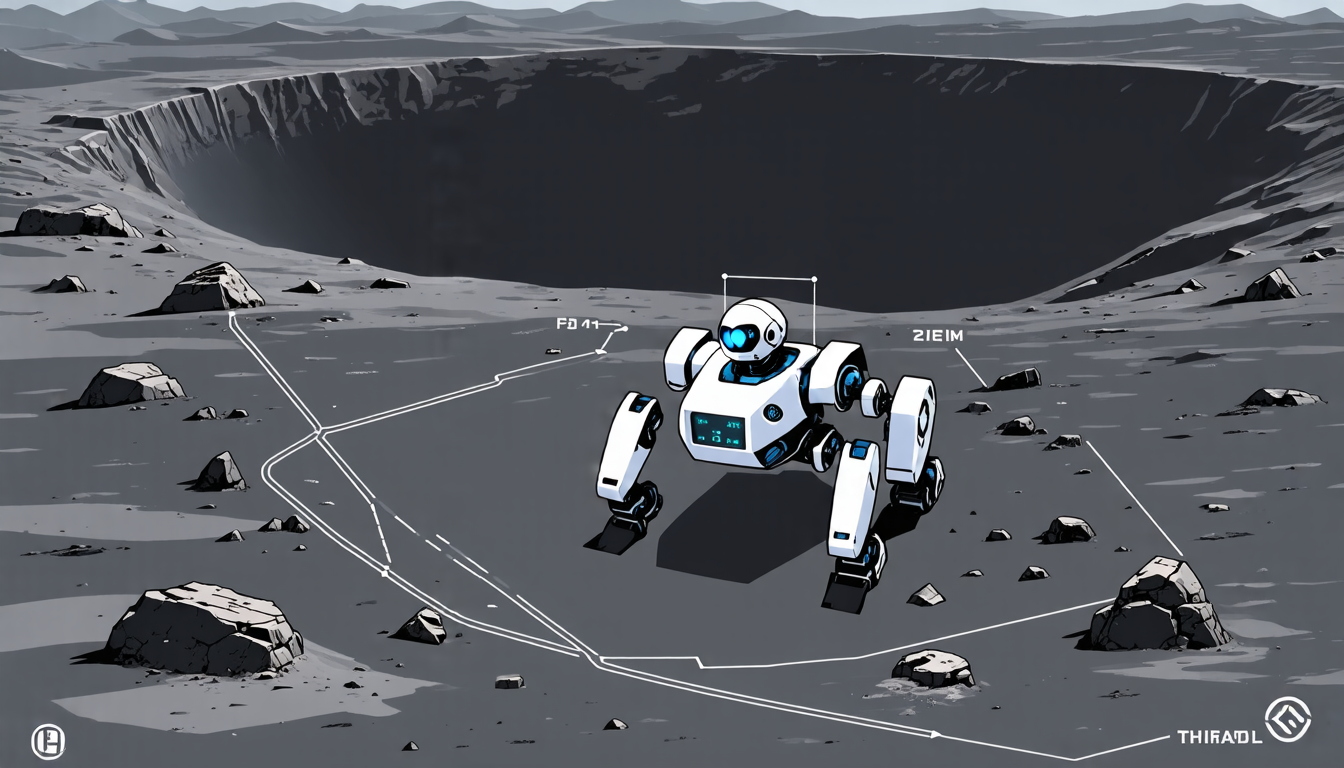
To understand how MEXEC works, consider a team of robots tasked with exploring a lunar crater. Each robot has its own set of sensors and capabilities, but they need to work together to create a comprehensive map of the area. MEXEC takes into account each robot’s strengths and weaknesses, as well as their current location and the tasks at hand.
The algorithm breaks down complex tasks into smaller, manageable chunks, which are then allocated to individual robots. This decomposition process allows the team to tackle larger problems more efficiently, as each robot can focus on its own specific task without getting bogged down in details.
But MEXEC doesn’t stop there. It also takes into account the limitations of each robot, such as battery life and communication range. By scheduling tasks around these constraints, the algorithm ensures that the robots are working together effectively while also conserving energy and minimizing the risk of errors.
One of the most impressive aspects of MEXEC is its ability to adapt to unexpected events. If a robot encounters an obstacle or experiences technical difficulties, the algorithm can quickly reassign tasks to other members of the team, ensuring that the mission remains on track.
The benefits of this autonomous approach are numerous. For one, it allows robots to operate for longer periods without human intervention, reducing the need for costly and time-consuming resupply missions. It also enables teams to tackle larger, more complex problems than would be possible with a single robot or human operator.
But MEXEC is not just limited to lunar exploration. The algorithm has potential applications in a wide range of fields, from search and rescue operations to environmental monitoring and even space station maintenance.
As NASA prepares to send its robots to the Moon, the success of CADRE will depend on the ability of MEXEC to coordinate their activities effectively. If successful, this mission could pave the way for future autonomous missions to other planets and celestial bodies, revolutionizing our approach to space exploration.
Cite this article: “Autonomous Robots Set to Explore the Moon with Advanced Planning Algorithm”, The Science Archive, 2025.
Robots, Moon, Nasa, Autonomous, Space Exploration, Algorithm, Cooperative, Distributed, Scheduling, Planning





