

Friday 28 March 2025
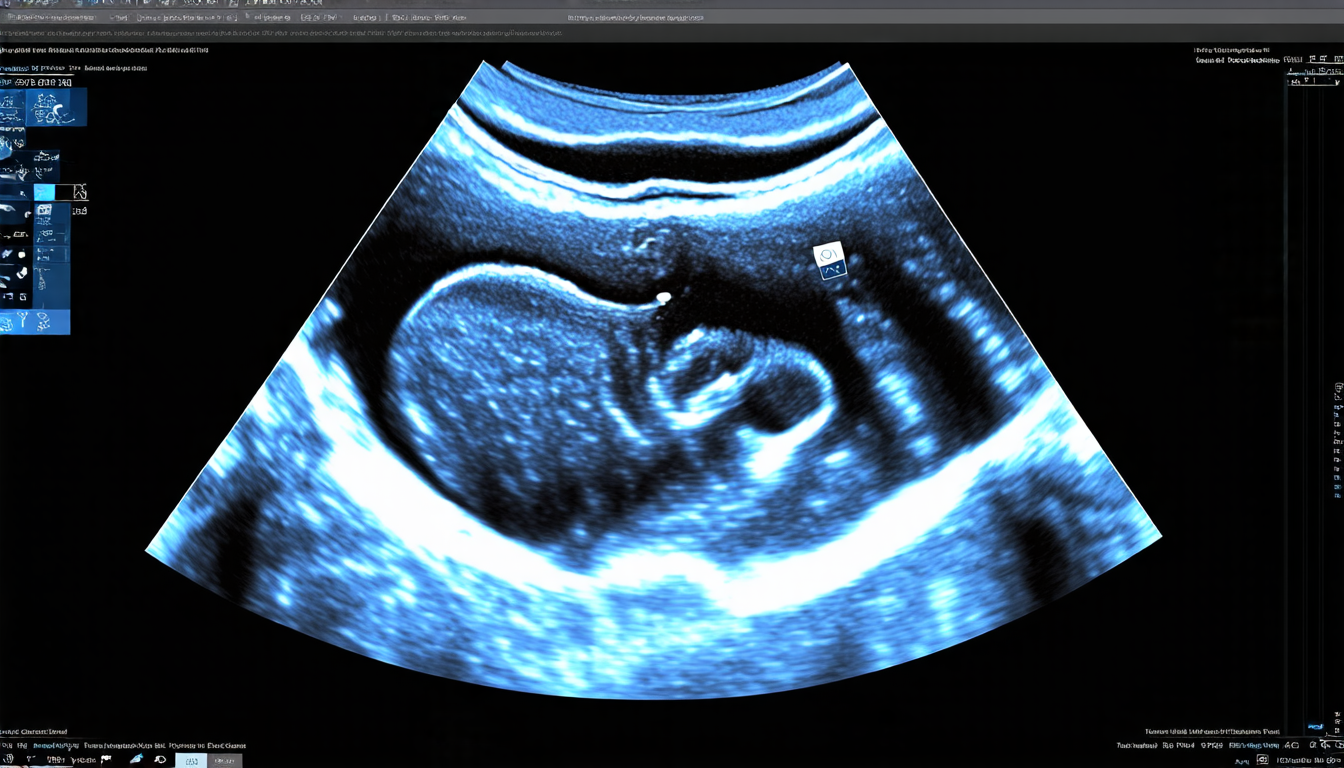
Fetal ultrasound images are a crucial tool for prenatal care, providing doctors and parents-to-be with valuable insights into fetal development. However, analyzing these images can be a time-consuming and labor-intensive process, often requiring specialized training and expertise.
Recent advances in artificial intelligence have shown promise in streamlining this process, but most approaches have focused on specific tasks such as classification or segmentation. A new study published in the journal Nature Medicine takes a more comprehensive approach, introducing FetalCLIP, a visual-language foundation model designed to provide a deeper understanding of fetal ultrasound images.
FetalCLIP is trained on a massive dataset of over 210,000 fetal ultrasound images paired with text captions generated by clinicians. This unique combination allows the model to learn not only what features are important in each image but also how to interpret them in context. The result is a powerful tool that can classify fetal planes and structures with high accuracy, detect congenital heart defects, and even estimate gestational age.
One of the key advantages of FetalCLIP is its ability to perform multiple tasks simultaneously. In contrast to traditional approaches, which often require separate models for each task, FetalCLIP’s unified architecture enables it to leverage information across different modalities and tasks. This means that clinicians can use a single model to analyze fetal ultrasound images in a variety of ways, from identifying specific anatomical structures to detecting potential abnormalities.
The study’s authors also demonstrate the effectiveness of FetalCLIP in real-world settings, using data from multiple hospitals and clinical centers. In these scenarios, the model performed competitively with state-of-the-art approaches, often outperforming them on certain tasks. This suggests that FetalCLIP has the potential to be a valuable tool for clinicians, enabling them to provide more accurate and timely diagnoses.
Fetal ultrasound imaging is a complex process that requires a deep understanding of fetal anatomy and development. While AI models like FetalCLIP are not meant to replace human expertise entirely, they can certainly help reduce the workload and improve accuracy. As the field continues to evolve, it will be important for researchers to explore new ways to integrate these models into clinical practice.
In addition to its potential applications in prenatal care, FetalCLIP also highlights the importance of multimodal learning in medical imaging. By combining visual and textual data, the model is able to capture a more nuanced understanding of fetal ultrasound images than would be possible with either modality alone.
Cite this article: “Revolutionizing Fetal Ultrasound Analysis with Artificial Intelligence”, The Science Archive, 2025.
Fetal Ultrasound, Artificial Intelligence, Prenatal Care, Medical Imaging, Multimodal Learning, Visual-Language Foundation Model, Congenital Heart Defects, Gestational Age, Classification, Segmentation.





