

Friday 28 March 2025
Scientists have been studying the behavior of superfluids, a type of liquid that can exhibit strange and fascinating properties under certain conditions. One of these properties is the ability to form patterns in response to external stimuli, such as changes in temperature or pressure.
Researchers at the University of Mexico have recently conducted an experiment involving a Bose-Einstein condensate (BEC), a state of matter that occurs at extremely low temperatures. In their study, they created a BEC and then applied a periodic modulation to its confinement, causing the atoms to oscillate and interact with each other in complex ways.
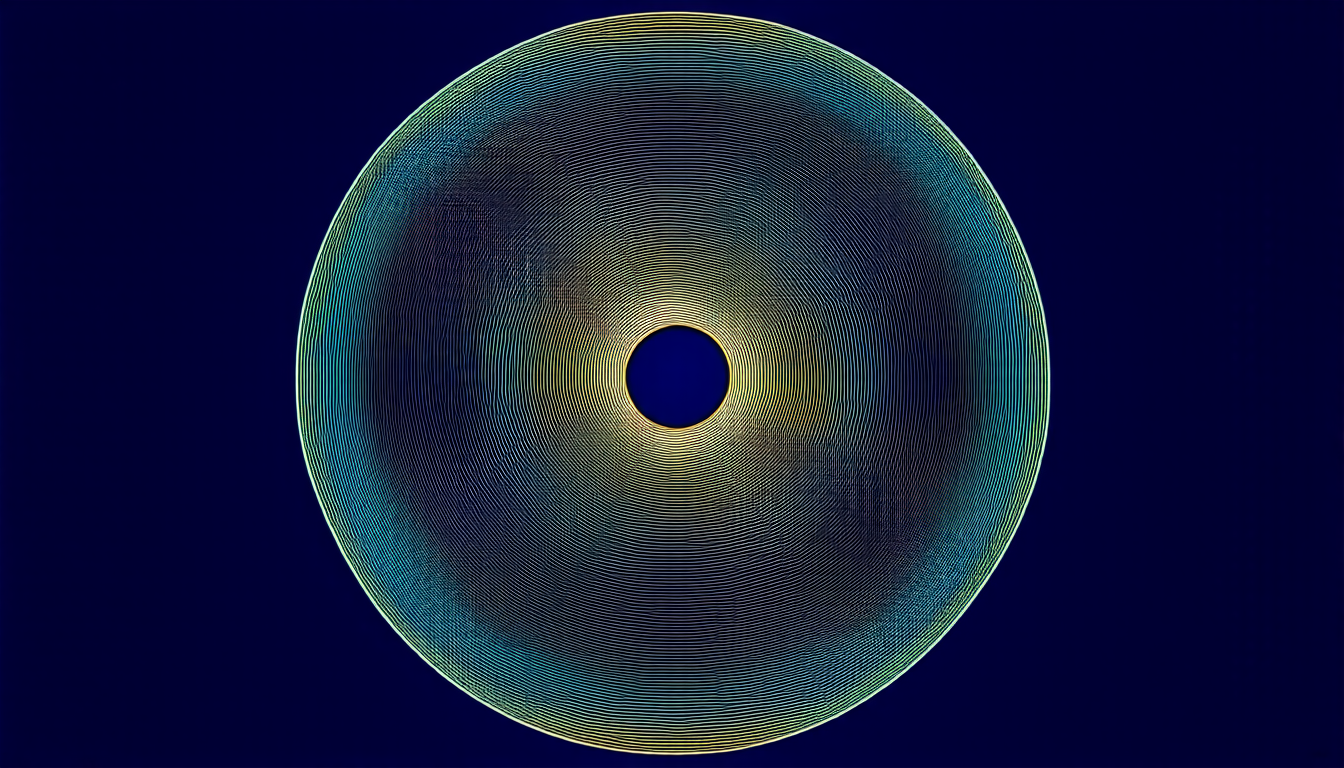
The team observed that these interactions led to the formation of spatial patterns within the condensate, which were dependent on the geometry of the trap used to confine it. In one experiment, they created a prolate (cigar-shaped) trap and observed the emergence of fringe patterns, while in another, they used an oblate (pancake-shaped) trap and saw the formation of ring patterns.
The researchers used numerical simulations to study the behavior of the condensate over time, analyzing the dynamics of the density patterns that emerged. They found that the patterns were not random, but rather followed a specific sequence of events. In both cases, the initial distribution of atoms remained unchanged until the kinetic energy in the less confined direction increased, at which point the density patterns began to form.
The team also studied the effects of different modulation frequencies on the formation of these patterns. They found that when the frequency was close to the resonant frequency associated with the breathing mode of the condensate, the patterns were more stable and formed faster than when the frequency was farther away from resonance.
These findings have important implications for our understanding of superfluid behavior and could potentially be used to create new materials or devices with unique properties. For example, by manipulating the geometry of a trap and the frequency of modulation, it may be possible to create materials that exhibit specific patterns or textures.
The study also highlights the importance of numerical simulations in understanding complex physical systems. By using these simulations, researchers can analyze the behavior of systems that are difficult or impossible to observe experimentally, allowing them to gain insights into the underlying physics and make predictions about future experiments.
In addition, the study demonstrates the power of collaboration between theorists and experimentalists. The researchers used a combination of theoretical models and numerical simulations to understand the behavior of the condensate, while also conducting experiments to test their theories.
Cite this article: “Unveiling the Dynamics of Superfluid Patterns”, The Science Archive, 2025.
Superfluids, Bose-Einstein Condensates, Bec, Quantum Mechanics, Numerical Simulations, Density Patterns, Modulation Frequency, Resonant Frequency, Breathing Mode, Superfluid Behavior





