

Friday 28 March 2025
Researchers have developed a virtual reality experience designed to raise awareness of dyslexia, a learning disorder that affects an estimated one in five people worldwide. The innovative approach uses immersive technology to simulate the challenges faced by individuals with dyslexia, providing a unique opportunity for non-dyslexic individuals to gain empathy and understanding.
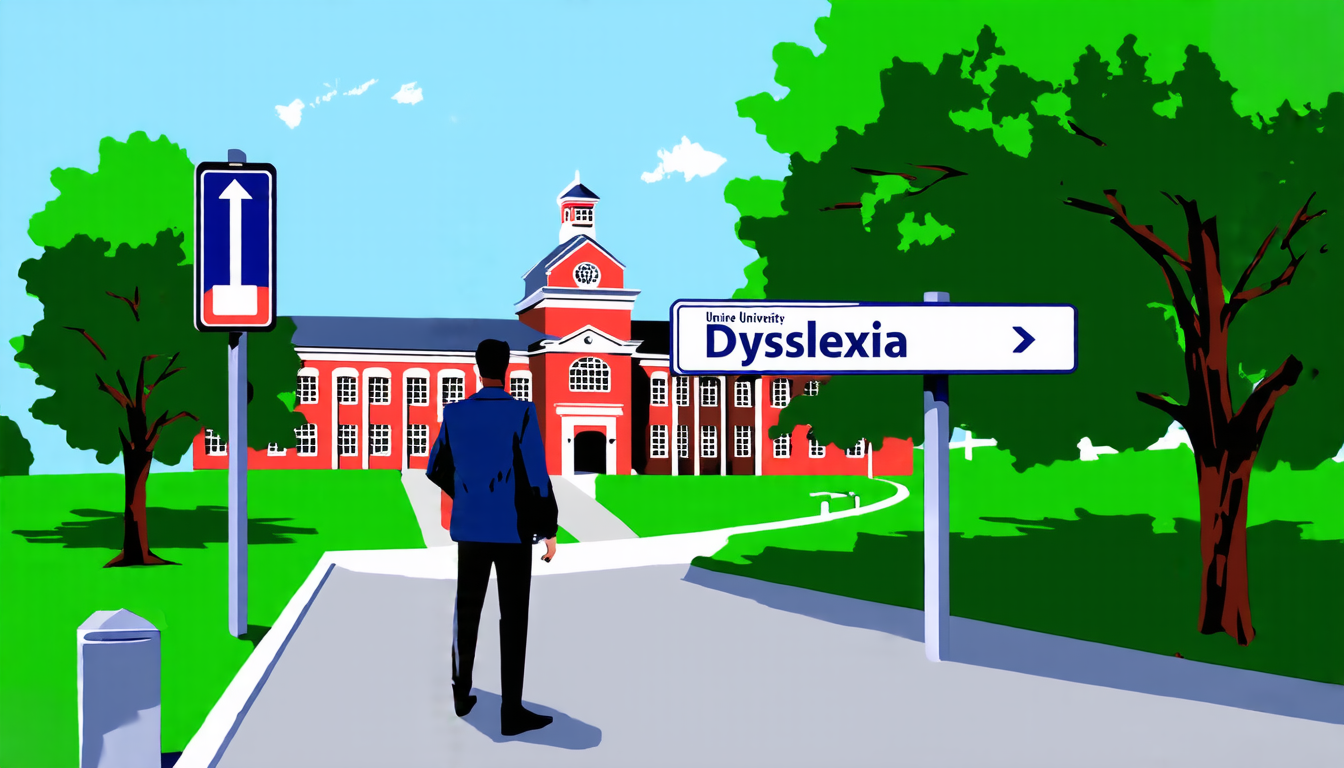
The VR experience, developed by a team of scientists from various institutions, is set in a virtual university campus where participants navigate through buildings, completing tasks and encountering barriers that mimic the difficulties encountered by people with dyslexia. The challenges include reading signs with shifting letters, following directional arrows that may point incorrectly, and dealing with a lack of assistance.
The experience was designed to be both engaging and informative, allowing participants to gain insight into the daily struggles faced by individuals with dyslexia. By simulating these experiences in a controlled environment, researchers hope to increase empathy and understanding among non-dyslexic individuals, ultimately fostering a more inclusive learning environment.
Studies have shown that people with dyslexia often face significant challenges in their academic and professional lives, including difficulties with reading comprehension, writing, and communication. These struggles can lead to feelings of frustration, anxiety, and isolation, making it essential to raise awareness and promote understanding among the general population.
The VR experience has already been tested with over 30 non-dyslexic participants from a university environment, who evaluated the experience through satisfaction surveys. The results indicated heightened awareness of the barriers encountered by individuals with dyslexia, with participants deeming the experience a valuable tool for increasing visibility and fostering understanding.
This innovative approach highlights the potential of virtual reality technology in promoting empathy and understanding towards individuals with disabilities. By providing a unique opportunity to experience the world from their perspective, researchers hope to break down stigmas and promote inclusivity in education and beyond.
The VR experience is just one example of how immersive technology can be used to raise awareness and promote understanding of various social issues. As this technology continues to evolve, it’s likely we’ll see more innovative applications that challenge our perspectives and foster empathy towards individuals from diverse backgrounds.
Cite this article: “Raising Awareness of Dyslexia Through Virtual Reality”, The Science Archive, 2025.
Dyslexia, Virtual Reality, Learning Disorder, Awareness, Understanding, Empathy, Inclusivity, Education, Disability, Technology





