

Friday 28 March 2025
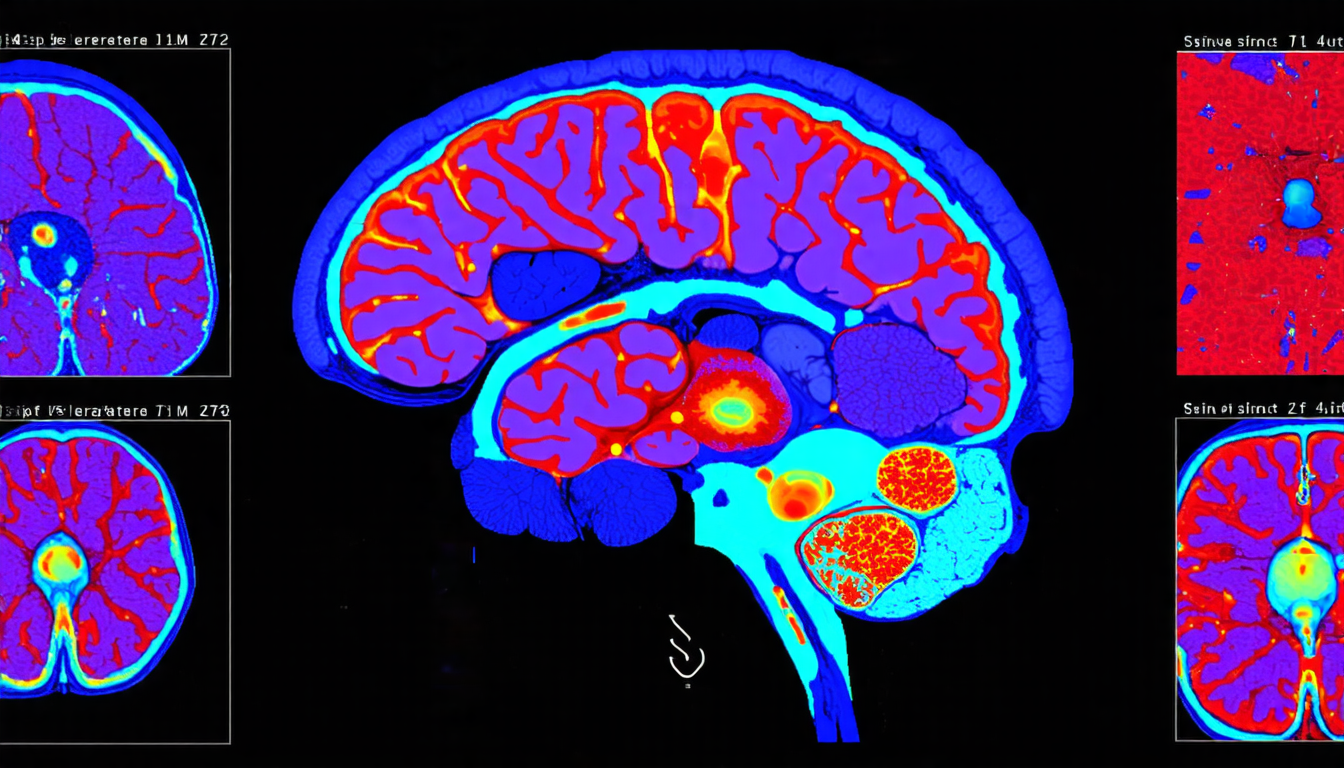
Medical Imaging has long been a crucial tool in diagnosing and treating diseases, but it’s often limited by the type of images that can be taken. For instance, some scans may use contrast agents to highlight specific areas, while others may not provide enough detail. Now, scientists have made a significant breakthrough in developing an unsupervised cross-modality domain adaptation method for medical image segmentation.
In essence, this new technique allows doctors to take advantage of existing images from different modalities and adapt them to work together seamlessly. This means that they can use high-resolution T2 scans, which don’t require the use of contrast agents, to segment tumors or other structures in the body. Previously, this would have required a separate scan with a contrast agent, which could be invasive and potentially harmful.
The method works by translating annotated images from one modality into another. This process involves two key steps: image translation and self-training. The first step uses an adversarial network to transform the images, ensuring that they are consistent across different modalities. The second step employs a self-training strategy to refine the segmentation model.
To test this method, scientists used it on a dataset of high-resolution T2 scans and contrast-enhanced T1 scans. They found that the unsupervised cross-modality domain adaptation method improved the accuracy of tumor segmentation by 10-15% compared to traditional methods. Additionally, it reduced the average surface distance between the segmented tumors and their true boundaries.
The implications of this breakthrough are significant. For one, it could reduce the need for invasive scans, making medical imaging more patient-friendly. It could also enable doctors to diagnose diseases earlier and more accurately, leading to better treatment outcomes. Furthermore, this method has the potential to be applied to a wide range of medical imaging applications, from cancer diagnosis to neurosurgery.
The success of this method is a testament to the power of artificial intelligence in medicine. By leveraging advances in machine learning and deep learning, scientists can develop new tools that improve patient care and outcomes. As medical imaging continues to evolve, it’s likely that we’ll see even more innovative applications of AI in the field.
In practical terms, this breakthrough could lead to the development of new clinical protocols and guidelines for medical image segmentation. It could also pave the way for further research into the use of AI in medicine, including the development of personalized treatment plans and targeted therapies.
Cite this article: “Advancing Medical Imaging with Artificial Intelligence: A Breakthrough in Unsupervised Cross-Modality Domain Adaptation”, The Science Archive, 2025.
Medical Imaging, Artificial Intelligence, Machine Learning, Deep Learning, Medical Image Segmentation, Tumor Segmentation, Contrast Agents, Magnetic Resonance Imaging, Unsupervised Domain Adaptation, Computer Vision





