

Friday 28 March 2025
For years, robotics researchers have been trying to create machines that can move and interact with their environment like humans do. One of the biggest challenges in achieving this is designing a robot’s musculoskeletal system, which allows us to control our movements with precision and flexibility.
In traditional robotics, this problem is often solved by using rigid joints and actuators that mimic human movement. However, these robots are limited in their ability to interact with their environment and can’t adapt to changing situations like humans do.
A new approach has emerged in recent years, which focuses on creating a more realistic musculoskeletal system inspired by the human body. This involves designing robots with flexible joints and muscles that mimic the way our own bodies move.
One of the biggest challenges in developing this type of robot is learning how to control its movements. In traditional robotics, this is typically done using programming and algorithms that specify exactly how the robot should move. However, this approach doesn’t allow for the same level of flexibility and adaptability as human movement.
To overcome this challenge, researchers have turned to machine learning techniques. By training a robot’s musculoskeletal system using data from real-world movements, they can learn how to control its movements in a more flexible and adaptive way.
A recent paper published in IEEE Robotics and Automation Letters has made significant progress in this area. The authors describe a new method for controlling the movement of a musculoskeletal humanoid robot using machine learning techniques.
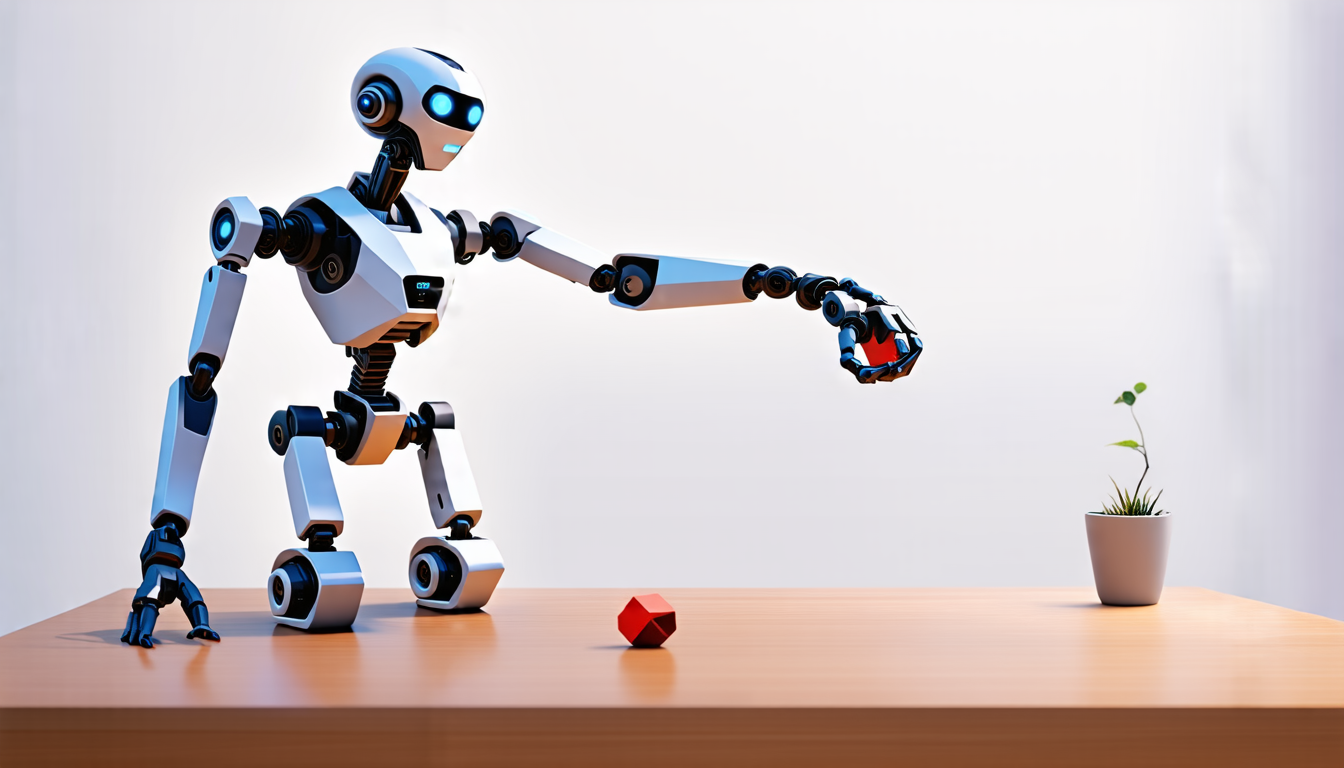
The robot, called Musashi, is designed to mimic the human body’s musculoskeletal system as closely as possible. It has flexible joints and muscles that allow it to move in a more natural way than traditional robots.
To control Musashi’s movements, the researchers used a type of machine learning algorithm called a neural network. This algorithm was trained using data from real-world movements, such as reaching for an object or moving around obstacles.
The results are impressive. The robot is able to learn how to move in a more flexible and adaptive way than traditional robots, allowing it to interact with its environment in a more human-like manner.
For example, when the researchers asked Musashi to reach for an object, it was able to adjust its movement mid-action based on the object’s location and size. This type of adaptability is difficult or impossible for traditional robots to achieve.
The implications of this technology are significant.
Cite this article: “Advances in Musculoskeletal Robotics: A Step Towards Human-Like Movement”, The Science Archive, 2025.
Robots, Musculoskeletal System, Machine Learning, Neural Networks, Humanoid Robot, Flexible Joints, Muscles, Adaptability, Control Systems, Artificial Intelligence





