

Friday 28 March 2025
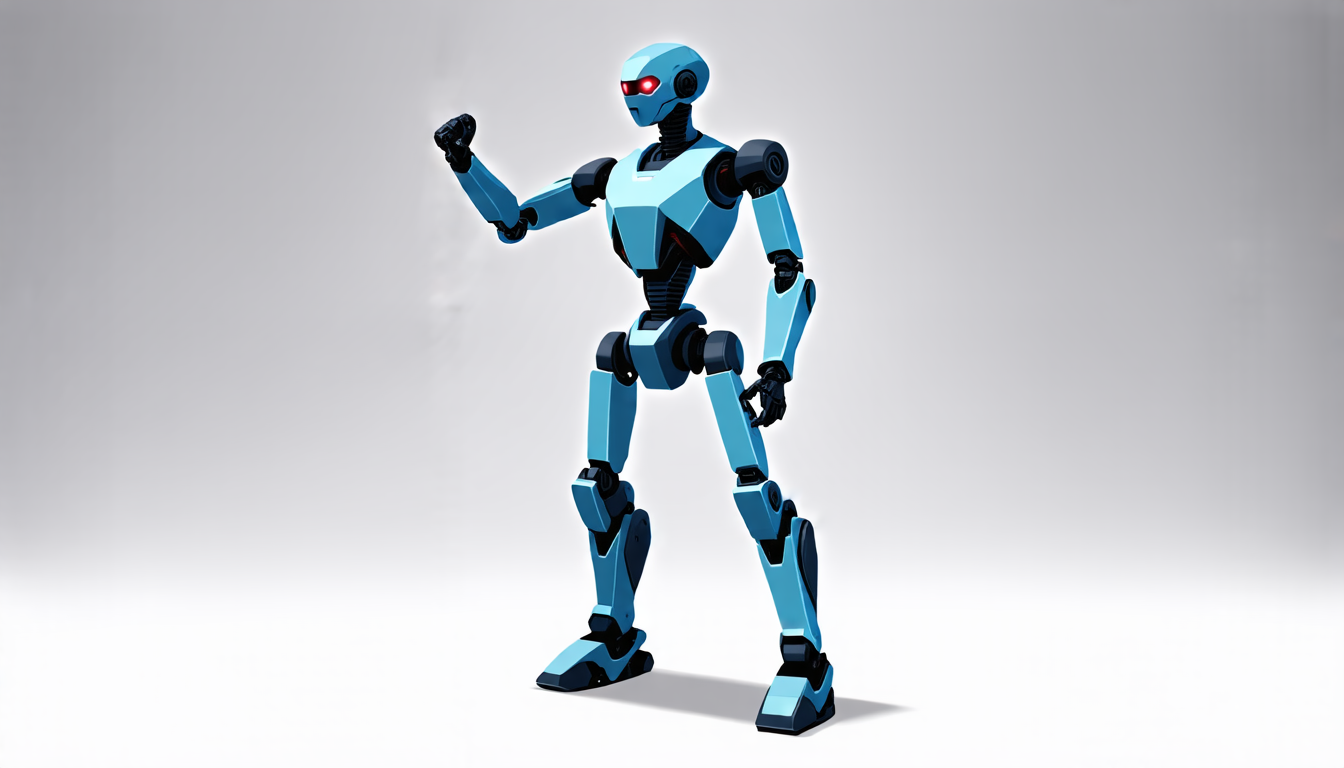
Scientists have been working tirelessly to create a humanoid robot that can mimic human movements and interactions with its environment. Recently, researchers made a significant breakthrough in developing a muscle relaxation control system for these robots. This innovative technology allows the robots to relax their muscles and reduce internal tension, making them more efficient and effective in performing tasks.
The new control system is designed for musculoskeletal humanoids, which are humanoid robots that mimic the structure and movement of the human body. These robots have a complex network of muscles, joints, and tendons that work together to perform various movements. However, this complexity can sometimes lead to internal tension and stiffness, making it difficult for the robots to move smoothly and efficiently.
The muscle relaxation control system addresses this issue by allowing the robot’s muscles to relax and reduce their tension. This is achieved through a sophisticated algorithm that analyzes the robot’s movement and adjusts its muscle activity accordingly. The system is designed to work in real-time, constantly monitoring and adapting to changes in the robot’s movement and environment.
One of the key benefits of this technology is its ability to improve the robot’s flexibility and range of motion. By relaxing its muscles, the robot can move more smoothly and efficiently, allowing it to perform tasks that would be difficult or impossible for a traditional humanoid robot. This has significant implications for the use of musculoskeletal humanoids in various fields, such as healthcare, manufacturing, and search and rescue.
The researchers who developed this technology used a combination of computer simulations and physical testing to validate its effectiveness. They tested the system on a humanoid robot called Musashi, which was designed specifically for this research. The results showed that the muscle relaxation control system significantly improved the robot’s movement and flexibility, making it more efficient and effective in performing tasks.
The development of this technology has significant implications for the field of robotics. It opens up new possibilities for the use of musculoskeletal humanoids in various applications, and could potentially lead to the creation of robots that are even more advanced and capable than those currently available.
Cite this article: “Muscle Relaxation Control System Enhances Humanoid Robot Performance”, The Science Archive, 2025.
Humanoid Robot, Muscle Relaxation Control System, Musculoskeletal Humanoids, Internal Tension, Stiffness, Flexibility, Range Of Motion, Real-Time Monitoring, Algorithm, Robotics.





