

Friday 28 March 2025
Detecting fake news on social media has become a daunting task in today’s digital age. With the rise of misinformation and disinformation, it’s essential to develop effective methods to identify and combat false information. Researchers have been working tirelessly to create algorithms that can accurately detect fake news, and their latest innovation is a significant step forward.
The new approach, called Advance Text Analysis Graph Neural Network (ATA-GNN), uses a unique combination of topic modeling and graph neural networks to identify fake news on social media platforms. Topic modeling is a statistical method that groups similar words together based on their co-occurrence patterns in a corpus of text. In this case, the researchers applied topic modeling to a large dataset of tweets to create multiple graphs, each representing different topics or themes.
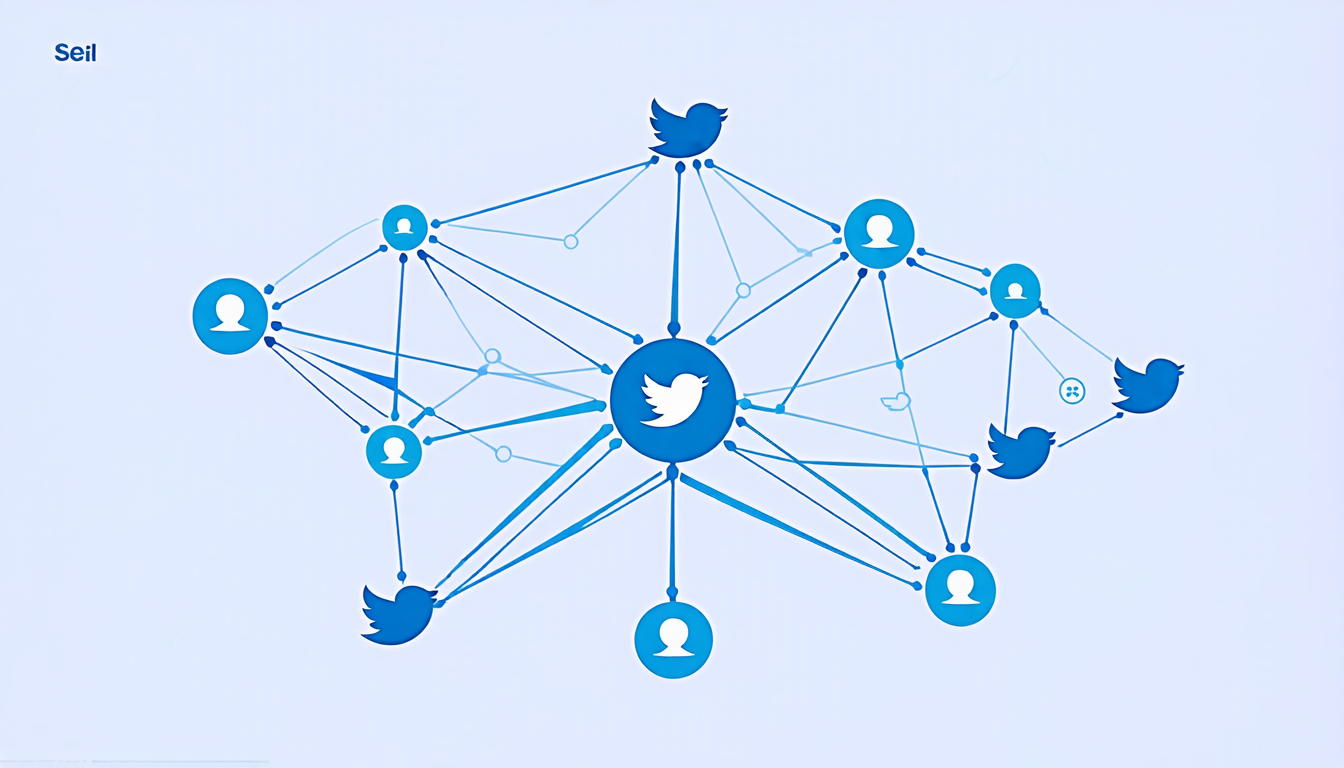
The graph neural network then analyzes these graphs to identify patterns and relationships between the nodes (or vertices) that represent individual tweets. By considering the connections between these nodes, the algorithm can determine whether a tweet is likely to be fake news or not. This approach has several advantages over traditional methods, which often rely on machine learning algorithms that are trained on labeled datasets.
One of the most significant benefits of ATA-GNN is its ability to capture complex relationships between tweets and identify patterns that may not be apparent using traditional methods. For example, the algorithm can detect when a tweet is part of a larger conversation or network of misinformation. This allows it to accurately classify tweets as fake news even if they don’t contain explicit indicators of falsity.
The researchers tested ATA-GNN on three publicly available datasets and found that it outperformed state-of-the-art models in terms of accuracy, F1-score, and precision. The algorithm was able to correctly identify over 90% of fake news tweets in the datasets, demonstrating its effectiveness in detecting misinformation.
The potential applications of ATA-GNN are vast. Social media platforms could use this technology to automatically flag suspicious or potentially fake news tweets, reducing the spread of misinformation and promoting more informed online discourse. Additionally, researchers could use ATA-GNN to study the propagation of misinformation and develop strategies for countering it.
While there is still much work to be done in the field of fake news detection, the development of ATA-GNN represents a significant milestone in the quest to combat misinformation. As social media continues to evolve and new forms of disinformation emerge, it’s essential that researchers and developers continue to innovate and improve their methods for detecting fake news.
Cite this article: “Advanced Algorithm Detects Fake News with High Accuracy on Social Media”, The Science Archive, 2025.
Fake News, Social Media, Misinformation, Disinformation, Algorithm, Graph Neural Network, Topic Modeling, Text Analysis, Machine Learning, Accuracy





