

Friday 28 March 2025
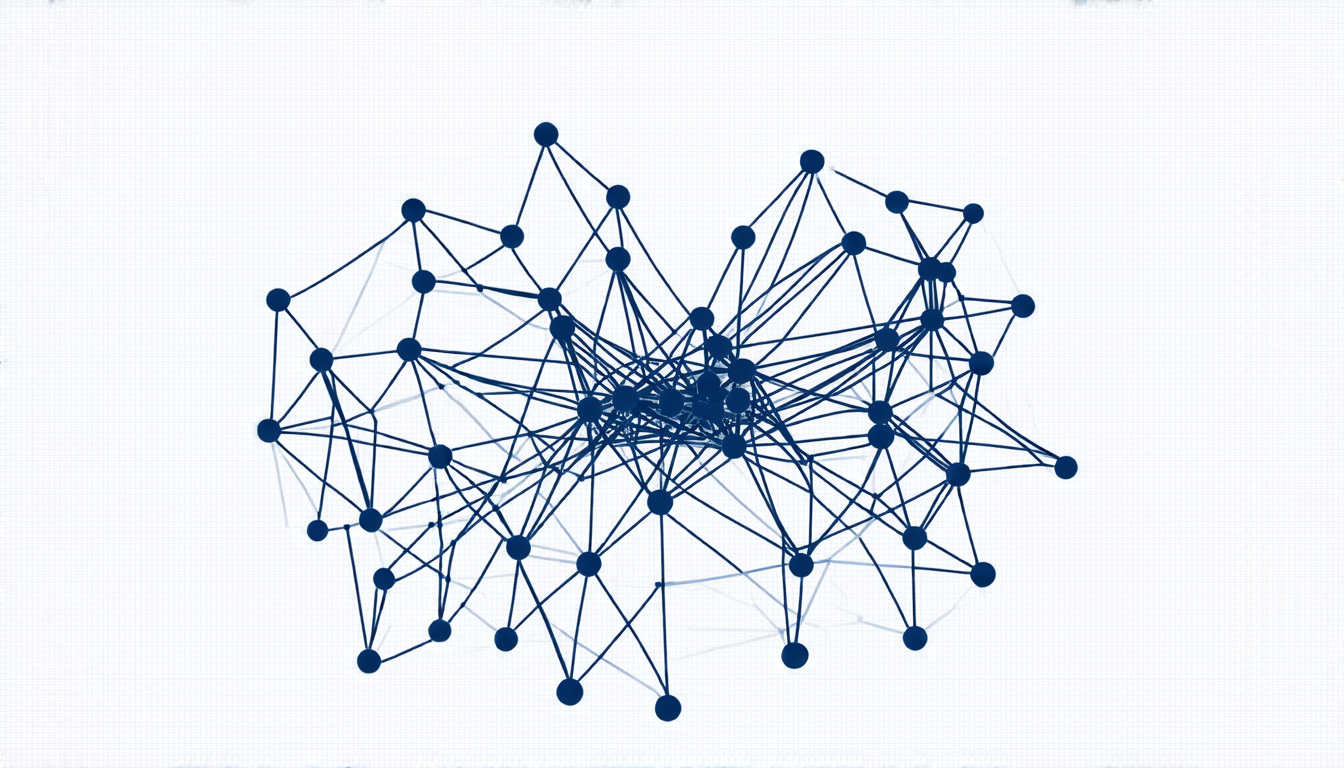
Graph theory, a branch of mathematics that studies connections between objects, has long been a staple of computer science and engineering. But researchers have recently made significant strides in developing new algorithms to tackle complex problems within this field.
One area of focus is on determining whether a subgraph – a subset of vertices and edges within a larger graph – is convex or isometric. This might seem like an esoteric concern, but it has real-world implications for fields such as computer networks and social network analysis.
To understand why, consider that in computer networks, identifying the shortest paths between nodes is crucial for efficient data transmission. Similarly, in social network analysis, being able to quickly identify clusters of connected individuals can reveal hidden patterns and trends.
However, traditional algorithms for solving these problems are often too slow or cumbersome for large-scale applications. This is where the new developments come in. Researchers have created more efficient methods for determining whether a subgraph is convex or isometric, allowing them to tackle complex networks with ease.
One key innovation is the use of dynamic trees, data structures that can efficiently maintain information about vertices and edges within a graph as it changes. By leveraging these trees, researchers can quickly determine whether a subgraph is convex or isometric, even in cases where traditional methods would struggle.
Another approach involves using techniques from computer vision to identify patterns within graphs. This allows researchers to recognize shapes and structures that are characteristic of convex or isometric subgraphs, making it easier to identify them.
These advances have far-reaching implications for a wide range of fields. In computer networks, they could enable faster and more efficient data transmission. In social network analysis, they could reveal new insights into the structure and behavior of online communities.
But perhaps the most exciting aspect of these developments is their potential to unlock new understanding of complex systems. By being able to quickly identify patterns and structures within large-scale networks, researchers can gain a deeper understanding of how these systems function and evolve over time.
In short, these advances in graph theory have the potential to revolutionize our ability to analyze and understand complex systems – and could have significant implications for everything from computer networks to social media.
Cite this article: “Unlocking Complexity: Advances in Graph Theory”, The Science Archive, 2025.
Graph Theory, Algorithms, Computer Science, Engineering, Convex Subgraph, Isometric Subgraph, Dynamic Trees, Computer Vision, Social Network Analysis, Complex Systems.
Reference: Sergio Cabello, “Testing whether a subgraph is convex or isometric” (2025).





