

Friday 28 March 2025
The bending of light around massive objects is a well-known phenomenon in physics, often referred to as gravitational lensing. This effect has been extensively studied and observed, providing valuable insights into the behavior of gravity and the nature of space-time. However, most research has focused on the effects of gravity alone, neglecting the influence of other factors that could impact light’s trajectory.
Recently, scientists have turned their attention to the study of gravitational lensing in the presence of non-magnetic plasma, a type of ionized gas found throughout the universe. This new area of research aims to better understand how plasma affects the bending of light around massive objects, such as black holes and neutron stars.
One of the most significant challenges in studying gravitational lensing is the complexity of calculating the exact trajectory of light rays in curved space-time. This task requires a deep understanding of both general relativity and quantum mechanics. Researchers have developed various approaches to tackle this problem, including the use of numerical simulations and analytical methods.
The study of gravitational lensing in non-magnetic plasma has several practical applications. For example, it could provide insights into the properties of black holes and neutron stars, which are still not fully understood. It could also help scientists better understand the behavior of light in extreme environments, such as those found near black holes or neutron stars.
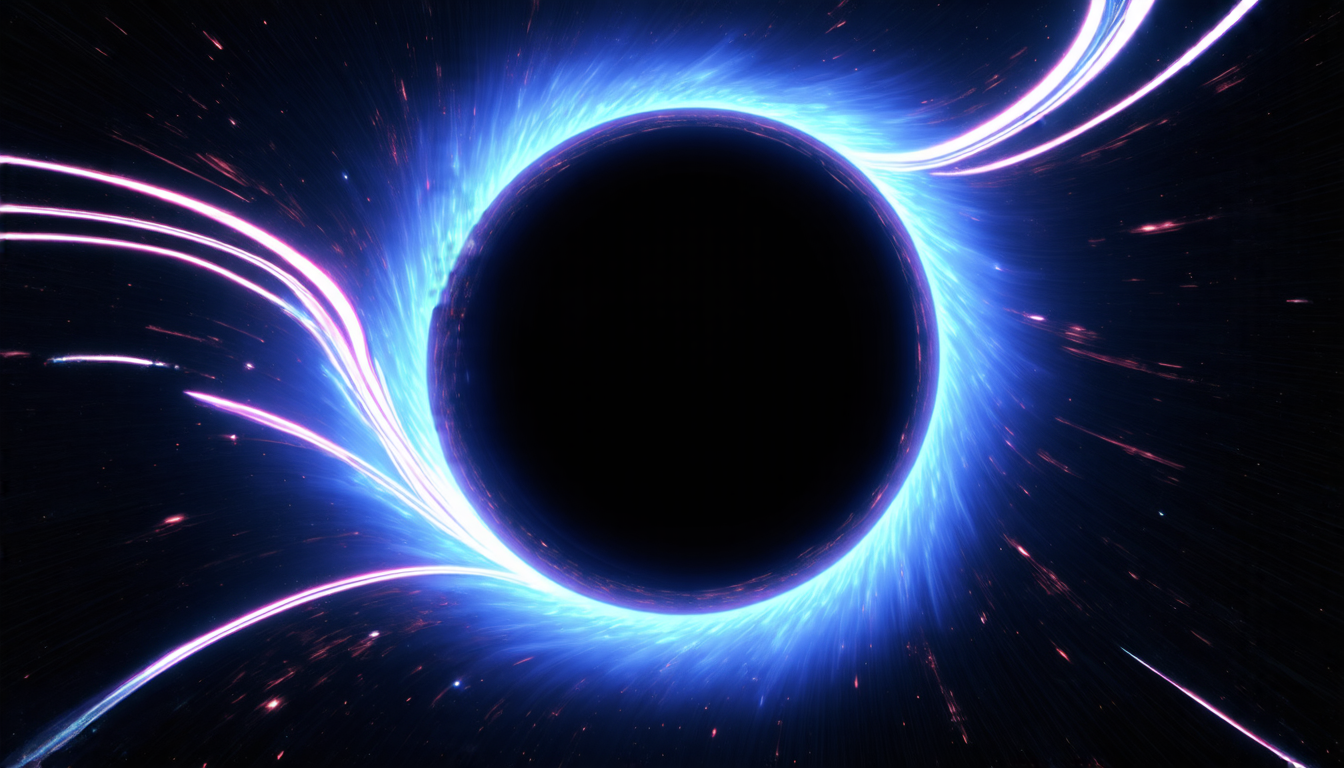
The research on gravitational lensing in non-magnetic plasma is still in its early stages, but it has already revealed some fascinating results. For instance, simulations have shown that the presence of plasma can significantly impact the shape and size of the shadow cast by a black hole. The shadow, which appears as a dark region around the black hole, is an important indicator of the object’s mass and spin.
In addition to its practical applications, this research also has significant theoretical implications. It challenges our current understanding of gravity and space-time, forcing us to re-examine our assumptions about how these fundamental forces behave in extreme environments. The study of gravitational lensing in non-magnetic plasma is a complex and challenging task that requires the collaboration of researchers from various fields.
The results of this research are not only important for advancing our knowledge of physics but also have significant implications for astronomy and cosmology. They could provide insights into the properties of black holes and neutron stars, which are still not fully understood. The study of gravitational lensing in non-magnetic plasma is an exciting area of research that has the potential to revolutionize our understanding of the universe.
Cite this article: “Gravitational Lensing in Non-Magnetic Plasma: Unlocking New Insights into Gravity and Space-Time”, The Science Archive, 2025.
Gravity, Gravitational Lensing, Non-Magnetic Plasma, Black Holes, Neutron Stars, Space-Time, General Relativity, Quantum Mechanics, Numerical Simulations, Analytical Methods





