

Friday 28 March 2025
A team of astronomers has made a significant breakthrough in understanding how galaxies collide and interact with each other. By studying the movements of galaxies within our own cosmic backyard, scientists have been able to shed light on the complex dance that occurs between these celestial bodies.
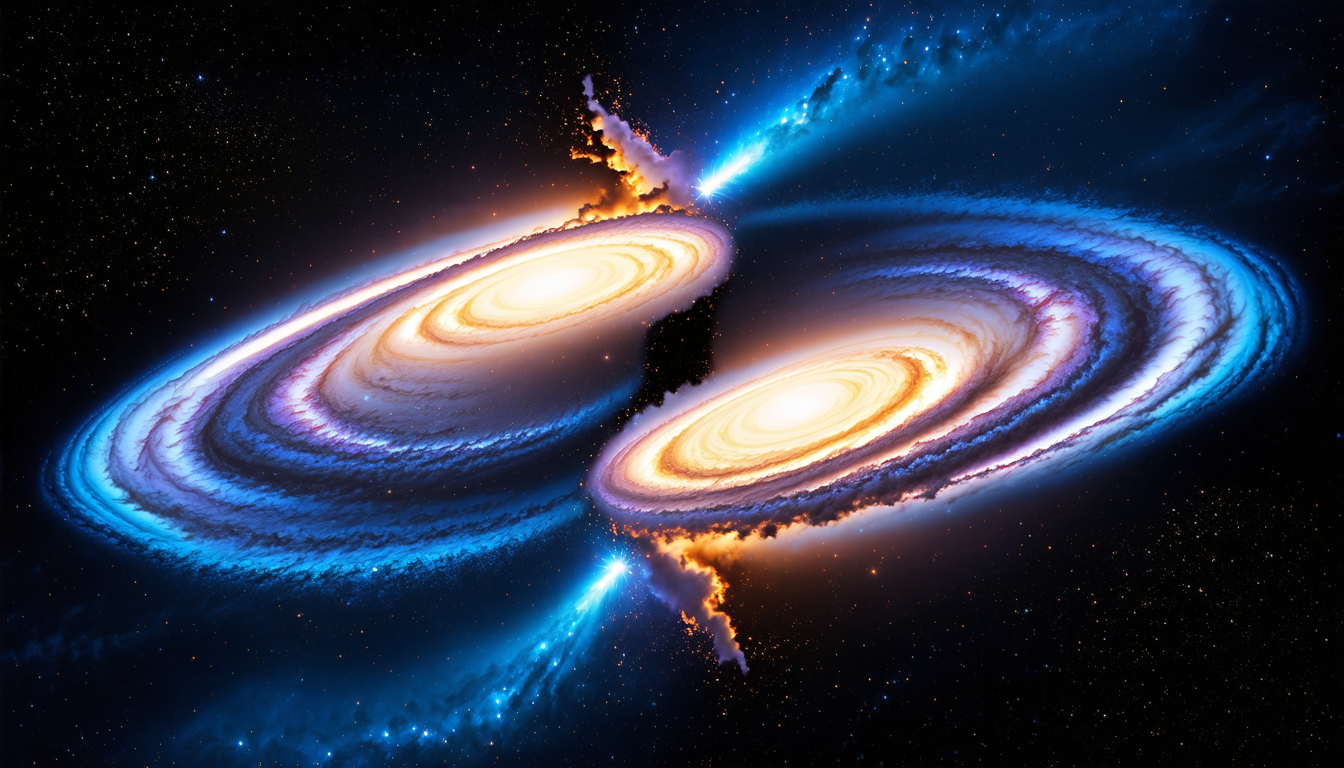
Galaxies are thought to be formed from vast clouds of gas and dust that collapse under their own gravity. As they spin faster and faster, they begin to flatten into discs, with stars and other matter swirling around a central core. But what happens when two galaxies collide? Do they simply pass each other by, or do they merge into a single, larger galaxy?
Researchers have long been fascinated by the way that galaxies interact with each other. By studying the movements of galaxies within our own cosmic neighborhood, scientists have been able to gain insights into how these collisions occur.
One key finding is that not all galaxies are created equal. Some are massive and dominant, while others are smaller and more fragile. When a larger galaxy collides with a smaller one, it can strip away much of the smaller galaxy’s gas and dust, leaving it a barren, starless husk.
But what about when two galaxies of similar size collide? Do they merge into a single, larger galaxy, or do they simply pass each other by?
According to new research, some galaxies are able to survive collisions with their peers. By studying the movements of galaxies within our own cosmic neighborhood, scientists have been able to identify certain characteristics that make these galaxies more resilient.
One key factor is the way in which a galaxy’s stars and gas are distributed. If a galaxy has a lot of gas and dust at its core, it may be better equipped to withstand the stresses of collision. This is because the gas and dust can help to cushion the impact, much like a crash pad on a car.
Another factor that scientists have identified is the way in which a galaxy’s stars are distributed. If a galaxy has a lot of old, red stars at its core, it may be more likely to survive a collision with another galaxy. This is because these older stars are less prone to being disrupted by the gravitational forces involved in a collision.
By studying these characteristics, scientists hope to gain a better understanding of how galaxies interact with each other. By identifying which types of galaxies are most resilient, they may be able to make more accurate predictions about the future behavior of these celestial bodies.
The implications of this research could be far-reaching.
Cite this article: “Galactic Collisions: Uncovering the Secrets of Cosmic Interactions”, The Science Archive, 2025.
Galaxies, Collisions, Astronomy, Stars, Gas, Dust, Gravity, Mergers, Cosmic Neighborhood, Resilience
Reference: Anastasiia M. Osipova, Sergey V. Pilipenko, “On the maximal velocity of colliding galaxies” (2025).





