

Friday 28 March 2025
The quest for more accurate predictions of electric vehicle charging demand has led researchers to develop a novel approach that combines machine learning with explainable AI techniques. By leveraging multivariate time-series analysis and an attention mechanism, the model is able to forecast the number of charging requests over the next day at 15-minute intervals.
The approach begins by collecting data on actual EV charging activity, including information such as temperature, day of the week, month, and holiday status. This data is then used to train a multivariate LSTM (long short-term memory) network, which is able to learn complex patterns in the data and make accurate predictions.
However, simply predicting the number of charging requests is not enough – it’s also important to understand why these predictions are being made. To achieve this, the researchers employed an attention mechanism that assigns weights to different time steps, allowing the model to focus on the most relevant periods for prediction.
The results show that the approach is highly accurate, with a test loss of just 0.0085 – a significant improvement over previous methods. But what’s more impressive is the level of explainability provided by the attention mechanism. By visualizing the weights assigned to different time steps, researchers can gain valuable insights into which features are driving the predictions.
For example, in one case study, the model was able to identify that Sundays tend to have lower charging demands, while Mondays and Tuesdays see a surge in requests. This information is crucial for operators of EV charging stations, who need to plan their resources accordingly.
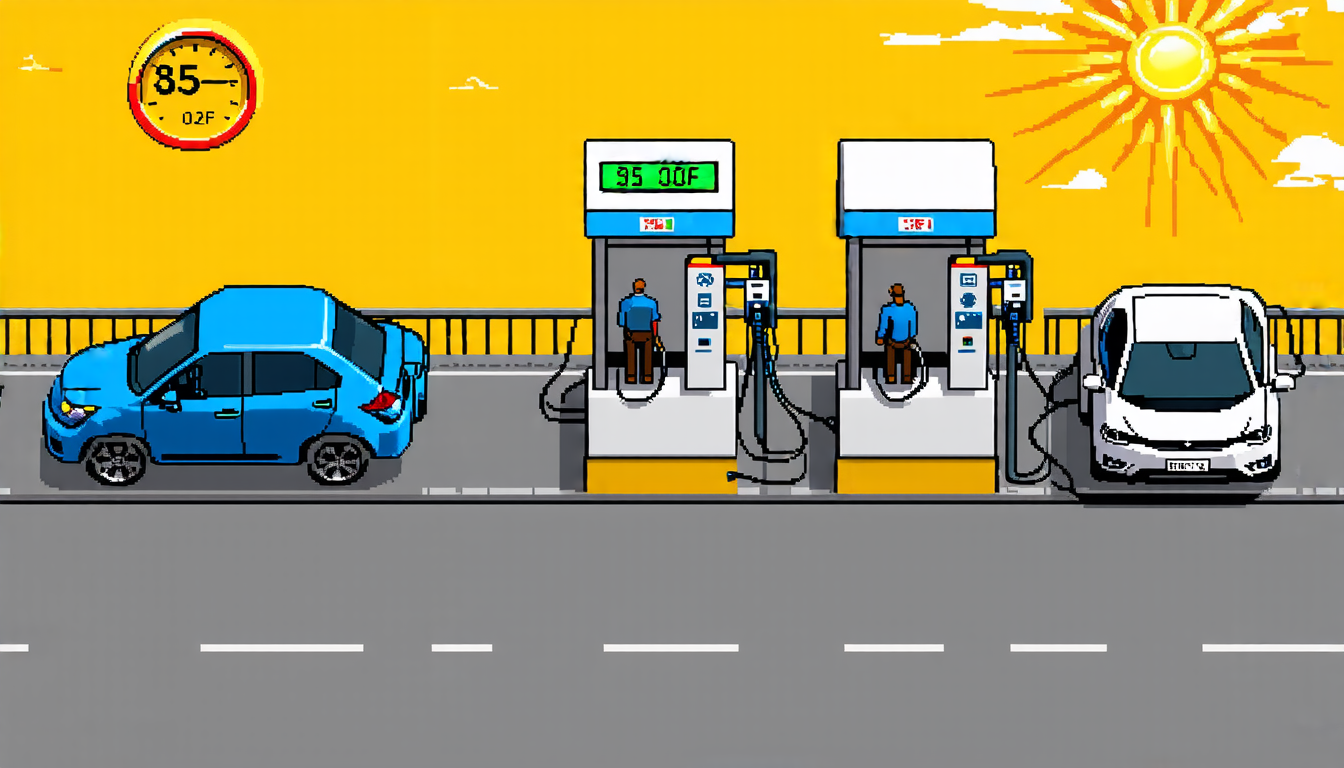
Another benefit of the approach is its ability to handle complex relationships between different features. For instance, the model can capture the impact of temperature on charging demand – during hot summer months, drivers may be more likely to charge their vehicles, leading to increased demand.
The implications of this research are significant. As the number of electric vehicles on the road continues to grow, accurate forecasting of charging demand will become increasingly important for ensuring a reliable and efficient energy supply. By providing insights into which features are driving these predictions, the attention mechanism can help operators make more informed decisions about resource allocation and infrastructure planning.
The approach also has potential applications beyond EV charging stations. Other industries that rely on complex data sets, such as weather forecasting or financial modeling, could benefit from the combination of machine learning and explainable AI techniques used in this research.
Overall, this study demonstrates the power of combining cutting-edge machine learning techniques with traditional statistical methods to achieve highly accurate predictions and valuable insights into complex systems.
Cite this article: “Forecasting Electric Vehicle Charging Demand with Explainable AI”, The Science Archive, 2025.
Electric Vehicles, Charging Demand, Machine Learning, Explainable Ai, Multivariate Time-Series Analysis, Attention Mechanism, Lstm Network, Ev Charging Stations, Resource Allocation, Infrastructure Planning.





