

Saturday 29 March 2025
A new approach to understanding complex networks has been developed, allowing researchers to better grasp the intricacies of social media, biological systems, and other interconnected systems.
The traditional method of studying these networks involves analyzing individual nodes, or points of connection, in isolation. However, this approach can be limited by its inability to capture the relationships between nodes and how they interact with one another.
To overcome this limitation, researchers have developed a new technique called Mamba-based Asynchronous Propagation Network (MAPN). This method uses a combination of random walks and meta-paths to generate node sequences and aggregate semantic information across multiple hops and layers.
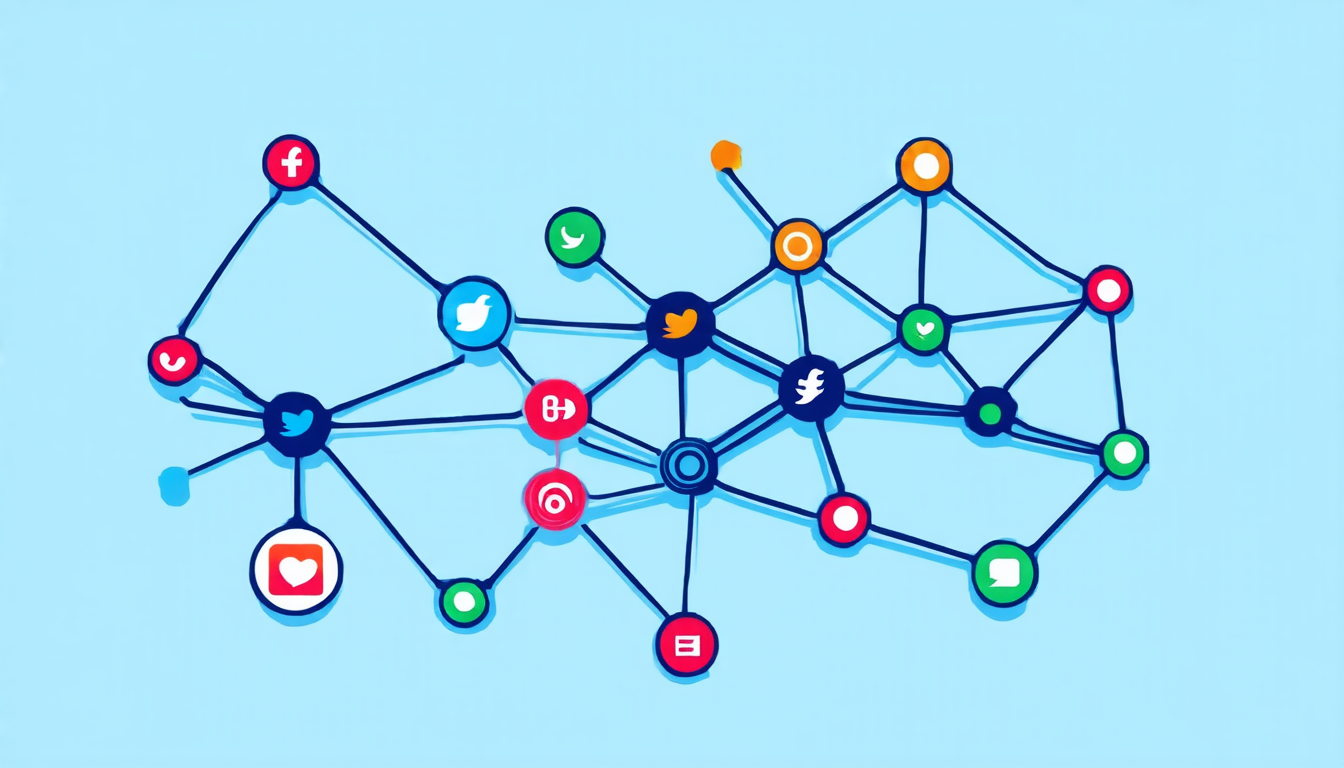
The MAPN approach is particularly useful for studying heterogeneous networks, where different types of nodes and edges are present. For example, in social media, users may be connected through likes, comments, or shares, while in biological systems, proteins may interact through binding sites or catalytic reactions.
One of the key advantages of MAPN is its ability to capture long-range relationships between nodes, which can be difficult to analyze using traditional methods. By using meta-paths, researchers can identify patterns and structures that would otherwise be missed.
The MAPN approach has been tested on a range of datasets, including social media networks and biological systems. The results show that MAPN is able to outperform traditional methods in terms of accuracy and ability to capture complex relationships between nodes.
In addition to its technical benefits, the MAPN approach also has practical applications. For example, it could be used to improve the detection of fraud or spam on social media platforms, by identifying patterns and structures that are indicative of malicious activity.
Overall, the MAPN approach represents a significant advancement in our understanding of complex networks and their behavior. Its ability to capture long-range relationships and identify patterns and structures makes it an valuable tool for researchers and practitioners alike.
Cite this article: “Unveiling Complex Networks with MAPN: A Breakthrough in Network Analysis”, The Science Archive, 2025.
Complex Networks, Social Media, Biological Systems, Heterogeneous Networks, Node Sequences, Meta-Paths, Random Walks, Semantic Information, Long-Range Relationships, Mapn Approach





