

Saturday 29 March 2025
Scientists have made a significant breakthrough in developing a new method for solving complex fluid dynamics problems, which has far-reaching implications for fields such as engineering and environmental science.
The problem of simulating fluids is notoriously difficult, particularly when it comes to understanding how they interact with each other. Fluids can behave in unpredictable ways, making it challenging to model their behavior accurately. In the past, scientists have relied on simplified models that don’t fully capture the complexities of real-world fluid dynamics.
The new method developed by researchers involves using a combination of mathematical techniques and computational algorithms to create a more accurate representation of fluids in motion. This approach allows for the simulation of complex fluid flows, such as those found in ocean currents or atmospheric circulation patterns.
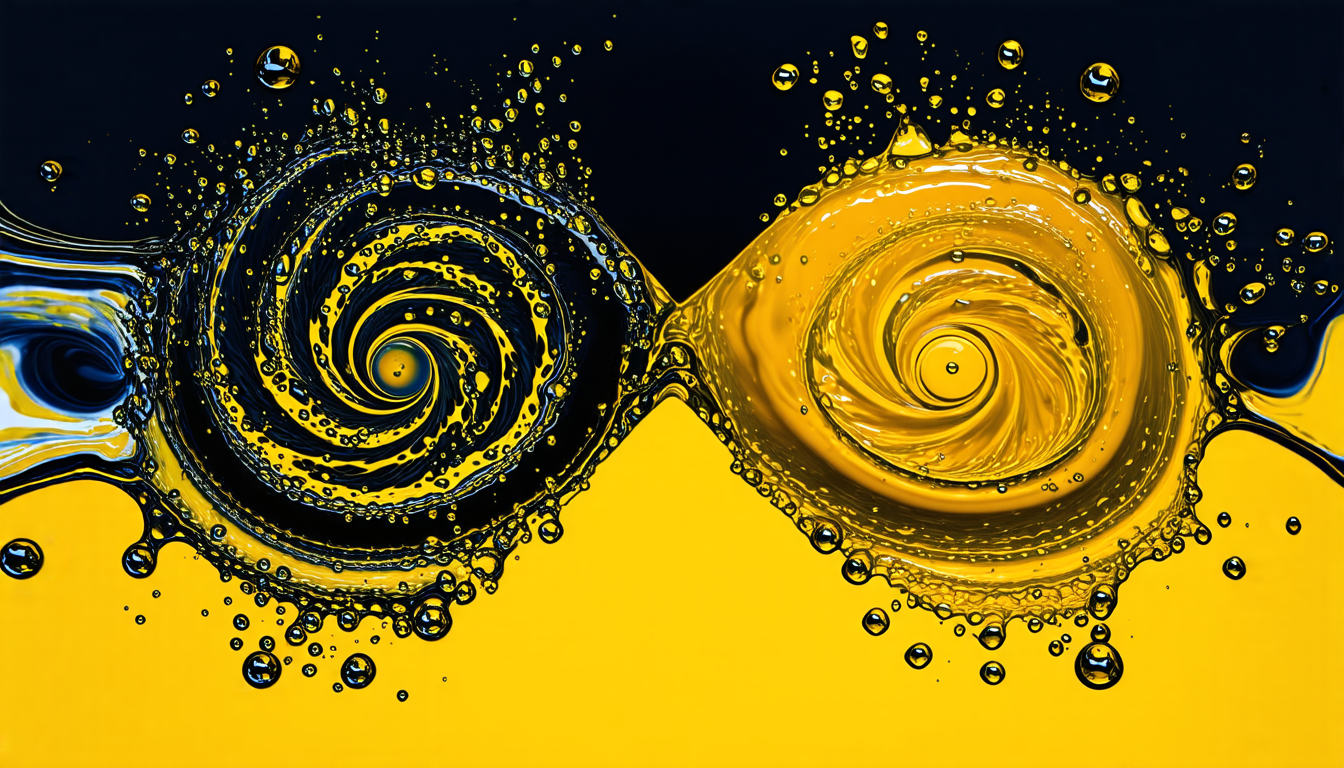
One of the key innovations of this new method is its ability to accurately model the interaction between different fluids. For example, it can simulate how oil and water mix together, or how pollutants spread through a river. This level of detail is crucial for understanding many environmental issues, such as oil spills or toxic waste contamination.
The researchers used a combination of mathematical equations and computational algorithms to develop their new method. They created a set of equations that describe the behavior of fluids in motion, and then used these equations to simulate different fluid flows.
To test their method, the researchers simulated several real-world scenarios, including ocean currents and atmospheric circulation patterns. Their results were surprisingly accurate, even when compared to actual measurements taken from real-world data.
The implications of this new method are significant. It has the potential to revolutionize our understanding of complex fluid dynamics, allowing scientists to make more accurate predictions about how fluids will behave in different situations. This could lead to breakthroughs in fields such as engineering, environmental science, and even climate modeling.
In addition, the researchers believe that their method could be used to study a wide range of phenomena, from the behavior of blood flow in the human body to the movement of tectonic plates in the Earth’s crust. The possibilities are endless, and scientists are excited to explore the potential applications of this new technology.
Overall, the development of this new method is an exciting breakthrough that has the potential to transform our understanding of complex fluid dynamics. By providing a more accurate representation of fluids in motion, it could lead to significant advances in a wide range of fields, from engineering and environmental science to climate modeling and beyond.
Cite this article: “Breaking Through Complexity: A New Method for Solving Fluid Dynamics Problems”, The Science Archive, 2025.
Fluid Dynamics, Simulation, Mathematical Techniques, Computational Algorithms, Complex Flows, Ocean Currents, Atmospheric Circulation, Environmental Science, Engineering, Climate Modeling





